|
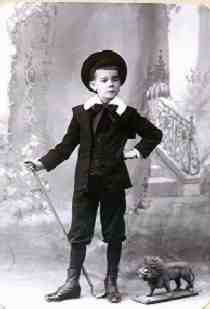
HBC at this time has relatively little information on Mexican boys clothes. I believe, however, that clothes for boys followed a very similar pattern common throughout much of Latin America. There has historically been very significant differences between the clothes worn by the boys from rich and middle class families and those worn by boys from poor families. Mexican boys' clothing was once sharply affected by social class and ethnicity. Wealthy boys from European origins wore European fashions. More affluent children wore European-styled clothes. Poor Indian and mestizo children wore simple white shirts and pants. The poor rural children which contituted the great bulk of the population wore plain white shirts and white trousers cut above the ankles. Most went barefoot. In more recent years Mexican boys fashions have been largely influenced by the United States and both wealthy and poorer children now wear the same styles. Of course not the quality of those clothes. Gradually Mexican children adopted basically American-styled clothing. We do not yet have any personal contributions from our Mexican readers. Nor do we know of any books where Mexican authors hasve decribed their childhood. Mexican readers have provided some individual portaits, although we often know very little about the individuals depicted. Photography was a largey European and American innovation. But studios and photgraphic activity soon appeared in Latin America, including Mexico. The first photographs taken in Mexico as in many other countries appeared shortly after Frenchman Louis Daguerre invented modern ohotography--the Daguerrgeotype (1839). Photography in the 19th century was mostly studio portarits, but the country's poverty and small middle-class as in other Latin American countries limited the size of the resulting 19th century photographic record.
Mexico when discussing geograpohy has been called a land of extremes. The country is domimatd by two parallel momtain chains with rugged mountains and deep canyons skirting both coasts. Over hakf the countries lies at altitudes above 1,000 meters. The Sierra Madre Oriental is inland from the Gulf of Mexcico coast. The Sierra Madre Occidental with much higher peaks skirts the Pacific Coast. There are narrow coastal lowlands. In between is the rugged central platau, the country's central land mass with smaller mountain ranges. There are mineral resources in these ranges, imclkuding copper and silver. The north constiututes about 40 percent of Mexican territory. Most of it is arid including border deserts which is why in addition to hostile Native American tribesthat the north,including Texas, was not heavily populated in the era before the Mexican-Aerican War. In the south bordering on Guatemala are dense rain forests. There are two appendages. The Yucantan Peninsuka in the southeast and Baa Califoirnia in the far west. The Yucatan lies between the Gulf of Mexico and the Caribbean Sea. It is where the Spanish first landed and encountered the Maya before launching the conquest of Mexico at the time dominated by the Aztecs centered in Tenochititlan (modern Mexico City). The Aztec capital doiminated the Valley of Mexico and the precious waters of Lake Texcoco. The Pacific Ring of Fire runs across southern Mexico into the Pacific (Trans-Mexican Volcanic Belt). The snow covered Pico de Orizaba (Citlaltépetl) south of Mexico City is an inactive stratovolcano, the highest mountain in Mexico and the third highest in North America. Nearby Popocatépetl is the highest actuve volcano. Most Mexicans volcanos are long established, one Parícutin further west rose out of a coen field (1943).
The Toltec people of the Central Valley of Mexico developed corn. Although not immediately as important as the potato, it is today with the 20th century development of synthetic fertilizer the single most important food crop. This made possible the moderbn expansion of the world population. The Native Americans the Spanish Conquistadores encountered were the Maya and Aztec. The Aztec in particular were a chillingly blood thirsty people, exceeding the Spanish in their lust for war, but not in their abiity to wage war. The Spanish Conquistadores wanted gold, but it was corn that was Mexico's great contribution to human society. European diseases descimated Native American populations. Mexico languished as a Spanish colony for over 300 years. Mexico under Spanish rule was an essentially feudal country. It achieved independence from Spain (early 19th century), in part because of the French Revolution and Napoleonic Wars--the Peninsula Campaign. A weakened Spain could not hold on to its colonies. A war with the United states resulted in the loss of the sparsely populated north. The Diaz dictatorship introduced a degree of modernization, but did not address deep-seeded social problems. Mexico's Revolution came a century after independence. (20th century). The Revolution brought the Partido Rvolucinario Institucional (PRI) to power (1920s). The PRI brought a degree of social justice, but not economic prosperity. Coruption flowing from one-party rule as well as an emphasis on state corportations that proved both inefficent and ineffective account for much of Mexico's economic failure. This failure has meant that millions of Mexicans have crossed the border to seek decent paying jobs in the United States. The PRI governed Mexico with a thin veneer of democracy for 80 years. Mexico held its first truly democratic election and the PRI was voted out of power (2000). Today millions of Mexicans still can not make a decent living in their own country and countinue to cross the northern border to work illegally in the United States. There does not seem to be a serious domestic discussion as to why the country cannot prosper economically. Many Mexicans seem nore intent on blameing America and free enterprise for their country's economic failure.
Mexico is one of the three principal countries of North America. It has developed a sustantial economy. The ramking varies froim year to year, but is usually ranked about the 20th largest world economy. Even so, it is by par the poorest of the three North ASnerican countries. And while percapita income is substantially below that of America and Canada, it has the highest per capita income in Latin Anerica. This raises a variety of historical and economic questions. Left wing popularism has a considerable following in Latin America, including Mexico. Yet left-wing rulers like Castro in Cuba and Chavez in Venezuela have trouble explaining why, Mecico which is the Latin Ameican country most integrated with the United States, is the most prosperous. Still the question of desparity between America/Canda and Mexico remains. And here the siffering historical/ecomomic experience surely is the principal reason. Nexico was the heart of the Spanish Empire until independence in the 1880s. Unlike America which had aong historical experience with both democracy and capitalism, Mexico became independent with an almpst feudal economy. America art the time began to enter the modern economy with capitalist inctitutions and individuals who began important industrial innovations. Even in the 18th century, people like Benjamin Franlkin (lighting rods and stoves) and Ely Witney (cotton gin) patentened important devices. And this only increased in the 19th century. Nothing like this occurred in Mexico. This is not only the result of the feudal ecomomy, but also the Inquisiton which deterred free thought in southern Europe and Latin America. After the French were expelled (1860s), Porfirio Díaz and the Cientificos furing the Porfiriato sought to modernize Mexico. Here they accomplished a great deal in terns of industry and infrastructure, but failed to address the summering social inequities. This led to the Mexican Recolution. Unfortunately for Mexico, the Revolution occurred a a time with Socialist thought was gaining currency and the Mexican leasers following the Revolution adopted many statist socialist policies which proved to be a huge drag on the Mexican economy. One reform was to create ejidos to protect the land holdings of Native Americans. But the ejido sydtem resulted in the Native Americans be denied access to capital and thus their agricultural operations continued to be highly inefficent rwsulting in very low incomes. What is discouraging is that there seems to be little discussion as to why jobs can not be created in Mexico beyond steril socialist political polemic.
We have very lille chronological information on Mexico at this time. Portraits suggest that children from affluent families in the 19th century were dressed like European children. In fact unlsss the provinance of the image is knnown it is rarely possible to identify portraits of Mexican children from European families by their clothing. The fashiojs involved followed fashion changes in Europe. Children of families from modest backgrounds are more likely to be identified as Mexican because they wore a kind of camposeino dress of plain white shirts and pants with barefeet or sandals. This style did not change significantly over time. Some boys wore guillaberas, but this was more an adult fashion. Styles began to change in the 20th century, especially after World War II. American fashions became increasingly important.
Mexican boys clothes have traditionally varied greatly by social class. Rich boys from largely European families wore the same clothes styles as worn in Europe. I assume that the most influential European country was of course Spain as Mexico was a Spanish colony until the early 19th Century. Other European countries by the mid 19th Century, such as France and England, were also influential. Thus little boys wore dresses and older boys wore tunics, Fauntleroy suits, sailor suits, knickers, Eton collars, and other popular styles of the day. I know of no popular indigenous Mexican garment or style worn by the wealthy boys. Poor Mexican boys have traditionally worn a white shirt and white pants, often at calf length and simple sandals without socks. I am not sure just when this dress became common place, but it was widely worn in the 19th Century and probably earlier. Poor Mexican boys have traditionally worn a white shirt and white pants, often at ankel/calf length and simple sandals without socks. Many children went barefoot. I am not sure just when this dress became common place, but it was widely worn in the 19th Century and probably earlier.
In the novel "Giant" there is an account about the Mexican foreman's son, which you might find interesting.
The story is about an Eastern girl that meets and marries this handsome Texas rancher. The Texan owns this huge ranch that employs many Mexican cowboys The Mexicans cowboys and their families are very poor and she get involved with helping to improve their living conditions on the ranch. She meets the foreman's wife who is barren. In the early years of their marriage she has two children, a boy and a girl. This kind of sets the stage for the following scene in the book. Her family has come from the
East to visit. Her 5 or 6 years old son is playing with a little Mexican girl who is better dressed than the other little Mexican girls on the ranch. Her Mother asks her who the strange little Mexican girl playing with her son is. This immediately brings a laugh from her and her husband. She goes on to explain the the little girl is really the foreman's son. It
turns out the the foreman's wife decided that the reason she couldn't conceive was because she had prayed for a boy. So she prayed to the Virgin Mary for a girl and promised when the girl's hair reached her waist she would have it cut and presented to the church as a sarifice. The supreme sarifice for a young Mexican girl whose hair is her crowning glory. When a
boy was born they felt that they had to keep their promise. So the boy was dressed in the best dresses they could afford and his grandmother carefully tended his hair, brushing his hair each day and braiding it with multicolored ribbons. Apparently, this practice wasn't that usual for extremely religious Mothers. Pretending that their son was a girl and sarificing his tresses to the church as a gift to the virgin doesn' seem any more extreme than dressing them the custom of
Irish and Dutch
mothers dressing their boys as girls to protect them from the dreaded faires. I guess one has to feel sorry for the girls who had their shorn tresses sarificed.
We have very limited information on garments worn by Mexican boys at this time. Wide brimmed straw hats with white shirts and pants and boys going barefoot were common in Mexico among but in rural areas and small towns. Middle class and upper class boys more commonly wore the same garments popular in Europe. Europe was the main influence until after World War II when American garments, like baseball caps, became increasingly popular. One garment we note not only in Mexico, but throuughout Latin America are fancy suits often done in white for pre-school children. One reader thought they might be First Communion outfits, but this does not seem to be the case. HBC has noted some Mexican boys wearing outfits that suggest folk styling. HBC is not sure at this times of the origins of the folk styles. Some are the outifts similar to mariachi bands which have western or cowboy/vaquero outfits with large wide-brimmed hats and elaborately embelished jackets and pants. Some outfits look more kike Bavarian styling with haltwrs and clothes with contrasting embrroidery and trim. This seems hard to understand as Mexico has not had large numbers of German immigrants. Hopefully our Mexican HBC readers will provide us some background information on these folk styles.
The are two basic ethnic components to Mexican ethnicity. The dominant ethnic component culturally is European, primarily Spanish. Spain was of course the colonial power. Only a few decades after Columbus' first voyage (1492), Spanish Conquistadores began the Conqust of Mexico (1519). The military superiority of the Conquistadores made Spaine and the Catholic Church the dominant cultural in New Spain. At the time of the conquest a very small group of Spanish conquistadors confront a huge relatively advanced Ameri-Indian population. The Spanish quickly defeated the major Amer-Indian pelole in Central Mexico because of superior military technology and the division of the indigenous Aner-Indian people into differnt, often warring tribes. The demographic balance rapidly shifted. The major factor was the collapse of he Amer-Indian population, primarily because of exposure to European diseses for which they had no exposure. The Bearing Sea crossing of Siberia nomads occurred before the advent of civilization which is where mny infectous diseases developed. Thus the Amer-Indian population declined while there was constant flow of Spanish and other European colonists to New Spain. The colonists were virtully all from southern Catholic Europe as the Inquisition kept almost all influence from Protestant northern Europe out. This continued even after independence (1821) and the demise of Inquisition as a cultural matter. Over four centuries, a third group appeared in Nexico--the mestizo, people of mixed Amer-Indian/Spanish ethnicity. Something like half of the Mexican population today is Mestizo. The exact proprtion is difficult to measure, beause there are diferent definitions and Mexicans themselves do not agree on the proper definition. There are two basic ways of defining ethnicity in Mexico and other Latin American countries--biological (meaning genetics) and cultural.
Mexico is one of three major Latin American countries along with Brazil and Argentina. Thus religious developments there are especially interesting. Each of the three countries are radically different and represent the demographic pathways followed throughout Latin America. Patterns which have profoundly impacted society, including religion. Argentina is a basically European country. The indigenous people were largely wiped out, although leaving a DNA imprint. Brazil's indigenous population was also wiped out, but replaced by captive Africans. Mexico's indigenous population was conquered, but not wiped out leading to a mestizo nation. This had profound religious consequences because the indigenous people had deeply held religious beliefs that could be suppressed, but not eliminted. Mexico like most of Latin America today is a predominantly Christian nation, strongly Catholic. Of great interest are the Amer-Indian religions. Mexico, namely Meso-America, was a hot-point for the development of religious beliefs--a kind of Latin America Holy Land--like Palestine. We cover this our Aztec and Maya sections. There of course were countless other Amer-Indian peoples, but most share the same central beliefs. The Spanish with the Conquista (15th century) and Inquisition, suppressed, but did not destroy these religions. Some of their beliefs were incorporated into Catholicism. Others beliefs went underground and became part of Amer-Indian cultural religious beliefs. The Spanish introduced Christianity, forcibly demanding adherence to Catholicism. The Inquisition not only stamped out the Amer-Indian regions, but as in Spain prevented the entry of Protestantism and Judaism. As a result, Christianity became the predominant religion in Mexico. Over 90 percent of Mexicans identify as Christian. But this is misleading. Mexicans and Latin Americans in general are culturally Christian. But this do not transfer into religious observation, especially for men. Commonly we see women and children in church--not men. And we mostly see middle-aged and older women in church. Also the Church has found recruiting priests is a problem. While many Mexicans do not practice their religion. Many children, however, even in non-observant families do celebrate First Communion. A substantial majority of Mexicans, some 75 percent of Mexicans identify as Roman Catholic. This means the largest religious group is Roman Catholic. Since the Mexican Revolution (1910-20), the percentage of Mexican Catholics has been declining. Data on this is imprecise. Also important in Mexico is the Christero War following the Revolution(1926-29). This was a cultural phenomenon in central and western Mexico not experienced in other Latin American countries. One source reports that the percent of Roman Catholics has plummet from 99 percent (1910) to host over 75 percent (2020). Again this means culturally Catholic not actual observing Catholics. One factor is the increasing membership of other Christian denominations, especially Protestantism. Protestants are now believed to account for over 10 percent of the country' population. And with Protestants, these people are not just culturally Protestant, they tend to be actually observant Christians. Before World War II Protestantism was negligible--less than percent of the population. Many denominations are involved, but Evangelicals are especially important. Jehovah's Witnesses are also important. Data often includes Mormons with the Protestants. Mormons are non-Catholic, but are not Protestant. Nearly 10 percent of the population identifies as non-religious> This includes actual atheists, agnostics, and those who simply do not adhere to any organize religious group. There are other non-Christian religions groups, but they make up a small part of the Mexican population, including Judaism and Islam. The Muslim population has increased in some Latin American countries during recent years, but has made few inroad in Mexico. We suspect the substantial population of heavily Catholocized indigenous and mestizo peoples is a factor. There are also some Mexicans who adhere to indigenous or folk religions. While the numbers who formally adhere to indigenous/folk religion is small. The numbers who are influenced and or engaged in cultural practices reflecting these religions is substantial. And of course here we are talking primarily about the continuing influence of the unorganized Amer-Indian religion suppressed by the Spanish.
We have limited information about minority groups in Mexico at this times. The principal minority groups are Infian communitirs lovated throughout the country. This is a bit different than the United States where Native Ameican groups are a very small part of the population. Native Americans in fact make up a major part of the Mexivan population in that most Mexicans have both Spanish and Native American ancestors. The Indian minorities are generally pure blood individuals living in communities that are culturally destinct from the overall Mexican national culture. Many of these Native American cultures still spean indigenous languages. Many lived on ejidos, communal organizations created during the Revolution. The ejidos have declined in recent years as a result of poor management and Government market reforms. Native American groups in Oaxaca have staged a rebellion from the authority of the national Government. A much smaller minority group is the Mennonites in Chihuahua. I
We note the clothing Mexican boys wore for a range of different activities. Many Mexican children worked from sn early age, especially in rural areas. Although not as extensive, there is also considerable child labor in urban areas. This is primarily in the "grey" unregulated sectors of the economy. This is still a problem. The major activity for children is now school. Many Mexican children wear school uniforms. Mexico has some children's choirs. The country is a largely Catholic country, at least culturally. Many Mexicans do not practice their religion. Many children, however, do a First Communion. Sports are very popular in Mexico. The single most populasr sport is scoocer (football). Baseball is also very popular, especially in northern Mexico. The main youth group is the Scouts, but paricipation is limited. There are also important festivals and holidays in Mexico in which children participate.
The sharp differences between wealthy and poor children have disappeared in recent years. This occurred as dress became more casual in Mexico, as in other countries. Both wealthy and poor kids began wearing jeans. The dominante inluence on style was America. This occurred as American movies and particularly television shows became widely worn in Mexico, especially beginning in the 1950s. One style that was less popular in Mexico than in Europe or even America since the 1920s was short pants. Only realtively young Mexican boys wore shorts. Older boys wearing them like in Europe was relatively rare. This varied somewhat by region and shorts were somewhat more common in the warmer tropical areas along the coast.
The family is an important topic in any assessment of Mexicam life. As in much of Latin America, fmily tends to transcend individual through generations. We do not yet fully understand this, but surely the region's Hispanic Catholic culture is central factor. The Spanish ruled Mexico for three centuries, but Mexico is a largely Mestizo country and thus Narive American culture has also played a role in develpong the modern Exican family. Kinship ties are a very important factoir of Mexican life. Young Mexicans are less likely than Americans to leave the home until marriage, especially the girls. One researcher reports that words used by Mexicans to describe the family reflect uniformily positive values, including: unity, children, love, home, well-being, parents, understanding, tenderness, education, happiness, and support [Salles and Tuirán] The family is where Mexicans find affection, solidarity, and care in their everyday life. This simple fact, the importance of the family, ripples through all aspect of national life, politics, economy, culture, social relarionships and much more. There are both positive and negative consequences. Families ties provide support in a country which because of a generalized economic failure, the state does not have the resources to build a safety net. But it also means that rather than making family sacrifices to ensure that children get a sound education, many children drop out of school to support the family. The basic trend affecting the Mexican family has been the migration if rural compesinos to urban areas. And the high birth rate common in rural reas has continued as families adjust to urban life. Most of these new migrant do not have the education to obtain decent jobs. And the socialist policies of Mexican governments a well as endemic corruption and wide-spread drug related criminality have ensured that the private sector can not create the needed jobs for swelling urban populations. Mexico has one advantage not open to modt countries. It has a long border with the United States thst is reltively easy to cross. Thus many Mexicans have sought job oppotunities in America. As a result, very large numbers of Mexican families have relatives in America. Trade with the United States has also been hugely beneficial to Mexico. As a result, there has been a growth of the Mexican middle class. Despite the lack of job opportunities generally, many more Mexicans have enteed the middle class and able to afford decent housing, cars, and other conmsumer products. For cHBC not only are these cultural and economic currehnts important, but family images provide a great deal of information about fashion and helps to put the information we have collected on boys' fashions in perspective.
Photography was a largey European and American innovation. But studios and photographic activity soon appeared in Latin America, including Mexico. The first photographs taken in Mexico as in many other countries appeared shortly after Frenchman Louis Daguerre invented modern pohotography--the Daguerreotype (1839). Early Mexican photographic types, both the Daguerreotype and the Ambrotype, however, are very rare. And our Mexican archive overall is small. Thus we have no such examples. It was not until the French Intervention (1864–67) that any substantial numbers of photographs become available. This primarily meant albumen prints like the CDV at first and then cabinet cards. The CDV was another French innovation. Photography in the 19th century was mostly studio portarits, but the country's poverty and small middle-class as in other Latin American countries limited the size of the resulting 19th century photographic record. Important photographers like William Henry Jackson, Charles B. Waite, Abel Briquet, and Guillermo Kahlo often focused more on the landscape, buildings, and engineering projects more than the people which is what our website primarily deals with. They did, however, record some intersing real life scenes in the era before point and shoot cmeras were readily available. Jackson is one of the most important American photographers of the Old West, but he recorded Mexican scenes as well. We notice Briquet taking photogtphs for sale to tourists, incvluding dcdns of Mexica families snd dily life. Photographers such as Agustín Victor Casasola and Kahlo commomly recorded ceremonial occasions, especially buildings and public works. With advanves in half-tone terchnology, Rafael Reyes Spíndola, who owned newspapers, reproduced the first photographs in newspapers (1896). And reproduction quality rapidly improved. Porfirio Siaz used photography to record the achievenents pf the Porfiriato, but the beginning of photojournalism was really what led to the fall of Diaz. We have not found a lot of images until the Mexican Revolution. The explosion of photojournalism has allowed us to build on of the larger wnsites on the Mexican Revolutio (1911-20). The various Revolutionary leaders were quick to seize opportunities to publicize their exploits. Here Pancho Villa was standout for a time. Occuring at about the same time as World War I in Europe, the era was the precursor of modern war photography. The Mexican Revolution began first which means the process began in Mexico (1911). Hugo Breme recorded many imprtant images of the Revolution. Mexico is one of the larger Latin American countries and increasing prosperity in recent years has resulted in a corresonding expansion of photoography annd the photographic record. This has espcially meant digital photography. Unfortunately, our website has attracted realtivively few Latin American readers in contrast to Europe and even Asia. So our Latin American pages, including Mexico are limited. Reader contributiins are an impprtant part of building our website.
We do not yet have any personal contributions from our Mexican readers. Nor do we know of any nooks where Mexican authors hasve decribed their childhood. Mexican readers have provided some individual portaits, although we often know very little about the individuals depicted.
Salles and Tuirán, "Family and kinship" (1997).
Navigate the Boys' Historical Clothing Web Site: Navigate the HBC Mexican pages Navigate the Boys' Historical Clothing national pages:Social Class
Hair
Garments
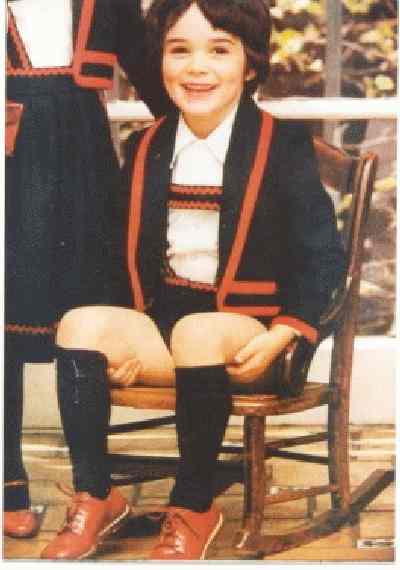
Figure 2.--A Mexican contributor to HBC provided this photograph of a folk outfit he wore when he was about 9 years old during 1966. His sister had a similar outfit.
Folk Styles
Mexican Ethnicity
Religion
Minority Groups
Activities
Current Styles
Families
Photography
Individuals
Sources
HBC

[Introduction]
[Activities]
[Biographies]
[Chronology]
[Clothing styles]
[Countries]
[Bibliographies]
[Contributions]
[FAQs]
[Glosario en Español]
[Images]
[Links]
[Registration]
[Boys' Clothing Home]
[Mexican choirs]
[Mexican Scouts]
[Mexican school uniforms]
[Mexican communions]
[Return to the Main Central American page]
[Return to the Main Latin American page]
[Return to the Main countries page]
[Belize]
[Costa Rica]
[Cuba]
[Guatemala]
[Honduras]
[Nicaraga]
[El Salvador]
[Panama]
[United States]
Created: February 25, 1999
Last updated: 5:47 AM 12/25/2021