Fashion has long been a European preserve. Men and women around the world have for generations emulated Europeans. Yet strangely enough, America has played a unique role in boys' fashions. European fashions in the 19th and early 20th centuries set the standards. This was true for both adult and children's fashions. Americans basically followed European fashions. It was in boys' clothes that America first made a fashion statement. For the first time, America in the late 19th century created a fashion that would be widely adopted in Europe. It is unclear to HBC why the first recognizeable American style emerged in boys clothing. Interestingly, that fashion was as far removed from the American spirit as one can imagine. That first fashion was the the classic Fautleroy suit which made its appearance in the mid 1880s. That style was followed by the turn of century by the Buster Brown suit. After World War I, American and European fashions diverged. Short pants were never as popular in America as in Europe. American boys more commonly wore knickers. It was after World War II, however, that American styles began to dominate childhood fashiions around the world. The smart, wealthy set in America still looked for Europe to set fashions. But American boys knew what they wanted and it wasn't Italian strap sandals and English short pants suits. It was "T" shirts and blue jeans. By the 1950s this was a virtual uniform of American boyhood. In the next decade these styles spread to Europe and eventually around the world. Even the Iron Curtain and the KGB was powerless against the relentless onslaught of American fashion. Today virtually any where you go you see baseball caps, "T" shirts, and jeans.
|
The United States domimnate most of th sothern area of North America. Mexico, Central America, and the Caribbean are geologically part of North America, but we treat these areas as part of Latin America because of the cultural afinities. While Russia is the world's largest country in terms of area. The next three countries (Canada, China, and the United States) are about the same size. Large areas of Russia and Canada are in Arctic or Subartic regions of only limited economic value, although with valuable mineral resources. China and America have more territoiry in temperate areas. All four have substantial areas of great agricultural potential. America is bordered by Canada in the north and Mexico in the south. In contrast to Europe there have rarely been wars between the three major North American countries. The only major war as independent countries was the Mexican War (1846-48). The United States is a transcontinental country as a result of what Americans describe as Manifest Destiny. The original English colonies were located along the Altantic coast and had not moved much beyond the Appalachins. This meant that North America was up for grabs with Britain, France, Russia, and Spain contending for dominance along with the United States. The Atlantic and Pacific Coasts were first connected by the Trans-Continental Railway (1869) and then the Panama Canal (1914). There are discontinuous territories, Akaska, Hawaii and other island possessions. The United States is twice the size of the European Union, but even after Brexexit has a smaller population than the more densly populated European countries. The geography is fairly straight forward. There are mountains along both coasts with narrow coastal plains--the Apppalachins in the east (Atlantic) and the Rockies in the West (Pacific). The Rockies are geological younger and thus much higher as well as still exhibiting volcanic activity. The Pacific Ring of Fire runs along the western coast. The tectonic activity involved creates a series of potentially devestating faults--the most prominent being the San Andres Fault. There is also a Southeastern coast as a result of the Gulf of Mexico, an arm of the Atlantic. The great Mississippi River drains into the Gulf at New Orleans. Most American cities were located on rivers until the advent of the railroads, rivers were the primary mode of transport. And New Orleans was the primary way for Americans to get their produce and goods to market. This is why the British attacked New Orleans in the War of 1812, it constituted a potential plug in the developing American economy. Most of the territory of the United States is located between the two coastal mountain chains drained by the Mississippi and its tributaries, including the Ohio and Tennessee Rivers in the East and the Missouri in the West. There are coastal rivers, but the United States is dominated by the Mississipi River. The primary coastal system is the Columbia of the northwest. The American-Canadian border is largely created by five Great lakes, the largest being Superior extending into the middle of North America. The central Great Plains creted by the two mountain ranges extending north into Canada. It was a vast grass lands supporting immnse herds, inclufing the buffalo om which the Native American had become dependent. It is the most productive agricultural area in the world because of both its natural atributes and technology developed by the American farmer. This area has prevented massive famine in many countries beginning with Belgium after it was invaded by Germany launching World War I (1914). The Southern Plains has to be carefully managed and scientifically cultivated to prevent the reoccurance of the Dust Bowl (1930s). While much of the country is well watered, the substantial areas of the West are arid, especially the southwest. Like Russia and Canada there are many valuable mineral resources. While the United States has a primarily East-West axis, there is also a North-South axis creating substantial climatic differences between north amd south. This has had a huge cultursal, demograpohic, economic, and historical impact on the United States, including slavery and Civil War.
The United States was founded by English colonists (17th century). This firmly planted English culture and law on America. The principles of representative government were even more instilled with the English Civil War cut off the American colonists from royal rule. America fought two wars with Britain and for a time the British underpinnings of America life were obscured. America developed differently from Europe in large measure because of the Frontier which gave virtually every individual the opportunity to own property. This resulted in a very different class structure than in Europe. The American Republic was based on a government structure established by the Constitution (1789). It and a small number of amendments have proved to be a remarkably successful structure for addressing major issues in national life. The sole exception proved to be slavery which was only resolved by a terrible Civil War (1861-65). America in the 19th century evolved from a largely agricultural to the world's most important industrial power. Bountiful natural resources, a foundation of English law, a free enterprise system, an effective public education system, and immigration combined to make America potentially the most powerful country in the world. America in the early 20th century was an exceptional country in that it was the only important Industrial power that had no military conscription and large army. England since the 16th century had played a role in maintaining the European balance of power. Britain no longer had this capability by the 20th century because of the rising power of Russia and Germany. The balance of power took on increasing importance in the 20th century because of the increasing spread of democracy and a desire for national self determination. This resulted in the appearance of many small European states without the ability to maintain their independence in the face of the massive resources which could be mobilized by Russia and Germany. The United States which had pursued an isolationist policy during the 19th century finally entered world politics. The United States prevented authoritarian Imperial Germany from dominating the Continent in World War I. Next America prevented totalitarian NAZI Germany from dominating the Continent in World war II. And then after the War prevented the totalitarian Soviet Union from dominating Western Europe. It was under the umbrella of American power that today even the smallest European state can enjoy its national identity and independence in unprecedented security. Domestically America in the 20th century gradually implemented a series of progressive and liberal reforms designed to widen the opportunity of all Americans. The Civil Rights movement finally opened up opportunities for black Americans. HBC is both a fashion and a history site. We do not believe that fashion can be viewed in avavuume. In addition, fashion offers a great deal of useful historical information. We have been expanding our background information on American history as HBC develops. This is to help put fashion changes into context as well as to assess how historical trends are reflected in fashion trends. Fashion trends and influences are also a visible reflection of interactions between countries. We also like to highlight the role that children were involved in and impacted by historical developments.
|
The ecomomy of the modern United States began its development with the European colonization of North America. This included several European countries, but was primarily conducted by the English. At the time the colonization began, neither the British political system or captalism itself had been dully developed. The first two colonies (Jamestown in Massachusetts and Plymouth in Massachusetts) served as prototypes for the two competing economic system that would develop in North and South. Plymouth was founded by religious dissenters influenced by Calvinist theology which had decided views on economic success. The Northern economy developed on the basis of small family farms and handicrafts. British legislation restricted manufacturing. The South developed on the basis of plantation agriculture and slave labor. Unlike the Spanish Empire, they produced little gold and silver, but in the long run generated far greater wealth. Only a few years after the colonies were established, living conditions for average people were higher than in the mother country. And in Britain both the modern English constitution and the capitalist system had evolved by the turn-of-the 18th century. Both were of enormous influence on America. The two differed models of economic developed survived the Revolution and became a dividing line of regional politics in the early years of the Republic. The independent farming and handicraft economy of the north laid the foundation for the industrial revolution. The invention of the cotton gin made possible the expansion of the plantation system in the South. Export earings from cotton helped finance the industrialization of the north. The eventual ecomomic direction of the United States was determined by the Civil War and settled in large measure by the superior capital and industrial resources of the Northern states. After the Civil War, the United States began a rapid period of indusrial expansion which made it the worlds largest industrial power as well as the greatest agricultural producer. The United States developed ever more complex economic and capital institutions to accomodate its industrial expansion. The system was essentially laize faire or ecomonic growth with minimal taxation and government regulation. The Government did promote economic growth in many ways such as land grants to rail road companies. With the rise of the Progressive Movement in the late-19th century, that involvement has expanded.
Fahion is intrincially linked with society and culture. The relationships are often not fully understood. This especially true in modern times, but even in histical period, these interelationships hve not been fully assessed, in part because historians have often looked on such matters as trivial. We have noted in building HBC that many foreign readers believe they have a good understanding of America, even those who have never visited America or met Americans. This is primarily American media, television and movies is almost unavoidable. Most Americans have never seen a foreign television program. Most foreigners are familiar with numerous American television programs, not to mention movies. This exposure gives many the impression that they are familiar with American culture. In fact, the American media convets many misleading impressions.
|
American boys' fashions until the 20th century basically followed European fashions. Most boys' clothing looked to Europe for inspiration. This basically meant British and to a lesser extent French fashions. The exengencies of Frontier life had an impact on American fashion. Those that could afford it, however, wanted to wear European fashions. American fashions by the late-19th century began to develop along different lines. And by this time the developing industrialeconomy meant that there were large numbers of Americans who had the where-with-all to indulge their increasing passion for fashion. And this included how they dressed their children. One of the first true American boys' fashions was the Little Lord Fauntlerou suit, but it was inspired by European styles. After World War I, American boys fashions began to develop very differently than European fashions. American boys never wore short pants to the extent thast they were worn in Europe. American boys in the eary-20th century may have worn sgort oants at avery yoing age, but than most began wearing knickers and later long pants instead of shorts. Eventually after World War II, it was American boys' fashions that began to influence fashions in Europe Europe and other areas as a kind of pan-European style developed.
|
The basic garments worn by American and European boys are fairly standard: caps, suits, jackets, sweaters, shirts, pants, hosiery, and shoes are fairly standard. The styles of these garments have of course widely varied over time and from country to country. Styles were at first basically set in Europe, such as skeleton suits, tunics, knee pants, sailor suits, and much else. American fahions began to diverge in the 1880s, although European fashions were still important. The Fauntleroy style was the first major destibctive American domestic American boys' fashion. We see Fauntleroy suits in other countries, but no where was Fauntleroy styling more popular than in America. Kilt suits were also especially popular in America. And knee pants became very popular in America during the 1890s, more popular than in Europe and worn by older boys. Knickers were not at first very common in America, but became standard boys' wear (1910s). It is at this time American and European fashions sugnificantly diverge. Knickers were worn in Europe during the 19th century, but were never as popular in Europe during the 20th century as in America. European boys began wraring short pants as a fashion standard. Shorts were never quite as common in America and had social class connotations. After World War II American casual fashions beginning with jeans became increasingly popular around the worldand not just in Europe. American blue jeans first penetrated the Iron Current years before American political and social ideas were able do so. American-styled garments are now highly influential around the world. It use to be possible to identify European children by the way they dressed. This is no longer posdible as Pan-European garments based largely on American styles are widely worm not only in Europe, but around the world.
Many American boys clothing styles originated in Europe. European fashion has always been important in America, especially among the well to do. Affluent American mothers always wanted to dress their boys like little English boys. French fashions were also important, espcially forvyoungervboys. The Little Lord Fauntleroy suit was perhaps the first uniquely Ameican style, although it was heavily influenced by European sdtyles at the time. Only in the 20th century did American boys clothing styles begin tio significantly vary from European styles. The major difference is that American boys do not seem to have liked the short pants that became so popular in Europe after theybwere adopted by Baden Powell' Scout movement. American boys for the most part objected. While shorts were worn by youngervboys anf boys from affluent families most influenced by European fashions, most American boys wore knickers or long pants. Even Scouts and Cubs in America, for the most part, did not wear short pants, but mostly knickers. After World War II, the fashion flow reversed and it was American styles that began influencing European boys. By the 1940s, few American boys wanted anything to do with European fashions. Rather it appears to be that America has influence Europe. Long pants, jeans, "T"-shirts, sport shorts, sweat shirts, baseball caps, and baggy pants are all American styles. I can't think of an important American boys fashion since the 1940s that has been imported from Europe. Not that moms didn't like the European styles--American boys didn't like them.
Our information on color in American boys is incomplete at this time. The popularity of some colors have notably changed over time, bit some baic colors includuing brown, blue, and grey seem pronounced over time--at least since the 19tyh century. Of course, information on 19th century colors are limited by the blasck sand white phpotography of the day. Fauntleroy suits were often black, but the black and white photography of the day effectively hide deep blue, burgandy, dark brown, and forrest green suits. Blue appears to have been a particularly popular color, both navy blue and other shades. There are a great range of blue shades. We know boys commonly wore dark blues, but we are less sure about light blues. Of course sailor suits were commonly navy blue. Blue suits and especially navy blue blazers beocme standard in the 20th century. We note many other colors in the 19th century. The suits sold in the late 19th and early 20th century included a lot of green and brown shades. We also note black and grey suits in the 20th century. The modern color conventions of blue for boys and pink for boys does not seem to have been firmly established at the turn of the 20th century. We do not see it universally accepted until after World War I (1914-18). Preppy fashions of the 1950s help popularize pastel shirts and khaki pants. And of course by the 1970s we see both color adverising and color photography that provide us detailed information about color and fashion.
Conventions for dressing boys have varied over time. One popular convention was to dress boys of similar age in similar or coordinated outfits. This varied from family to family. There were also many age associated clothing conventions these have varied over time as well as the populatrity of age graded clothing itself. One major such convention was dressing younger boys in skirted garments, but this convention declined after the turn of the 20th century. Another major convention was dressing boys in shortened length pants of various styles. Like breeching, obtaining one's first long pants became for many years a major milestone in a boy's life.
American boys wore generally short hair in the early 19th century. Bowl cuts were common in frontier America. Hair styles by mid century had become longer, often worn to or even over the ears. Some younger boys wore long-shoulder length hair, often done in ringlet curls but there were various styles. After the turn of the 20th century, short hair became increasingly common even with younger boys, especially after World War I. Very short hair vecame popular after World War II, especially in the 1950s. Boys wore crew cuts or buzz cuts. Destinctive national styles began to decline in importanmce with the appearance of the Beatles in the 1960s and longer hair became stylish for boys. Since the 1980s, boys hair styles in the United States and Europe have been remarably varied, although not destinctive by country. After the turn of the 20th centuiry close cropped hair has become increasingly popular both in America and Europe. HBC has not pursued U.S. hair styles in detail yet. This is primaruly because we focused on the general hair style page. Most of the images there and discussion is really about American hair styles, although we have begun to add more European information. As a result, we only have a few pages specifically about American hair styles. There is a page on 1960s hair styles and a HBC reader had provided details on his 1980s experiences. There are a few other pertinent pages and we will link them here as they come to mind.
|
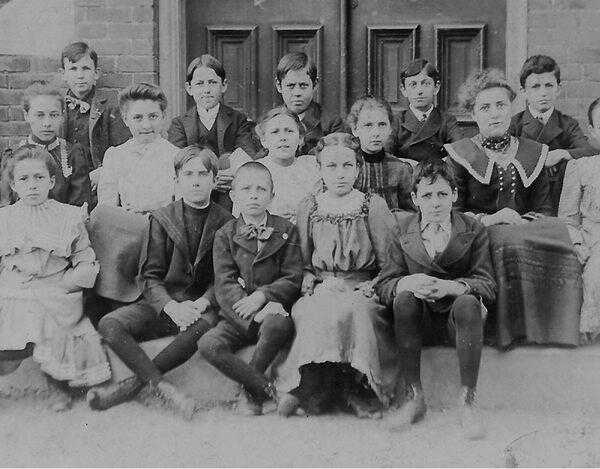
Boys have been photographed both at work and at play showing varying fashions over time. Boys have traditionally learned various crafts. Poor boys have earned money shining shoes. School and play became increasingly important in the 19th century. Images exists of boys playing games. American boys have been photographed with bicycles, marbles, group games like hide and seek, mummeldipeg, and others. Important activities include art, choir, dance, music, pets, school, Scouting, sports, and much more. Chemistry and erector sets used to be of great interest. Today of course it is the computer. Especially important activities for American boys are hunting and fishing, although this has declined somewhat as America continues to urbanize. School was an especially important childhood activity. And school portraits are an especially important source of impormation about period fashions.
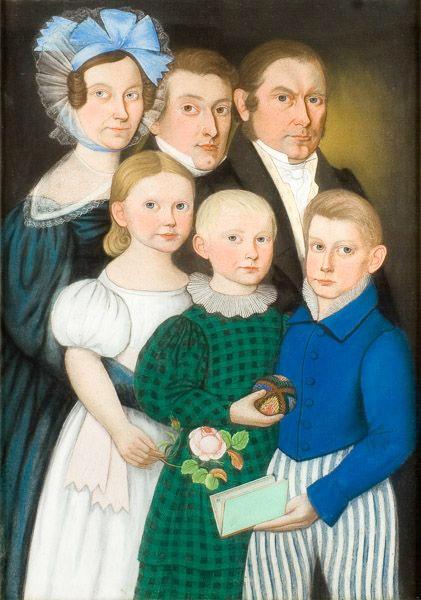
Many images exist of American families. These images are interesting because they show the fashions that all members of the family wore over time. The family portraits also add some cultural context as they provides clues as to the social status or occupation of the parents--until recently mostly the father. Most of the portraits are of the privlidged classes, but by the late 19th centuries falling prices at photographic studios had brought the family portrait within in the reach most American families. Thus family portaits provide wonderful historical records of fashion. They also offere fascinating insights into the strucure of the American family.
There are a wide range of institutions which are involved with children. The most obvious is of course schools. And America created one of the most succesful public schools in the world which help to educate no only American-born children, but to being immigrant children into the American mainstream. America did not create public education, although few countries did it as well. While American schools are similar to other countries, one destinctive school type was the military boarding school. Tragically that system today has lost much of its vitality. One institution which America help to found was the summer camp. The initial idea was to get city kids out into the fresh air and sunshine. Both the YMCA and the Boy Scouts played an important role in the summer camp movement. The American summer was an institution subsequently adopted in many other countries. We also notice different kinds of charity borganizations like orphanages. Mostvstates have done away with orphanages, but they played an important role in the 19th and early-20th century. We do not see as many health sanatoriums as in Europe. Another type of institutional facility were reformatories for youthful offenders.
American girls like girls in other countries wore dresses throughout the 19th and much of the 20th century. We do not kow a great deal about dresses at this time. We believe dress styles were largely set in Europe throughout the 19h century. We want to develop information on fashion trends over time. We also want to see how girls' dress styles compared to adult women's styles. This will be very useful in improving our ability to date old photographs, mny of which are not dated. Not only did girls wear dresses in the 19th century, but so did younger boys. Girls continued to wear dresses in the 20th century. Only after World War II do we commonly see girls wearing other garments. Here American girls led the way for a trend that would be followed in ther countries. Grdually in the 20th century it became popular for girls to wear boys' styles like shirts and jeans. In sharp contrast to the 19th century, boys' did not wear girls' styles.
American boys clothing and fashion have varied over time by age. Thus one interesting line to pursue is to look how boys dressed at every chronological age over time. Old photohrraphs do not alwaysdentify ages, but this is usually possible to assess with a fair degree of accuracy. There are wide variations over time aswell as how basic age groups were clustered together. . At some times the differences were not great except for the vary youngest. At other times the age differences were pronounced and expressed in many different ways. Some of the most important ways of differentiating ages have been breeching, pants, length, and collar and neckwear styles. We note mahot age groupings, including todlers, primary school, and then teenagers. The basic age breaks within these groups have varied over time. For many years in the mid 19th century the dufferences after breeching were not large. By the late-19th and early-20th centurty, age greading was pronounced. Most boysanted to dress k\like dad or at least older brothers. Many mothers abnd even fathers were, however, determined to pursue age greading. Some mothers with large families found both major and minor differences to differentiate each child. This of course varied from familt to family. Some parentsettled the issue by just dressing everyone in identical or similar outfits. The popularity of these various approaches varied substantially from family to family.
|
America of course has a very recent art history. Here some of the most valuable work was done by primitive or naive artists in the late 17th and early-mid 19th century before the advent of photography. These artists, while their perspective was often weak, commonly did provide very detailed reproductions of clothing in their portaits which is of emense value in assessing historical fashion trends. Of course the greatest American portratist has to be John Singer Seargent, but unfortunately he painted only a small number of children.
The early research on photography was done in Europe. Americans took to the European developments and the potential for a new industry with a vengence. Processes developed in Europe appeared in America within months. Inventors in Europe were able, with varying degress of success, able to enforce patents. American photographers paid virtually no attention to patents, atleastin the early stages of the industry. And the European invenors at forst gave more attention to European than American patent law. We note large numbers of cased dags in America from the 1840s and 50s, mostly prepared in cases. We find far fewer dags in Europe, even France where the process was developed. We are not sure just why this is. It may reflected a greater reluctance of European dealers, including France, to sell their items over the internet rather than an actual differerence in the number of portraits made. But we think there were probably far more Dags made in America. The tintype was also developed in France. Prof. Hamilton L. Smith in America developed the tintype or ferrotype process (1856). He patented the process. The albumen process used for CDVs and cabinents cards was a.so developed in Rurop and quickly adopted in America. The tintype was an almost instant process, ideal for both small-scale local and itinerant street photographers. Several inventors made important contributions. It was the Americam George Eastman that created the first user frindly camera for anateurs--the Kodak Brownie. Germany was a leader in color photography, but German industry was destroyed in World War II and Kodak energed as a world leader in photography after the War, dominating the market for may years.
There is a great deal of fashion information in literature. As it is literature and not actual history, the comments on clothing have to be taken with caution. Authors vary as to
how accurately they write about fashion and other historical cultural matters used to flesh out their plots and characters. Of course the most reliable fashion references
are those in contemprary works. There are various types of literature of interest to HBC. We note useful information in both novels and children literature. Of special interest to HBC is the large number of boy characters in American literature. Of course one helpful aspect of many books are the often fascinating literay accounts which help describe characters and cultural trends.
To fully understand modern fashion trends, it is necessary to assess the mass media. Thecmedia was used to introduce new styles. The clothes worn by the rich and famous were influential. Gradually the styles worn by movie and then TV stars or just the styles pictures on television became important. In some cases certain styles that boys wore were not depicted in the mediam in some cases out of concern over the reactions of children and teenagers--potential patrons.
America has a wide diversity of ethnic clothes. The most Well known is the clothing of native Americans. Although the native American costumes are now no widely worn daily, they are worn at the native American pow-wows and other events heald around the country. Other ethnic costumes are mostly worn for ethnic events based on the ethnic costumes of the various costumes from which emmigrants came. There are a few exceptions such as the Amish who do wear their destimctive dress for every day wear.
No assessment of America would be complete without considering the immigrants that played such an important role in the American saga. All American except for Native Americans have immigrated from other countries. Most of the early immigrants came from the British Isles. Immigrants followed from every European country. Immigrants from Germany, Ireland, Italy, Svandinavia, and Africa played key roles. Blacks brought from Africa as slaves also played an important role. Important immigration also came from China and Japan. While these immigrants played a major role in the building of modern America, we think that their influence on fashion was relatively limited. Most of the children wanted to wear American clothes and lear Englisg so that they could fit in as quickly as possible.
Geographers vary as to the how they divide the United States into regions. The most simple is the four basic compass coordinates: Northeast, southeast, southwest and northwest. This is a regional division based on gepgraphy. But much more is involved in our assessment. These states in these regions are not only geographically united, but share historical, cultural, economic, climatic, ethnic, and other characteristics. Many of these factors, except for geography and climnate, have become blurred since Wotld War II as aresult of greater mobility and mass media as well as Hispsanic migration. Texas and California as wll as the Midwest rather complicate the matter. The state has both southern nd western charateristics. And California staddles the southwest and northwest in both geography ad culture. Thus it is probably best to devise a separate grouping for the west encompasing the northwest and to cresate the Midwest as a destinct region. We thus for thre purposes of our study have accepted five basic regions. These regions are the Northeast, Southeast, Midwest, Southwest, and the West. In addition thre are some outlyers. Alaska can be considered paer of te West, but seems almost a region in itself, despite the small population. Hawaii is often grouped with the West, but might be considered under Pacific territories with American Samoa and other island possessions. And of course historically this would include the Philippine Islands during the first very eventful first half of the 20th century. There are also Caribbean possessions, including Puerto Rico and the Virgin Islands.
There is detailed demographic information on the United States because America is a relatively young country and the United Stares Constitution manadated a census be taken every 10 years (Article I, Section 2). There were several raesons for this, but one of the most imprtant was that population determinned representaion in the House of Representatives. America had a population of over 330 million people (2020). This makes the United States the third most populous country in the world, after China and India. The united States is a rare industrialized country that has a groeing population -- something like 0.8 persent annually. The population increase is priamrily due to immigration. The American population nearly quadrupled during the 20th century, increasing at about 1.3% annually from about 76 million (1900) to 281 million (2000). The population along with indidustial growth. This mean that Americaa inctreased from a small unimportant colonial outpost at its creation to the most productive Western country (late-19th country). Much of the history of the 20th century was determined by the simple fact that Britain understood and recogbized what it meant and Germany did not--despite the huge influx of German immigrants to America (19th century). America reached 200 million people (1967) and 300 million people (2006). Foreign-born immigration is responsible for about one-third of the recent population increase. The population growth in recent years has been the fastest among minorities. Today half of all Amrican children under the age of 18 years are ethnic minorities. American demographics have changes as part of its expansion west from the Atlantic seabord. This has reflcted both terraine and climate differences. There are huge variations between the land east and West of the Mississippi River. A major exception to this pattern is the tendency of population to cluster along the Western seabord, emulating the pattern along the Eastern seabord. Tecvhnology is also a factor. The development of home air conditioning after World War II has resulted in population increases in the Southwest and especially the previously sparsely populated Southwest. Economics is another major factor affecting population. America began as British agricultural colonies with laws restricting manufacturing. Industrialization began slowly in the early-19th century, but was underway by the time of the Civil War (1860s). By the turn of the 20th centutry, America was the greatest industrial power on earth. This not onkly had a huge imapact on demographics, leading to the growth of major cities and rising income levels, but would fundamentally shape modern history. Most Americans still lived in rural areas until after World War I like the father and sons here (figure 1). At about the ane time this photograph was taken, Henry Ford's Model-T was rolling off the assembly line and were beginning to change both rural and urban life. It was not until 1920 that America made the transition with a majority of the population living in urban areas. Ethnicity has been a amajor factor in American demograohics. The poppulation was largely British and British culture (including law, economics, and language) predominated as America expanded, even when large numbers of Germans and other Europeans began arriving. The primary issue involving ethnicity was a first slavery, an issue the framers of the Constitution side stepped. It was an issue that could mot be resolved by normal political processes leasing to the Civil War (1861-65). America became more diverse with the arrival of Catholics, first the Irish (1840s) and then the Italians (1870s). Jews began adding to the American ethnic stew as a result of increasing Tsarist oppression in Russian (1880s). The American population continued to be primarily European ethnicities until immigration laws were changed and illegal migration became increasingly important (1965). Ethnicity and race are a major factor in an imprtant factor in American society. The modern Democratic Party began to form after the Civil War and organizing immigrant ethnic minorities in the growing cities. Today the core issue of the Democratic Party is race with much of the Party endorsing Critical Race Theory (CRT). Since 1965 there have been a steady rise in non-European ethicities. A central role in American development has been the rise of the middle class. The United States had the kargest middle class in the world and at the time of Workd War had a middleclass copmparable to that of Europe, depending on how it is defined. The status of the middle class since the 1970s has become a major issue in Americam politics.
Social class until recently had a major impact on how American children dressed. A major factor here is that in the 19th and eveb early-20th century many children worked rather than going to school. Children from working-class families were much less likely to attend school. States varied as to child labor and compulsory school attendance laws. American had a more advanced public education ystem than much of Europe, but still many children did not attend scool or ty in school very long. This significantly affected how they were dressed. Boys who worked in mines and factories might wear overalls for work as did their fathers. Working children in cities sych as newsies and delivery boys dressed more like other children, wearing suits, often knee pants suits which was a popular style at the turn-of-the 20th century. Suits seem rather popular to us today, but were commonly worn at the time. Many boys did not have changes of clothes to wear. These often were part time jobs and many of these boys also attended school. Commonly once boys kleft schol they were more likely to wear long pants suits. There were also uniforms for boys involved with the public (telegram delivery boys or hotel bellhops). Children from more affluent families
wore clothes associated with childhood. Then between the groups of children there seems to be further class division. Wealthiest children appeared to wear more juvenile clothes, a least when young. Q complicating factor here is that in the 19th and early 20th century, wealthy people set fashion trends. When you look at catalogs such as Bella Hess, National, Sears and Wards, the children clothes appear to be very juvenile for younger ages and less juvenile and more long pants as the child reaches age 6 or so. For catalogs such as Best & Company and Franklin Simon which appears to cater to a wealthier clientele, Eton suits were available for older children as were short pants suits and there were more dresses for toddlers that stated for boys or boyish definitely to age 3 and possibly age 6. This perception matches the films when we compare wealthier children's dress to poorer children in the movies etc. After World War II there were major changes as a result of widening affluence. Children in rural areas no longer dressed differently than city boys. As the working-class entered the middle class we no longer see major differences social class differences in clothing styles. A subsequent shift was that we befin to see a fashion influence from the low-incme people in te big cities that appealed to some middle-class teenagers in the suburbs. This occurred along with a similar trend in music.
No examination of historical boys' clothing styles in America would be complete wihout an examination of slavery which was a legal institution until 1863-65. HBC has very limited information on slavery and how slave children were dressed at this time, but it is an issue we hope to persue. There are limitations here as there are few photographs of slave children until he arrival of Federal troops in southern slave states. Soe of the photogrphs that were taken are of light-complexioned children. These are course are the offpring of white masters and slave women. These children often became houuse servants are were quitely shipped north by theie fathers.
|
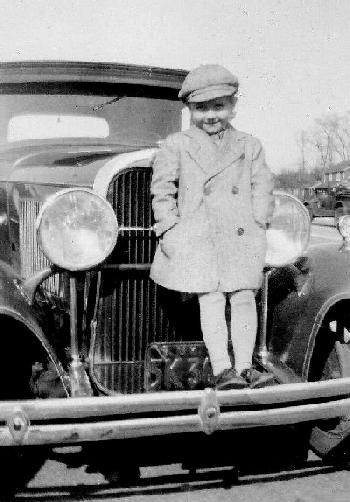
The automobile by the 1920s had become an intrical part of the merican life style. Henry Ford with the Model T had made the car an affordable item for most Americans. In the prosperous 1920s many American families purchased cars. And with many families the car was a prized possession. Countless American children were photographed by the family car. It was in the 1920s that a family vacation in their car became an American institution and motels and roadside cabins sprang up all over america. These portraits by the fimely car provide interesting time-line views of children's fashions. Until the 1960s virtually all of the cars involved were American-built cars.
American mail order catalogs help to illustrate destinctive Americam clothing styles and changes over time in those styles. The available catalogs and advertisements provide a great deal of useful information both on garment details and chronological trends. At this time we have added most of the infirmastion to the chronology secrion, but we will eventully cross index the chronological entries in the garment section.
HBC has begun to collect information on interesting sites with useful information about clothing and history and related topics. We know many of our readers have specific interests and often want to pursue them in greater depth than they are currently covered in our web site. Hopefully they will report some of their findings back to HBC. Please let us know if you find important sights that should be linked here.
The great majority of images on HBC are single shot portraits or snapshots. We have a few sectiins where we have a set of images on the same boy or family to see how fashions varied over time. What we do not have, however, is how the various garments intereacted with each other. Getting dressed is a relatively simple matter today. Earlier it was more complicated. Children might wear buttin on clothing. There were also undewaists to hold up pants and stocking supporters to hold up long stockings. Underwear also used to be different and without central heating a more important part of a child's wardrobe. We thought it might be useful to take a family of three boys abd show how they might be dressed over time. The boys are Tom (age 4), Carl (age 7) , and John (age 12). We have chosen a middle-class family living in a northeastern city under comfortable circumstances. As a historical tool we also add images of how the boys might have dressed if they were not from a middle-class family. We will show how the boys dressed at different stages from underwear to overcoats. Our intention is to show this during decades to illustrate how the process of dressing and the fashions would have changed over time. We are using HBC as a source of information for the garments illustrated. This is a joint undertaking with Album1900.
We have found some images that we cannot identify other than they are American. The images raise all kinds of interesting questions as we try to understand the individuals, situations, and garments depicted. . We can use the image to make assessments, such as chronological period or gender. These are images, however, that we have had difficulty assessing. This involves a range of image types. Sometimes we don't understand the garments involved. In other instances the chronology or age of the children is unclear. Also we have group images that we do not fully inderstand. Some of our readers enjoy detective work. We would welcome any insights that readers may be able to offer. HBC notes that the discussion of these subjects often inspired by reader comments helps to bring out useful insigjhts.
Here we have gathered details about American boys describing their clothing and boyhoos experiences. This information has come from a variety of sources. Some pages are based on available portraits with or without personal deails. Other pages are biographies of both known and unknown individuals. that American HBC readers have contributed details about their boyhood for the more recent decades. We have also added summaries of published accounts. Perhaps you have always wondered to write your autobiography. Here is your chance. You are welcome to draft an outline and add details as you see fit. All we ask is that your account include details about your boyhood clothing.
Working on pages about individual boys has highlighted changes in the popularity of mames. We did a page about
Frank Mortimer Hene. Boys tiday are nevered named Mortimer. The name may have been in decline earlier, but Edgar Bergan's Mortimer J. Snerd must have signed the death nell of the name. A British reader tells us, "There is a very interesting web site -- http://www.babysnameshub.com -- that shows the year-by-year popularity of names registered in the United States since 1880. The name 'Mortimer' appeared in small numbers up to 1911. Then there was a cluster over the next few years when in 1925 it dropped off the scale. I refer to this site quite a lot when looking up unusual names. Unfortunately there is not such a thorough database for Britain. Mortimer is a name not infrequently found in this country, but again it is very dated and most males so named are now deceased. It is sometimes difficult to identify the gender of ancestors in the 1800s. Not only may the photographic image be difficult, but names, now assumed to be girls names, such as Shirley, Grace and Florence were then considered suitable for boys."
Thank you for your interest in our site. If using any of our material, partially or in full, we ask that you always provide an active hyperlink to the pages that you have consulted.
HBC is compiling lists of sources that we have consulted or hope to consult in the process of compiling our assessment of American boys' clothing. Some of these sources are specifically about fashion and clothing. Others deal with childhood in general, but may include information about clothing as well.
Bremner, Robert. Ed. Children and Youth in America, 2 vols. (1971).
Griswold, Robert. Fatherhood in America (1993).
Kett, Joseph. Rites of Passage: Adolescence in America, 1790 to the
Present (1977).

Navigate the Boys' Historical Clothing Web Site:
[About Us]
[Return to the Main North American page]
[Return to the Main country page]
[Introduction]
[Activities]
[Biographies]
[Chronology]
[Clothing styles]
[Countries]
[Essays]
[Bibliographies]
[Contributions]
[FAQs]
[Glossaries]
[Images]
[Links]
[Registration]
[Tools]
[ Boys' Clothing Home]