|
Wales is one of the constiuent countries of the United Kingdom. HBC has not yet , however, created separated pages on Wales as we have done for Ireland and Scotland. This is primarily because we have been unable to detect any noticeable difference in Welsh boys and English boys' clothing. We have not noted any destinctive Welsh styles for contemporary boys clothing. This was because Wales was conquuered by the English in the 12th and 13th centuries and Welsh political independence largely extinguished. The imposing Norman castles encircling Wales seem a momument to the totality of the English onslaught, although the Welsh view them differently. The conquest of Ireland and Scotland was much more recent and never as thorough as the subgegation of Wales. Interestingly, the Welsh appear to have held on to their language more successfully than the Irish and Scottish, suggesting a cultural resistance to English rule. As a result, we have not noted the kinds of destinctive garments and cultural destinctiveness as is the case for Ireland and Scotland. We have found some information about Christmas in Wales. There are of course destinctive Welsh folk costumes, epecially for girls and women. An English reader writes, "Wales did not develop distinctive clothing styles. They just about held on to their language and now teach it in schools." Pitty the poor school boy that has to learn Welsh spellings.
Wales is one of the constiuent countries of the United Kingdom. HBC has not, however, created separated pages on Wales as we have done for Ireland and Scotland. This was because Wales was conquuered by the English in the 12th and 13th centuries and Welsh political independence largely extinguished. The imposing Norman castles encircling Wales are a momument to the totality of the English onslaught. A Welsh reader points out, however, "The castles are more of a testimony to Welsh resistance than anything else." Wales was the first of the constinuent parts of the United Kingdom to unite with England with the Act of Union (1536 and 43).
Wales is a small country located on the cental western portion of the islnd of Bruitain. It is only about half the size of the Nethelnds, one of Europe's smallest countries. To the east is the Englidh Midlands. Wales is a kind of stuby peninsula or projection of Britain. To the west is the Irush Sea which separates Brirain from Irelands. to the Noth and south are projections of the Irish Sea, the Dee estuary/Liverpool Bay to the north and the Bristol Channel to the south. Here two of Englnd's most important cities are located, Liverpool and Bristol. The Welsh population is today heavily concentrated in the cities of Swansea, Cardiff and Newport, the South Wales Valleys and the north-eastern corner of Wales near Liverpool. The varied coastline of Wales measures about 600 miles (970 km). Wales is made upm of ix traditional regions: the rugged central heartland, the North Wales lowlands and Isle of Anglesey county, the Cardigan coast (Ceredigion county), the southwestern lowlands, industrial South Wales, and the Welsh borderland. The rugged heartland is a major reason that Welsh was abkle to remain undependentb of Englabnd fior some time and to oreserve its cultural identity.
The earliest population of Wales as the rest of Britain appaer to have been of non-Caucasic ancesty. They were absorbed or displaced by the Celts,for centuries the dominant civilization in Europe north of Greece and Rome. The Gaelic Celts were probably the first to populate Britain. Wales and other areas of Britain were was also occupied by the Cymric and Brythonic Celts. By the time the Romans first appeared (55 BC), the Welsh tribes were a mixture of the primitive native Iberians and invading Celts and referred to themselves as Cymry.
The Romans after a protracted struggle finally subjected the Welsh during the rule of Emperor Vespasian. During three centuries, the Romans largely Romanized the Celtic period of Britain. Here the historical evidence is limited and there were likely considerable regional differences. After the withdrawl of the Romans, Britain was invaded by Anglo-Saxon tribes. Romanized Celts moved west fleeing the Anglo-Saxons. Some moved into Cornwall and even Britanity accross the Channel. Others moved north into Scotland. Still others sought refuge in the rugged Welsh mointains and gradually merged with resident Celts there. The rugged territory helped the Celts maintain their independence in several Welsh principalities, including Gwynedd, Gwent, Dyved, and Powys. It is at this time that the legends of King Arthur begin to appear and involve the resistance of the Romized Celts to the Germanic Anglo-Saxons. The question arizes as who were the true Britains. As the Saxons gradualy prevailed except in the extrenes western areas like Cornwall and Wales, they came to see themselves as the trur Britons and the Welsh as foreigners. The term Welsh is actually a name given the Welsh meaning essentially foreigners. Wales was conquuered by the English in the 12th and 13th centuries and Welsh political independence largely extinguished. The imposing Norman castles encircling Wales are a momument to the totality of the English onslaught. The conquest of Ireland and Scotland was much more recent and never as thorough as the subgegation of Wales. Interestingly, the Welsh appear to have held on to their language more successfully than the Irish and Scottish, suggesting a cultural resistance to English rule. Of course the fact that Wales was closer to England than Scotland and Ireland made the Welsh more vulnerable.
Wales is on of the constiuent parts of the United Kingdom after England and Scotland. After two centuries of guerilla warfarem, Edward I conquered Wales (1282). This was several centuries before union with Scotland. As a result, Wales became integrated into the English economy centries before Scotland (1282). The economic development of wales fell behind that of England. The peripheral location of Wales and rugged upland topography, poor transport infrastructur, and small population were all factors. [Falkus and Gillingham] Commerce was mostly active in the ports and thedrivers who drove cattle and sheep into the prosperous English Midlands. With the advent of the Indistrial Revolution (mid-18th century), Welsh mineral resources became important. This included both iron ore and coal. Iron smelting by coke (a coal product) tuned the South Wales Valleys an important industrial location. As the Indistrial Revolution developed, the demand for coal and iron/steel rsulted from the development of steam power (steamships and railways). [Falkus and Gillingham] The northern rim of the South Wales Coalfield was developed around on Merthyrwhich became Britain's most important iron-producing district (late-18th century). The southwestern area around Swansea became an important center of non-ferrous metal smelting and tinplate manufscture, in part ecause of the plentiful coal supply. Metallurgical industries required coal which at first was largely mined for this purpose. The need to power steam ngins steadily increased which became the primary demand for coal along with hime hearting (mid-19th century). Coal mining becme the primary industry of the of the South Wales Valleys. [Falkus and Gillingham] Economic cnditions caused some econmic migration to America. South Wales became the chief coal exporting region of the world (late-19th century). The region began to decline economically after World War I (1920s-30s). Welsh coal played an important role in World war II. The dependency of much of Europe on Welsh coal creted aerious problm for the Germns. THe German conquered much of Europe. They had enough coal for their own industry, but not to effectively fuel the economies of the vast area they controlled. They just could not replace the coal that the British had been supplying. After the War, the new Labour Government took ovr the iron nd coal industry. For a few years they subsidized operations, keeping money losing mines and factories open, but only by taxing other industries. This was a factor in Britain's post-War decline.
The conquest of Ireland and Scotland was much more recent and never as thorough as the subgegation of Wales. As a result, we have not noted the kinds of destinctive garments and cultural destinctiveness as is the case for Ireland and Scotland. We have not noted any destinctive Welsh styles for contemporary boys clothing. An English reader writes, "Wales did not develop distinctive clothing styles." A Welsh reader writes, "Of course Wales has its own historical tradition in clothing, and I would suggest that you first of all start your research in the National Library of Wales, Aberystwyth and then in the archives of St Fagan's museum of Welsh life in Cardiff." As a tourist visting Wales, I was unable to detectb any real differences between English and Welsh clothing, but would be interested here in any information readers may have. One Welsh reader writes, "I cannot disagree with any of the claims on clothing since it is a matter very unknown to me, and in fact, given the way pupils were forced to do things the English way I feel it's likely their clothes would have been similar." [Aaron]
We ae not sure about clothing trends in Wales during the ancient times. The clothing was probably similar to the rest of Celtic Britain, perhaps influenced by the Roman conquest. We know nothing about the early-medieval era. The Normans after Hastings began the cinquest of Wale. It was Edward I known as Longshanks who completed the conquest (1277-83). Edward defeated and annexed the Principality of Wales and the other remaining independent Welsh principalities. As far as we can tell clothing and fashion chronological treds since the conquest were essentially the same, alhough our information on the medieval era are limited. Edward is of course the same English monarch who set out to conquer Scotland, albeit with less success. Wales was a relatively poor area of Britain, thus there might have been a higher proportion of working class population and thus less affluence which affected clothing and fashion. The styles were, however, essentially the same. That was certainly what we have been able to observe in the 19th and 20th century photographic record. Unlike Scotland which was never subdued by the English, we have been able to find no evidene of national dress worn by Welsh boys. And by the post-World War II era there just was no real obseveable dfference as you moved from England to Wales.
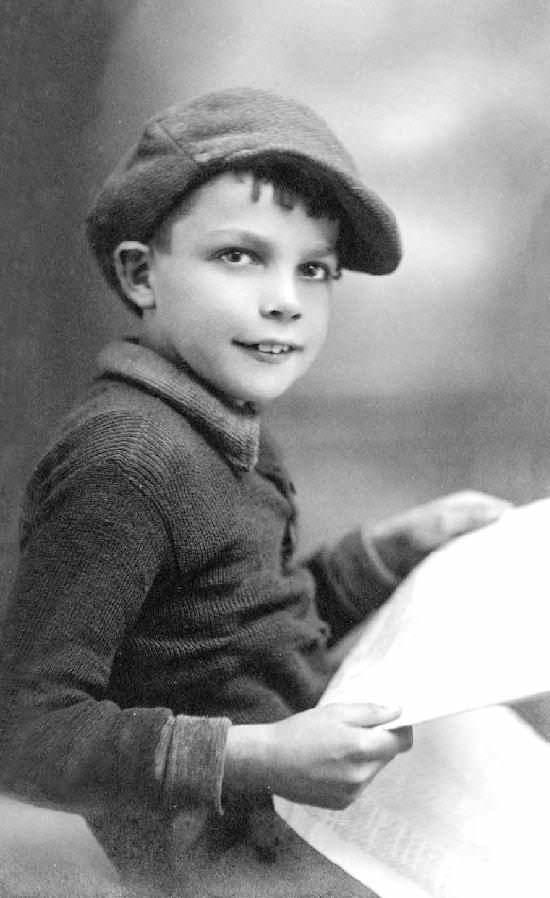
Our Welsh garment section at this time is very limited. We have no infpormation on Wales bfore the 19th century. The limited numbers of items that we have found confirm our initial assessment that Welsh boys by the 19th century commonly wore essentially the same garments as worn by English boys of comparble social class. We note women wearing folk costumes, but this does not seem very common for boys. We would be interested in any insights that our Welsh readers may be able to offer. We do not have very many Welsh images, but will add the ones we find here which show fashions virtually endestinguishable from English boys. All of the garments popular in England were also worn in Wales.
The Welsh as part of the United Kingdom celebrate the same basic holidays as in England as the rest of Britain. We do not yet have much information about specific Welsh traditions. We have found some information about Christmas in Wales. While we know little about Welsh holiday traditions, perhaos the most notable aspect of Welsh holidays is the fact that there are quite a number of seaside resports in Wales as a result of the lovely beaches. Wales is perhaps best known for King Edward I's imposing castles built during the medieval era as part of the Norman conquest of Wales (13th century), the beautiful beaches became a popular tourist destination during the Voctorian era, especially after the construction of railroads opened up access to the English middle-class and prosperous working-class families (19th century). And at about the same time that Britain began building railroads, the sailor suit thanks to the Bitish Royal family. appeared on the fashion scene. At it was the sailor suit that became the standard dress for the children at beach resorts. After World War II, many of these beach resorts began to decline, especially after cheap flights made vacations in warmer climes more affordable. Many of the Welsh and English resorts declined, but in recent years thanks to renewal efforts these resorts have been recovering.
There are of course destinctive Welsh folk costumes, epecially for girls and women. As is the case in most countries, women tend to wear folk costumes more than men. Also the general pattern is for boys to wear simply smaller versions of men's costumes. Generally speaking there are rarely destinctive garments for boys. We suspect that this is the case in Wales, but have not yet collected any information on Welsh folk costume. Welsh folk costume seems to have almost disappeared in the 19th century when efforts were made to preserve it. The most common image of Welsh "national" dress appaears to be a woman in a red cloak and tall black hat. This appears to have been based on 19th century styles. Commonly women wear a striped flannel petticoat under a flannel open-fronted bedgown, with an apron, shawl and kerchief or cap. For some unknown reason, the hats generally worn were the same as hats worn by men at the period. The tall "chimney" hat for women did not appear until the late 1840s and seems to be based on an amalgamation of men's top hats and a form of high hat worn during the Regency period (1790-1820) in rural areas. Information on men's folk costumes is much less available. A HBC reader visiting Wales writes, "I am interested in folk travel and always look out for interesting postcards on my travels. In Wales there were quite a few nice post cards with women's folk costumes, but I couldn't find comparable cards for men and boys." There does not appear to be any destictive image for men that stands out in the public mind like that for women. And we know of no destinctibe boys' folk costume. Hopefully our Welsh readers can provide some insight here.
Wales was conquered by the Normans in the 12-13th century before the developmnt of the British education system. Thus education developed in Wales along the same pattern as in England. Schooling was a luxury in the Middle Ages reserved for a privlidged few. What schooling was to be had, was conducted by the Church and until Henry VIII and the Reformation would have been conducted in Latin as was the case throughout the Christain world. After the Reformation schools began to be established in England that were secular in nature. Many of the great English public schools were established at this time and the language of instruction was English. Only a small part of the population, however, actually went to any form of school. We are unsure about the language of instruction in Welsh schools established in the 16th-18th centuries. As they would have been established in the cities where English influence was greatest, they may have been conducted in English, but we have no actual information at this time. During the 18th century, John Griffiths set up many Sunday schools in Wales to teach the Welsh how to read and write in Welsh, bringing mass literacy to Wales, something not seen in England until the late 19th century. A Welsh reader writes, "The Welsh Sunday schools in the 18th century came about after noncomformity and the chapels began to dominate Welsh life (the chapels did dominate Welsh life right up until the middle of the 20th century) with their firebrand preaching. The literacy (in Welsh, not English) in Wales led to many Welsh books being printed and many households owning their own Bibles." [Morgan] With the advent of state-financed public education, the inroads of the English language into Wales increased. As far as we know, all of the state financed schools like National Schools conducted classes in English and insisted that only English be spoken. We note in the 20th century little difference between English and Welsh schools and school uniform. We do have details on one Welsh school, Cowbridge Grammar School which dates back to 1607. A Welsh reader writes, "Since the 1950s Welsh language education (and that is education through the medium of Welsh, not just teaching the Welsh language to pupils) has become evermore popular." [Morgan]
We are just beginning to develop information on Welsh boys' activies such as choir, dance, holidays, music, outings, religion, schools, sports, and others. What we see is basically the same trends we see in England. The only activity that we see that differs somewhat from England is choral singing. We would be interested in any information on such activities that HBC readers may have. Perhaps no art form is more associated with Wales than choral singing-especial male choirs. There are a few boys' choirs as well, but they are essentially the same as English boy choirs. We have developed some information on the St. Wolo Cathedral Choir. We also have some information on traditional Welsh dancing. We have some information on holidays. The beautiful green country side, including the rugged coastline provides oportunities for family outings. School, sports, and youth groups are essentilly the same as in England. The educatin system is essentially the same. Various sports are played at schools , but the dominant youth sport is football. Scouting and Guides are the main youth groups. There is also the Boys' Brigade.
We do not yet have much information about Welsh families. Our Welsh archive is still very limited and these photograpohs are our primary source of information about Welsh families. As far as we can tell, fashion we see in these Welksh family images are the same as in England. The only exception we have noted are the clothes worn my mostly nolder women in the villages were folk styles were still worn to some extent in the late-19th century. We note an unidentified Port Barry family. They seem a substantial middle-class family. The portrait is undated, but looks like it was takern in the 1890s. There are five children from infancy to about 15 years old. The two boys wear matchuing Norfolk suits with Eton collars. The two girls wear matching dresses even though they are different ages. We also note the James family which emigrated to Australia in 1927. They seems a modest income family.
Language is a key element in national culture. After the Norman conquest in the 12th century, English gradually replaced the Welsh language, but the process was very slow. The English onslaught on Wales is far from total. While Ireland and Scotland lost their language, to all purposes, because of the English invasion, Wales retained its language against all the odds. Indeed, cultually speaking, Wales has managed to preserve its identity far more than either Ireland or Scotland. [Morgan] Historians believe that as late as the 16th Century, 95 percent of the Welsh in the principality spoke only Welsh and this proportion was nearly as high in the Borders (the area of Wales ruled by Westminster). By the 19th century Welsh was still spoken, but primarily in increasingly isolated pockets of the country. The census of 2001 revealed that roughly 20 percent of the Welsh speak Welsh, although I am not sure how well and to what extent it is actually used in everyday life. We do not know what the language of instruction was in the Middle Ages. As most early schools were in urban centers, we suspect that schools may have been taught in English even in Medieval Wales. The coming of state education in the 19th century had an especially serious impact on the welsh lanuage. The language of instruction was English and even speaking in Welsh was discouraged and children might be punished for doing so. We do note, however, that the Aberdare Grammar School which opened in 1896 offered Welsh as an elective subject.
Language policies changed in the 20th century. There is today an effort to teach Welsh in the schools. A HBC reader wrrites, "They just about held on to their language and now teach it in schools." Looking at the length of some Welsh words, pitty the poor school boy that has to learn Welsh spellings. Here a Welsh reader takes issue, "Unlike English, Welsh is a phonetic language and is therefore very easy to spell. English is generally regarded worldwide as one of the most difficult languages to spell as it is a mixture of many other languages. The irony of 'Pitty the poor school boy that has to learn Welsh spellings' is hilarious, but I feel that this might have been an accident on your behalf?!" Another Welsh reader agrees, "First the 'pity the poor schoolboy' statement shows an utter lack of knowledge about the language. The quote you added from a Welsh contributor is correct. Even though from the outside the unfamiliar letters of 'ch' 'dd' 'll' 'ff' 'ng''ph' 'rh' 'th' combined with the lack of the English letters 'j' 'k' 'q' 'x' 'z' and 'v' makes it looks complicated, this is not the case. Once you become accustomed to the new letters, and the fact that 'w' and 'y' are vowels in Welsh, it's very easy to follow. It's purely phonetic, unlike English which has devoloped over the centuries into a complicated mass of exeptions and anomalies." [Aaron] Another Welsh reader writes, "As for the Welsh language, I'll have you know that it is far from dead, and the 2001 census showed that the number of speakers had risen dramatically from 500,000 to 575,000, with nearly 800,000 people claiming to understand some Welsh. Although there has been a general decline, Welsh continues to be the main language of west and north-west Wales, and is currently seeing a huge increase in the rest of the country as Welsh language education has expanded rapily in those areas which lost the language. Welsh is a living language, spoken between friends, family, in all sections of the community still, and is therefore a very living language. In my county of Gwynedd, around 70 percent of the people can and do speak Welsh." [Morgan]
Wales does not have a major film industry that we know of. In such matters Wales has l-argely been absorbed into the larger English economy. Several films have been made about Wales. Perhaps the best known is the American film "How Green in My Valley" (1941) about the sons of a Welsh coal miner. It was based on the novel by Robert Lewellyn. A Welsh reader, however, writes, "It may surpsise you to know that Wales does have a film industry - for a country of less than 3 million people this is no mean feat - for example, the Welsh language film "Solomon a Gaenor" was nominated for an Oscar in 1999." [Fflur] Another reader mentions the film the Welsh-language film "Hedd Wyn", which was nominated for an Oscar in 1993 (or thereabouts). A Welsh reader poibts out, "For the most obvious reason (only around half a million talking the language) blockbuster Welsh films are rare! However as has been pointed out to you "Solomon and Gaenor" and "Hedd Wyn" have both been internationally acclaimed." [Aaron]
We have few individual accounts from Welsh boys at this time. We do have a biography of Anthony Hopkins. We also found information on Stanley Davies, a buggle boy with a Welsh regiment.
Aaron, Guto. E-mail message, July 17, 2003.
Falkus, M. and J. Gillingham. Eds. Historical Atlas of Britain. {London: Kingfisher, 1987).
Fflur, Mari. E-mail message, July 17, 2003.
Morgan, Jason. E-mail message, July 17, 2003.
Richards, Alan. E-mail message, August 8, 2003.

Related Chronolgy Pages in the Boys' Historical Web Site
[The 1880s]
[The 1890s]
[The 1900s]
[The 1910s]
[The 1920s]
[The 1930s]
[The 1940s]
[The 1930s]
[The 1940s]
[The 1950s]
[The 1960s]
[The 1970s]
[The 1980s]
Related Style Pages in the Boys' Historical Web Site
[Long pants suits]
[Knicker suits]
[Kneepants]
[Short pants suits]
[Socks]
[Eton suits]
[Jacket and trousers]
[Blazer]
[School sandals]
[Flat caps]
[Sailor suits]
[Pinafores]
[Long stockings]
Navigate the Boys' Historical Clothing Web Page
[Return to the Main U.K. page]
[Return to the Main country page]
[Introduction]
[Activities]
[Bibliographies]
[Biographies]
[Chronology]
[Clothing styles]
[Countries]
[Photography]
[Contributions]
[FAQs]
[Glossaries]
[Images]
[Links]
[Registration]
[Tools]
[Boys' Clothing Home]