|
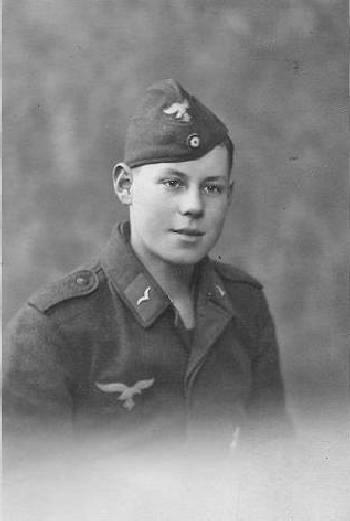
Military planners after th terrible killing fields of World War I studied how to fight the next war with technology to minimize battlefield casulaties. And here massive air fleets seemed to provide the answer. It was the Lufwaffe which dominated Europe for the first 3 years of the War. It looked for a time that the Luftwaffe would win the War for the NAZIs. It was the Royal Air Force, however, that delivered the force defeat to Hitler's military. Germany began the War with a strategic and industrial capability inferior to that of the countries Hitler planned to conquer. Part of the NAZI concept of war was to wage it with superior technology. The NAZI defeat so early in the War should have given Hitler pasuse. It did not. Air Marshall Sir Arthur "Bomber" Harris when he was appointed to lead the RAF's Bomber Command stated that the Germans began the War with the unrealistic assumption that they would bomb enememy cities, but German cities would not be bombed. The British at the time were outproducing the Germans. The Luftwaffe destroyed the Red Air Force in the first few days of Barbarossa. It dod not, however, destroy the Soviet aircraft industry. Relocated Soviet began factories begun producing improved aircraft types in huge numbers. The Allies significantly underestimated the effectiveness of Japanese aircraft and the result was the loss od wide areas of Southeast Asia and the Paciic in 1942. More than any other country the United States decided to fight the War with a massive air force. About 25 percent of American war spending was devoted to the air war. Not only was this a greater share than Germany devoted to the Luftwaffe, the industrial capacity of America was much greater than that of Germany. The British focused on bombers. The Americans produced a wide range of aircraft for its various commands as well as for its allies. It took some time for the Allies to perfect tactics and production priorities, but by 1944 the Allies unleased a torrent of destruction, first on Germany and then on Japan that was in terms of destruction was unprecedented in modern warfare.
More than any other country the United States decided to fight the War with a massive air force. President Roosevelt is known for his affinity with ships and the Navy. Less well known is hit commitment toward building a assive air force. About 25 percent of American war spending was devoted to the air war. Not only was this a greater share than Germany devoted to the Luftwaffe, the industrial capacity of America was much greater than that of Germany. The British focused on bombers. The Americans produced a wide range of aircraft for its various commands as well as for its allies. It was the most powerful air force of the 20th century. It took some time for the Allies to perfect tactics and production priorities, but by 1944 the Allies unleased a torrent of destruction, first on Germany and then on Japan that was in terms of destruction unprecedented in modern warfare.
The British Royal Air Force almost entered World War II with biplanes. The Royal Navy did--the Fairy Swordfish. The Hawker Huricane was an effective fighter, but was outclassed by the Luftwaffe ME-109. The Spitfire arrived just in time to play a decisive role in the Battle of Britain. The full significance of the Battle of Britain was not dully undrstood until later in the War. Air Marshall Sir Arthur "Bomber" Harris when he was appointed to lead the RAF's Bomber Command stated that the Germans began the War with the unrealistic assumption that they would bomb enememy cities, but German cities would not be bombed. The British at the time were outproducing the Germans. As the War progressed, much of the British aircraft production was devoted to the construction of bombers. Unable to contest land campaigns with the Wehrmacht and smarting from the Blitz, the British decided to focus on a strategic bombing campaign. The sinstrment of tht compaign would be Harris' Bomber Command. The British relied on American production for much of its fighter and virtually all of its reconisance and cargo aircraft. American aircraft factories were supplying the British from the onset of the War and this only increased after Amerca entered the War. The effectvennes of the Anglo-American alliance showed in the ultimate propeller fighter of the War--the North American P-51 Mustang. It was an Amercan air frame married with the Rolls Royce Melin engine. It was the long range fighter which destroyed the Luftwaffe in the skies over northern Europe.
The French Army complained during the Battle of France (May-June 1940) that the French Air Force did not provide cover. The French pleaded with the British to commit more RAF squadrons. Less publicised at the time is that even as the French pleaded for more FAF squadrons, there were French squadrond that were not committed to the crucial fighting in the north. After the capitulation, Army officers played a major role in the Vichy regime headed by World War hero Marshal Petain. And these officials tended to focus blame on the Air Force to save the honor of the French Army. It was a convenient way of explaining away their failure to defend the country. It was also a way to further direct the blame to the political leadership consisting of many Socialists like Leon Blum who did not build an air force of adequate strength as well as the British who did not fully commit the RAF fighter squadrons. Many World War II assessments still today tend to stress the numerical superority of the Luftwaffe. Modern historians are increasibg coming to the conclusion that the Luftwaffe did not have overwealming superority either in numbers and quality aircraft. Modern research is increasingly coming to the opinion that the Allies had the capacity to counter the Luftwaffe in the air, both in numbers and quality.Rather it was the German tatics and battle doctrine that made the difference, specifically concentrating their forces in a small area that allowed the breakout that led to the fall of France. The problem was the failure of the French General Staff to deploy the available forces effectively. Researchers point out more of the FAF than the French Air Force was deployed in the critical area of northeastern France. Just as the Germans concentrated their Panzer divisions, the Luftwaffe concentrated its forces. Neither the RAF or French Air Forces were prepapred to respond effectively. The fall of France meant that the French Air Force did not play a role in the subsequent conduct of the War. Under Vichy, the Air Ministry was abolished and the limited air forces allowed by the Germans returned to Army control. An interesting question is why the Germans did not use the French aircraft industry in their armaments program. Here we do not yet, however, have full details.
The Germans during World War I created an air arm during World War I (1914-18). The airplane was first used in any significant way in World War I. It played a useful, but marginal role. The Allies were able to outproduce the Germans, but both side made important technological strides. The German air ace the Red Baron (von Rictoff) was the most famous pilot of the War. When he was killed, Herman G�ring took over command of the the Flying Circus. The German air forces were dissolved after the War, as required by the Treaty of Versailles. Even so the German military continued to develop technology through secret arrangements with foreign countries. German companies built planes in other countries, especially the Netherlands. Glider clubs throughout Germany provided training for future pilots. The operations were expanded when the NAZIs seized control (1933). Soviets and Japanese. Adolf Hitler ordered G�ring to formally establish the Luftwaffe (February 26, 1935). The Versailles Treatu was still in force. G�ring and Hitler announced the Luftwaffe in 1935. The Lufwaffe dominated Europe for the first 3 years of the War. It was the Luftwaffe which most scared the British and French at Munich and uttimately forced the Czechs to capitulate. It looked for a time that the Luftwaffe would win the War for the NAZIs. It was the Royal Air Force, however, that delivered the first defeat to Hitler's military. Germany began the War with a strategic and industrial capability inferior to that of the countries Hitler planned to conquer. Part of the NAZI concept of war was to wage it with superior technology. The NAZI defeat in the skies over Britain so early in the War should have given Hitler pasuse. It did not.
The Meiji Restoration (1868) was largely the result of the realization that Japan would have to modernize to resist Western imperialism. As a result, one of the primary goal of the new Japanese imperial government was to build a powerful military along European lines with modern arms. Thus in the early-20th century when Western countries began assessing the military potential of the airplane, the Japanese military followed these developments. Japan at the time did not have the capability of designing and building their own aircraft. The first Japanese-owned plane was purchased by a private individual (1910).
It was similar to a plane designed and flown by the French aviator Henri Farman. The Tokugawa Balloon Factory began to build the plane on a limited basis (1911). Japan had a naval treaty with Britain abnd joined the Allied side when World War I broke out. As a result, the Japanese military acquired several advanced Allied aircraft types, including some French Nieuport fighters and Salmson 2A-2 bombers. After World War I, Japan actively followed air craft developments and acquired mostly European techhnology. They hosted military aviation delegations and sent their own military delegations abroad. Slowly Japan was able to develop their own aviation design capability. Both the Army and Navy had active programs, but there was no independent air force established. The Japanese dominated the skies over China, until the United States began supplying modern aircraft and trained pilots to China--the Flying Tigers. The Allies significantly underestimated the effectiveness of Japanese aircraft. Before the Japanese struck, it was widely thought in the West that Japan was not capable of maaking high-performance modern aircraft or that Japanese pilots were particularly skilled. The Mitsubishi Zero shocked the Americans and British. The result was the virtual destruction of the U.S. Pacific fleet at Pearl Harbor and the loss of wide areas of Southeast Asia and the Paciic in 1942. The Japanese, however, badly miscalculated their ability to compete with American industrial strength. Japanese aircraft designers were competent, but their industry had a limited capacity. The U.S. Navy ad Army Air Corps fought the first year of the Pacific War with inferior aircraft. Within less than a year of Pear Harbor, American air units were receiving new aircraft that out performed the Zero and other Japanese aircraft. New types continually rolled off American assembly lines while the Japanese continued to use the same aircraft types with which they began the War. The Japanese in the final year of the War were reduced to using suiside tactics--the Kamakazze. And their aircraft could not capable of reaching sufficent alditudes to engage the American B-29s that reduced Japanese cities to ashes.
Romania had only a small aviation industry. Advanced military aircraft had to come from the major industru\ial powers. Romania fought with the Allies during World War I and recived some territorial awards from the Central Powers (Bulgaria and Hungary). It also acquired territiry from the tge firmer Tsarist Empire whileRussia was invokved in the Civil War. In the inter-War era, Romania was allied with the Allies when Hitler seized conttol of Germany. When the British and French deserted Czechoslovkia at Munich, the Romanians realized they were on their own (1938). At the time the most advance plane in the Romanian Air Firce was the British Hawker Hurricane Mk1, but only 12 were sent before the military situation firced the British to divert all of the aircraft production to the Royal Air Force. Romania attempted to remain neutral after Hitler launched World War II. German diplomacy and right-wing groups in Romania became increasingly aggressive. The Soviet Union was the first to strike, forcing Romanian to hand over its northeastern provinces (July 1940), one of several Soviet Aggressions while a NAZI ally. While nominally allies, Hitler and Stalin differed on how to carve up Eastern Europe. For Hitler, Romania was a small, but critical ally. The Ploesti oilfields were the only important source natural petroleum available to Germany ither than the large quantities of oil the Soviet Union was supplying. Fearful of further Soviet incursions, the Romanian Government moved closer to Germany. As Germany was preparing for Barbarossa, Hitler wanted to secure the Wehrmacht's southern flank. German forcesmoved into Romania (October 1940). Romanian formally entered the Axis (November 1940). As an Axis ally, Romania provided Germany large quantities of oil and other raw materials. Germany did not pay for these raw materials, but there weretrade agreements signed. The Germans committed to supplying the Romanians with manufactured goods, especuially mikutary equipment. This included aircraft. The Germans provided ME-109s and other planes, but given the enormity of Barbarossa, a relatively small numbers. It is unclear to what extent this was do to limited Germnan production capacity as opposed to concerns anout making Romanis too strong.
The Luftwaffe destroyed the Red Air Force in the first few days of Barbarossa. . As a result the Red Air Force was not a factor during Barbarossa. The Red Army during the Barbarossa had to fight with virtually no air cover. The Luftwaffe did not, however, destroy the Soviet aircraft industry. Relocated Soviet began factories begun producing improved aircraft types in huge numbers.
Thus the situation in the air gradually changed and by 1943 the Red Air Force was again an important factor in the War. Several factors were involved here. The Soviets did have a substantial aeronautics industry and the Soviet war plants that had been moved east by 1943 had reached full production. America through Lend Lease was delivering planes to the Soviets. The Allied strategic bombing campaign forced not only forced the Luftwaffe to withdraw assetts from the Eastern Front to defend German cities. In addition the bombing disrupted German production as well as casused substantial lossess in German fighters. Many accounts of the air war do not give sufficent attention to the impact on the Luftwaffe of engaging the Allied bombers even before long-range fighter cover became available.

Navigate the CIH World War II Pages:
[Return to Main World War II aerial campaign page]
[Return to Main World War II page]
[Biographies]
[Campaigns]
[Children]
[Countries]
[Deciding factors]
[Diplomacy]
[Geo-political crisis]
[Economics]
[Home front]
[Intelligence]
[Resistance]
[Race]
[Refugees]
[Technology]
[Bibliographies]
[Contributions]
[FAQs]
[Images]
[Links]
[Registration]
[Tools]
[Return to Main World War II page]
[Return to Main war essay page]