|
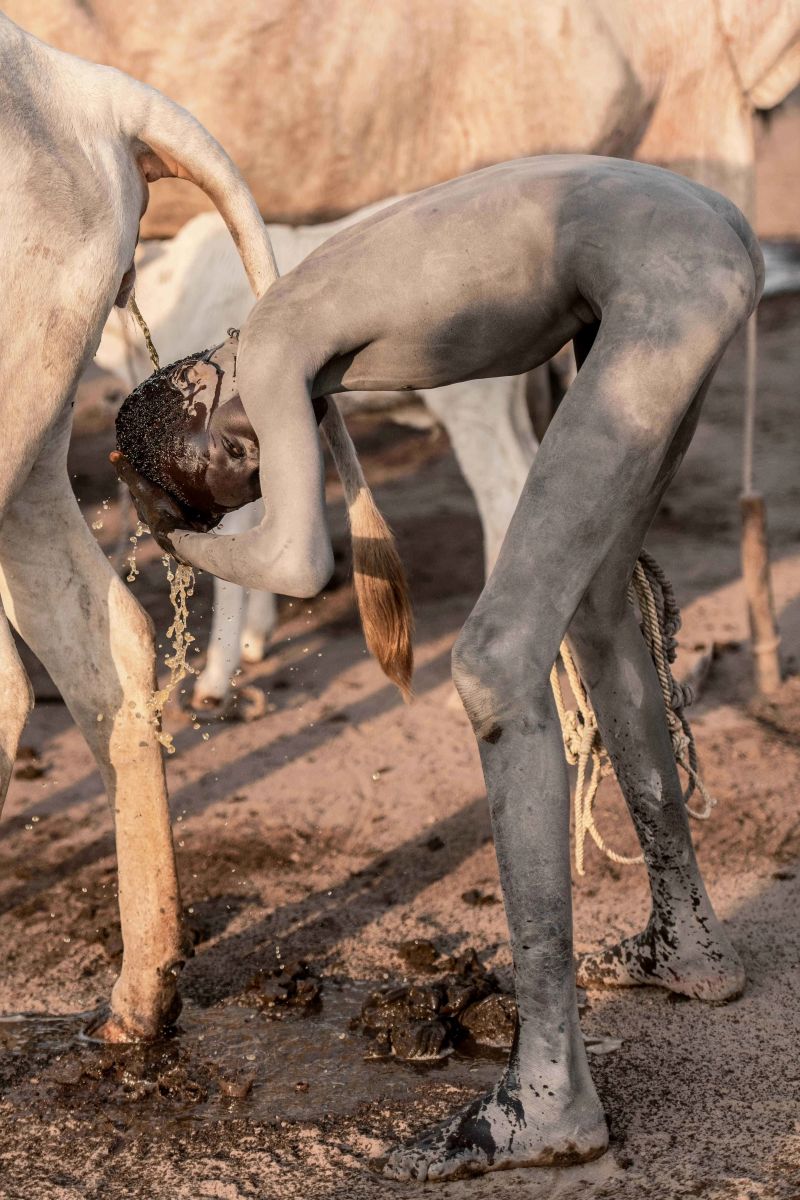
The Mundari are one of the several Nilotic groups in South Sudan and neighboring countries. The Nelotic tribes share similar languages and a culture centered on cattle raising. The population is estimated to be between 70,000 and 100,000 members. The Mundari are one of the several Nilotic groups in South Sudan and neighboring countries. The Nelotic tribes share similar languages and a culture centered on cattle. Mundari culture, like that of other Nilotic tribes, is deeply rooted on cattle. Their livestock are impressive long-horned Ankole-Watusi cattle (referred to as 'cattle of kings'). The cattle are the primary currency, status symbol, and source of wealth in Mandari society. Given the debasement of Western currencies, they may be ahead of their time. Cattle are not indigenous to Africa. None of the native hoofed African animals have been domesticated. Cattle were domesticated in Mesompotamia/Egypt (10,000-8,000 BP). This also occurred in Harappa/Indus Valley. (Notice that the Mudari cattle are more similar to Indian than Western cattle.) At this time the Sahara/Sahel was not as arid as it is today. Thus, cattle raising spread south from the Mediterranean into West Africa. And there was an easier route south—the Nile. This is why the Nelotic tribes are known for herding cattle. Although the Mundari came into contact with modern Western culture and technology in the late-20th century, the Mundari people remain deeply attached to their ancient traditions. Casual Western clothing has now become part of daily life, especially for men and older boys. But this has not been fully accepted in everyday life. Inside their cattle-camps, their traditional ancestral bond with their cattle remains profound. Many Mundari continue to prefer to go without any clothing when entering the camps, believing that clothing actually frightens their cattle. The photos here show this tight bond. It is common for children to drink milk directly from cattle udders. And it is widely believed that it is beneficial to bathe in cattle urine. Although they came into contact with modern Western culture and technology in the late-20th century, the Mundari people remain deeply attached to their ancient traditions. Casual Western clothing has now become part of daily life, especially for men and older boys. But this has not been fully accepted in everyday life. Inside their cattle-camps, their traditional ancestral bond with their cattle remains very strong. Many Mundari continue to prefer to go without any clothing when entering the camps, believing that clothing would actually frighten their cattle. The photos here show this tight bond. It is common for children to drink milk directly from the cow's udders. And it is widely believed that it is beneficial to bathe in cattle urine. The Mundari are fiercely protective of their cattle. In earlier times this meant clubs and spears. The Mundari live today in a very dangerous place. At first there was the civil war to establish independence (2011). Tragically since independence, there has been a bloody civil war within South Sudan. Tribal conflicts run deep, permeating political and economic affairs of the new nation. Over two million people have been displaced in South Sudan and tens of thousands killed. The Mundari have armed themselves with rifles. 【Page】 They do not for the most part, however, possess the heavy weapons that the major warring parties have acquired. The South Sudan tragedy is just one of many humanitarian crises in Africa and Asia. But for some reason the Legacy Media and Red-Green alliance (Marxist and Islamic groups) ignore most of them and focus on the Palestinians, involving much smaller numbers of mortalities and displaced people.
Page, Thomas. "The Mundari: The tribe dying for their cows," CNN (August 31, 2016).

Navigate the Boys' Historical Clothing Web Site:
[Introduction]
[Activities]
[Biographies]
[Chronology]
[Cloth and textiles]
[Clothing styles]
[Countries]
[Topics]
[Bibliographies]
[Contributions]
[FAQs]
[Glossaries]
[Images]
[Links]
[Registration]
[Tools]
[Boys' Clothing Home]
Navigate the Boys' Historical Clothing national pages:
[Return to the Main South Sudan country page]
[Return to the Main African country page]
[Return to the Main African page]
[Return to the Main tribal page]
[Algeria]
[Angola]
[Cape Verde]
[Congp]
[Egypt]
[Ethiopia]
[Ganon]
[Ivory Coast]
[Kenya]
[Lessothor]
[Madagascar]
[Mali]
[Somalia]
[South Africa]
[Sudan]
[Uganda]
[Zimbanwe]