|
The eastern-most tip of Italy is is located in the north -- Friuli-Venezia Giulia (the Julian March). It has two sub regions: Friuli and Venezia Giulia. It borders Austria and Slovenia and is located at the foothills of the Italian Alps along with the Adriatic coast. During the Roman era n Roman times, modern Friuli-Venezia Giulia was part of Regio X Venetia et Histria. The remains of Roman building can be seen all over the region. The town of Aquileia (founded 181 BC), It was the regional capital and prominent during the Augustan era. Separation began with the fall of Rome and the arrival of the Lombards (6th century). The society of Friuli and Venezia Giulia began to diverge. Cividale del Friuli (derived from the the Roman Forum Iulii) became the capital of the first Lombard dukedom in Italy. The Alpine Slavs (ancestors of modern Slovenes) settled the eastern areas of the region. They settled in the easternmost mountainous areas of Friuli known as the Friulian Slavia, as well as in the Karst Plateau and in the area north and south of Goria. They moved closer to Trieste (12-13 centuries). The city of Venice is not part of the Friuli-Venezia Giulia region. Venice is located in the neighboring Veneto region. While the name 'Friuli-Venezia Giulia' sounds like it includes Venice, it is actually made up of two separate historical territories: Friuli and Venezia Giulia. The 'Venezia' in this region's name refers to the historical influence of the Venetian Republic and a broader geographic name (the Julian March), rather than the specific city of Venice.
Friuli is a historical region of what is now northeast Italy. It has been described as a cultural crossroads of Italy. The region has a unique blend of Italian, Austrian, and Slavic influences. The region is marked by its separate regional and ethnic identity predominantly tied to the Friulians, who speak the Friulian language. The Friulians are part of the broader Rhaeto-Romance language family which is closely related to Ladin (South Tyrol) and Romansh (Switzerland). Friulian identity has deep roots in the ancient Celtic tribes. Friulia comprises the major part of the autonomous region Friuli-Venezia Giulia (Udine, Pordenone, and Gorizia), excluding Trieste.
Friulia is bordered on the west by the Veneto region, the border formed by the Livenza river. The northern border istset he by the crest of the Carnic Alps between Carnia and Austrian Carinthia. The eastern border is the Julian Alps which is the border with Slovenia and the Timavo river. In the south Friulia has an Adriatic coast. The adjacent Slovene parts of the Soča/Isonzo valley from Gorizia/Nova Gorica up to Triglav and the Vipava Valley, constiute the Goriška region and are parts of historic Friulia. The mountainous northern part of the region belongs to the Southern Limestone Alps.
The highest peak is the Jôf di Montasio (2,754 meters/9,035 ft). Many mall rivers flow south from the Alps through the Friuilian plain to the coast.
South of the plains lie the lagoons of Marano and Grado, which are nature reserves. Other important rivers include the Torre, Natisone, Stella, Isonzo/Soča, and Ausa.
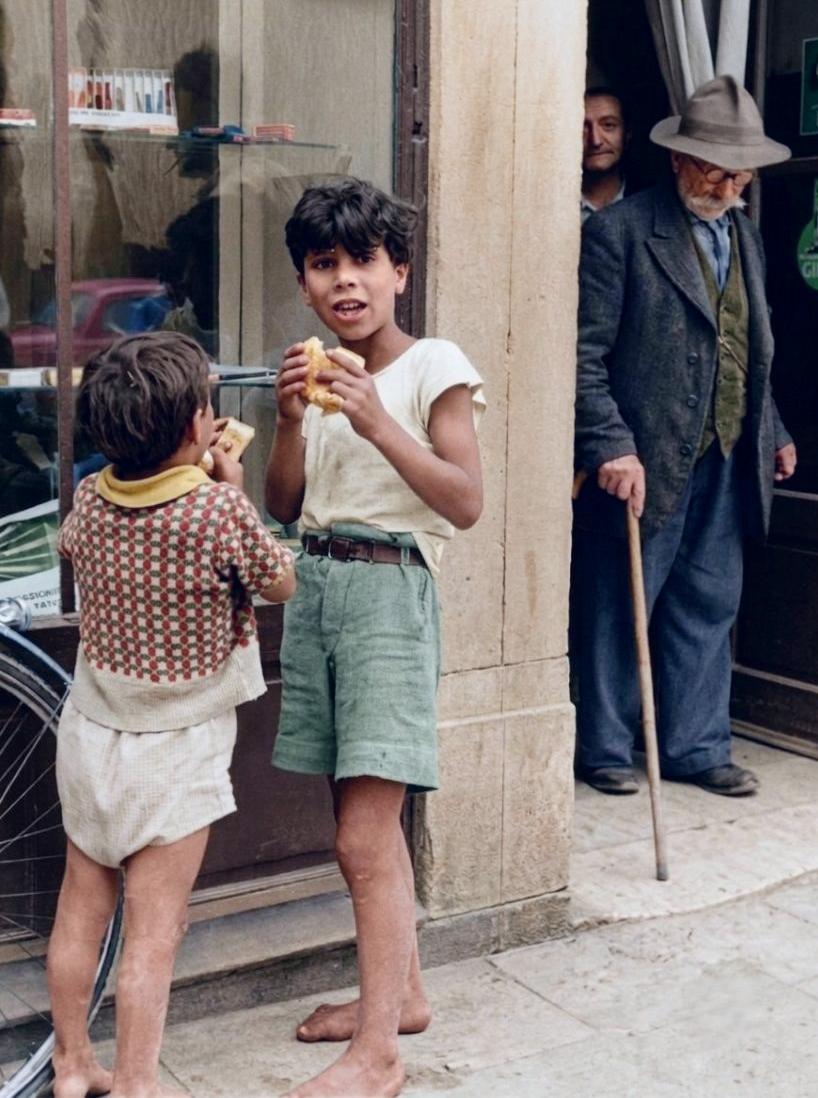
The historical capital and most important city is Udine, which was also the capital of the medieval Patria del Friuli. Other important towns are Pordenone, Gorizia/Nova Gorica, Sacile, Codroipo, Cervignano del Friuli, Cividale del Friuli, Gemona del Friuli, Monfalcone, and Tolmezzo. The modern shape of Friulia began with the Congress of Vienna (1815). They confirmed the union of Veneto, which Central-West Friuli was part of, with Lombardy (previously divided between the Austrian Empire and Venetian Republic). This constitute the Kingdom of Lombardy–Venetia, a puppet state. Eastern Friuli was not included. The District of Portogruaro was removed from the Province of the Friuli unfer Austrian pressure. It was assigned to the Province of Venice (18388) Portogruaro was for an extended period part of Friuli, even under Venetian Republic. The Friulian language was widely spoken in the area. Central Friuli (Udine) and western Friuli (Pordenone) were annexed by Italy together with Veneto after as part of the the Third Italian War of Independence with Austria (1866). This was connected with the Austro-Prussian War. Eastern Friulia (Gorizia and Gradisca) remained under Austria rule until World War I (1914-18). Friulia was a battleground with Austrians backed by the Germans fighting the Italians. Civilians suffered greatly in the fgighting, especially when the Austrians broke the front wide open at Caporetto (1917). The Allied victory on the Western Front, reversing the losses. Friulia as well as Südtirol and Trieste were assigned to Italy, basically completing the border of modern Italy. he colorized photograph shoiws two boys having a snack in Spilimbergo, a snall town in western Friuli on the Tagliamento river (figure 1).
Venezia Giulia is located at the extreme northeast of Italy bordering Austrian Slovenia and Veneto to the west, the Carnic Alps to the north, the Julian Alps to the east, and the Adriatic Sea to the south. The principal city, Trieste, had for years been part of the Austrian Empire. It had a large population of Slovenes, although Italians were in a small majority. The term Julian March is an Adriatic coastal area stretching from Trieste south along the eastern Adriatic coast inhabited by Italians, Slovenes and Croats. The area was ruled by the Austrians. The term was coined by the Italian linguist Graziadio Isaia Ascoli to prove that Austrian Littoral (Veneto, Friuli, and Trentino) shared a common Italian linguistic identity and should be part of Italy (1863). This was a case taken up by Italian irrednentists. Ascoli claims go back to the Augustan partition of Roman Italy (1st century AD). The term 'march' refers to a border area. As World War I approached, Italy was allied with Germany and Austria. The Triple Entente (the Allies) offered Austrian territories to Italy if they would joint the Allies. The secret 1915 Treaty of London promised Italy territories largely inhabited by Italians (such as Trentino) in addition to territories largely inhabited by Croats and Slovenes. This was a major factor in Italy joining the Allies in World War I (1915). In the post-War settlement, Italy got Venezia Giulia (basically Trieste), but not the Austrian territories further down the Adriatic coast which went to Yugoslavia (now Slovenia and Croatia). Italy was hugely disappointed by this. They were greatly disappointed, expecting much more. This fed into Italian dissolution with the War and the rise of Italian Fascism. Trieste became a Cold War flash point mentioned by Churchill as the southern terminus of the Iron Curtain in his famous Cold War speech. Trieste with its large Slovenian population became a bone of contention between Italy and neighboring Yugoslavia--after World War II. Trieste today serves as the capital of Friuli-Venezia Giulia, which is a separate, neighboring autonomous region to the east of Venenzia. The terrain includes mountain ranges, rolling hills, and coastal plains, with the Tagliamento River coursing through the central highlands. The region’s includes Alpine peaks (the Jôf di Montasio --2,754 m) and karst plateaus near Trieste, featuring dramatic sinkholes and caves.

Navigate the Boys' Historical Clothing Italian pages:
[Return to the Main northern Italy page]
[Return to the Main Italian regional page]
[Return to the Main Itlalian page]
[Italian school uniforms]
[Italian youth groups]
[Italian choirs]
[Italian movies]
[Italian royalty]
Navigate the Boys' Historical Clothing Web Site:
[Introduction]
[Activities]
[Biographies]
[Chronology]
[Clothing styles]
[Countries]
[Bibliographies]
[Contributions]
[FAQs]
[Glossaries]
[Images]
[Links]
[Registration]
[Tools]
[Boys' Clothing Home]