
South African Religions: Wedding Traditions
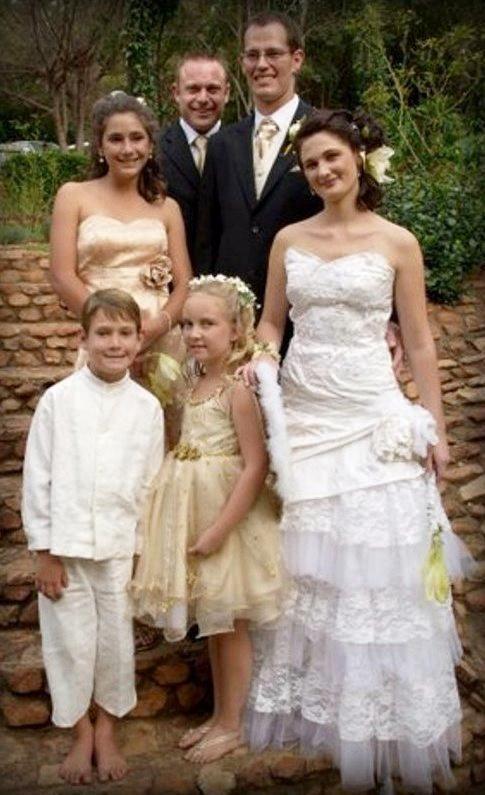
Figure 1.--Here we see a modern Europwan style wedding in Pretoria during the 2000s.
A reader writes, "It is interesting that at such a formal occasion for an apparently affluent family, that the boy is barefoot. Looking at his feet, I notice quite a space between his big toes and the second toes. It makes me wonder whether the boy usually wore sandals with a strap between these toes." It is interesting. I think going barefoot in South Africa is very common. I have seen formal outdoor weddings in America where the children go barefoot. A reader writes, "About South African children, it seems to me that they go barefoot more than
they wear flip-flops."
|
|
Weddings in South Africa like the various people which make up the country are highly diverse. They reflect the various cultural traditions, including the many African tribes, European (primarily Dutch and English), and Asian (mostly Indian). The wedding ceremonies to a a large degree reflect the different religious traditions of these many people. There are of course secular weddings, but usually ceremonial weddings have a religious component. To a large extent, the African peoples have accepted Christianity and their weddings are thus an interesting mix of traditional African and Chridtian belefs. The South Africans of European origins mostly dollow Dutch and English ceremonies. Weddings often begin with the bridal procession into the church. The actual cremony begins with a dedication prayer. Then the actual ceremony begins. The centrepiece of the wedding is the exchange of vows. Then a unity candle will be lit. The couple will then be pronounced man and wife, and blessed by the officicating clergy man. Many have added the twelve symbols of life important in African culture to the tradoitional Christian creemony as well as African traditional religions and Muslim weddings. These twelve symbols are wine, wheat, pepper, salt, bitter herbs, water, a pot and spoon, a broom, honey, a spear, a shield, and a copy of Holy Scriptures. This is usually the Bible, but Muslims (mostly of Indian origins) will use the Koran. A wedding is not just a union of two solitary individuals, but actually two families. Each of the 12 sybols stand for an aspect of the love and strength which unites families being joined together. A wedding feast follows the ceremony and is known by the traditional African name Karamu. An aspect of many traditional African weddings is that the bride's and groom's parents carry a flame from their hearths to the home of the newly maried couple and a fire is kindled there.
Chronology
Ethnicity
Weddings in South Africa like the various people which make up the country are highly diverse. They reflect the various cultural traditions, including the many African tribes, European (primarily Dutch and English), and Asian (mostly Indian). There are strong associations between the various ethnic groups and specific religious traditions.
The wedding ceremonies to a a large degree reflect the various religious traditions of the many different people which make up South Africa. There are of course secular weddings, but usually ceremonial weddings have a religious component. To a large extent, the African peoples have accepted Christianity and their weddings are thus an interesting mix of traditional African and Chridtian belefs. Most of our information is about ethnically European South Africans. We hope ethnically African South Africans will eventually send us information about their wedding traditions. The South Africans of European origins mostly follow Dutch and English ceremonies. Weddings often begin with the bridal procession into the church. The actual cremony begins with a dedication prayer. Then the actual ceremony begins. The centrepiece of the wedding is the exchange of vows. Then a unity candle will be lit. The couple will then be pronounced man and wife, and blessed by the officicating clergy man. Many have added the twelve symbols of life important in African culture to the tradoitional Christian creemony as well as African traditional religions and Muslim weddings. These twelve symbols are wine, wheat, pepper, salt, bitter herbs, water, a pot and spoon, a broom, honey, a spear, a shield, and a copy of Holy Scriptures. This is usually the Bible, but Muslims (mostly of Indian origins) will use the Koran. A wedding is not just a union of two solitary individuals, but actually two families. Each of the 12 sybols stand for an aspect of the love and strength which unites families being joined together. A wedding feast follows the ceremony and is known by the traditional African name Karamu. An aspect of many traditional African weddings is that the bride's and groom's parents carry a flame from their hearths to the home of the newly maried couple and a fire is kindled there.
Wedding Outfits
HBC

Navigate the Boys' Historical Clothing South African pages:
[Return to the Main South African reigion page]
[Return to the Main South African page]
[S.A. children's lierature]
[S.A. choirs]
[S.A. school uniforms]
[S.A. youth groups]
Navigate the Boys' Historical Clothing Web Site:
[Return to the Main wedding country page]
[Introduction]
[Activities]
[Biographies]
[Chronology]
[Clothing styles]
[Countries]
[Bibliographies]
[Contributions]
[FAQs]
[Glossaries]
[Images]
[Links]
[Registration]
[Tools]
[Boys' Clothing Home]
Created: 12:17 AM 5/2/2010
Last updated: 6:24 PM 2/14/2011