|
American boys in the early-19th century began wearing long pants. Boys and men in the 18thcentury wore knee breeches. Thisbegan to change at the turn of the century. Ar first tche change was in boys wear. This began with skeletoin suita the turn of the 19th century. This was an outfit with short jsckets and long pants. The skeleton was the first decicated outfit for children--in this case boys. A good example is an unidentified boy wearing a bright red skeleton sduit in a painting by James Ward (1797). We begin to see boys wearing a mix of pants in the 1860s. After boys wore long pnts for half a century. We begin to see shortened-length pants appearsing, esecially after mid-centuty (1860s). Fashionble trends were still imprted from Europe. We also see boys wearing a variety of suits. Most boys wore long pants, but we see some boys begining to wearing shortened-length pants. This was the case among fashionable families in the big cities. Based on the pgotographic record, the most common type of shortened-length pants were straight-leg knee pants. We do see some bloomer knockers in the 1860s. They were mot as common as long pants and knee pants. Unfortuntely most of the images we have found are undated. We can generallu assess the decade, but we can not differentiaste CCVs taken durng the lare-1960s and 70s. We begin to see caninent cards in the mid-1960sm but CDVs were still very common until weell into the 1870s. After the mid-1870s bloomer knickers became less common and we see more younger boys wearing knee pants. By the 1870s we begin to see many more knee pants than blooner knicers, although long pants were still standard for older boys. Notavly bloomer knickers much more common in Europe. Knee pabts were becoming standard for Ameriocan boys in the 1880s. All Fasunteleroy suits weere done wityh knee pants. We rarely see bloomer knickers. Teenagers still generally wore long pants. By the late-19th century we see destinctive Anerican trends.
American boys in the early-19th century began wearing long pants. Boys and men in the 18thcentury wore knee breeches. This began to change at the turn of the century. Ar first tche change was in boys wear. This began with skeletoin suita the turn of the 19th century. This was an outfit with short jackets and long pants. The skeleton was the first dedicated outfit for children--in this case boys. A good example is an unidentified boy wearing a bright red skeleton sduit in a painting by James Ward (1797). The firsr skeleton suits had knee nreeches, but by the 19thcentury they were mostlybdone with long pamsys. Men at tge time still wore knee nreches and mostly contimnued wearing knee breches until gradualy begam adopting long pants as wll (1810s). Boys continued wsearing skelton suits into the 1820s. , but while the skeleton suits began going out of style, bys contiuedcwearing other long pants outfits.
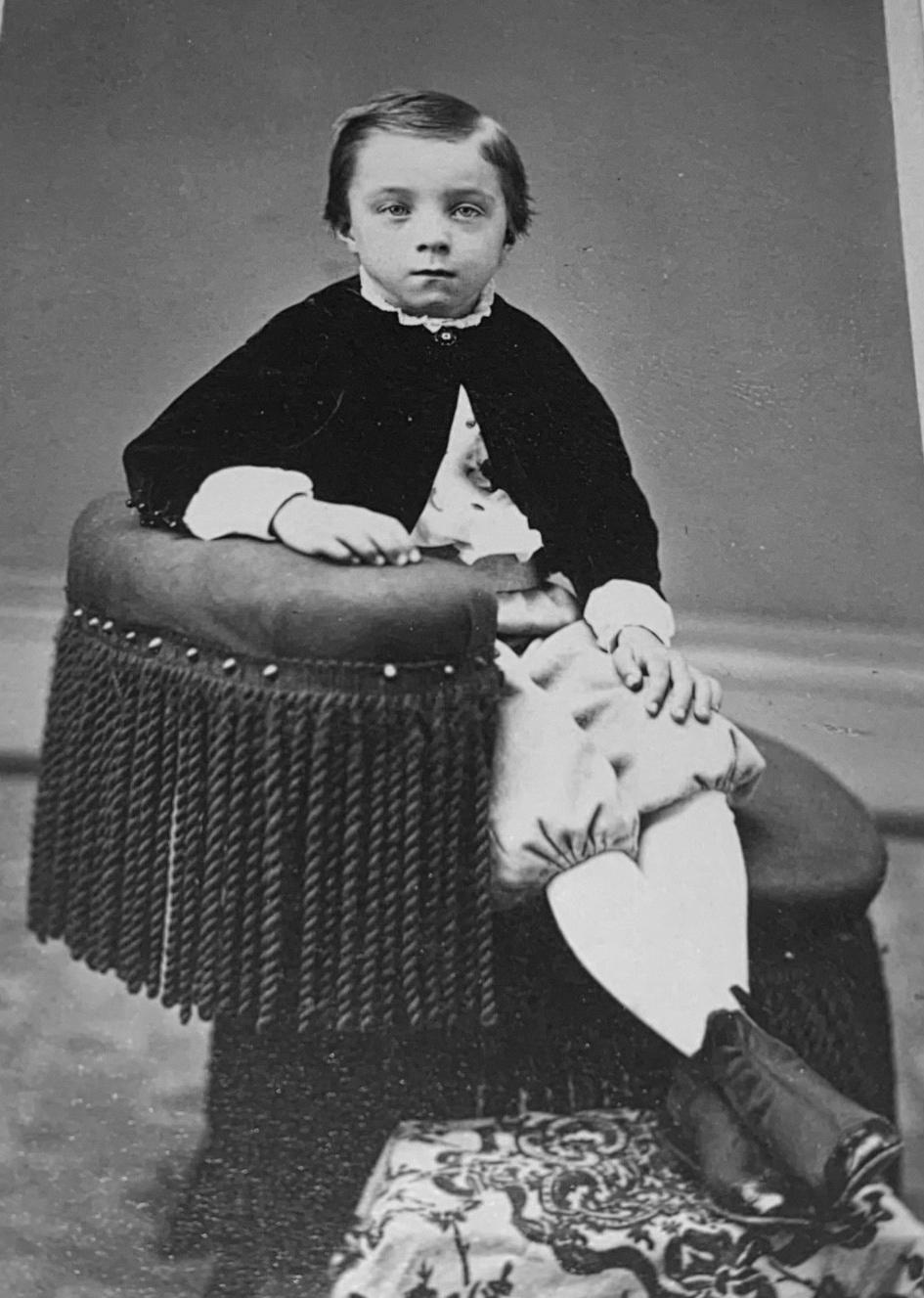
We begin to see boys wearing a mix of pants in the 1860s. After boys wore long pnts for half a century. We begin to see shortened-length pants appearsing, esecially after mid-centuty (1860s). Fashionble trends were still imprted from Europe. We also see boys wearing a variety of suits. Most boys wore long pants, but we see some boys begining to wearing shortened-length pants. This was the case among fashionable families in the big cities. Based on the pgotographic record, the most common type of shortened-length pants were straight-leg knee pants. We do see some bloomer knockers in the 1860s. They were mot as common as long pants and knee pants. The image here looks likethe late-1860s, but we cannnot be sure (figure 1).
Unfortuntely most of the images we have found are undated. We can generallu assess the decade, but we can not differentiaste CCVs taken durng the lare-1960s and 70s. We begin to see caninent cards in the mid-1960sm but CDVs were still very common until weell into the 1870s. After the mid-1870s bloomer knickers became less common and we see more younger boys wearing knee pants. By the 1870s we begin to see many more knee pants than blooner knicers, although long pants were still standard for older boys. Notably bloomer knickers were much more common in Europe.
Knee pabts were becoming standard for Ameriocan boys in the 1880s. All Fasunteleroy suits weere done wityh knee pants. We rarely see bloomer knickers. Teenagers still generally wore long pants.
By the late-19th century we see destinctive Anerican trends.

Navigate the Boys' Historical Clothing Web Site:
[Return to the Main U.S. bloomer knicker cvhronology page]
[Return to the Main U.S. bloomer knicker page]
[Return to the Main U.S. pants type page]
[Introduction]
[Activities]
[Biographies]
[Chronology]
[Clothing styles]
[Countries]
[Essays]
[Theatricals]
[Bibliographies]
[Contributions]
[FAQs]
[Glossaries]
[Images]
[Links]
[Registration]
[Tools]
[ Boys' Clothing Home]