|
Japanese casualties until the final year of the War were almost entirely military. Some authors contend that that World War II began with Japanese seizure of Chinese Manchuria (1931). There were casualties in China beginning with the seizure of Manchuria, but no very many. Chang and the Nationalists decided not to contest Manchuria militarily.
The Japanese seized Manchuria, but there was only limited fighting and minimal casualties (1931). Chang and the Nationalists declined to contest the aggression.
Really large casualties began with the invasion of China (1937). A major Japanese slogan during World War II was 'One hundred million hearts beating as one'. The War for the Japanese began with the invasion of China (July 1937). Japanese losses compared to those of the Chinese were low, but not inconsequential given the war unlike what was anticipated continued for nearly 5 years before Pearl Harbor. It was in China that the bulk of the Japanese Army would be deployed and really substantial casualties would begin to be sustained. This was because the fighting was conducted in China and the Pacific Islands far from the Home Islands. Civilians had to make sacrifices. Rationing was instituted as a result of the campaign in China (1938). But there were no significant civilian casualties until the Americans began bombing Japan's industrial cities.
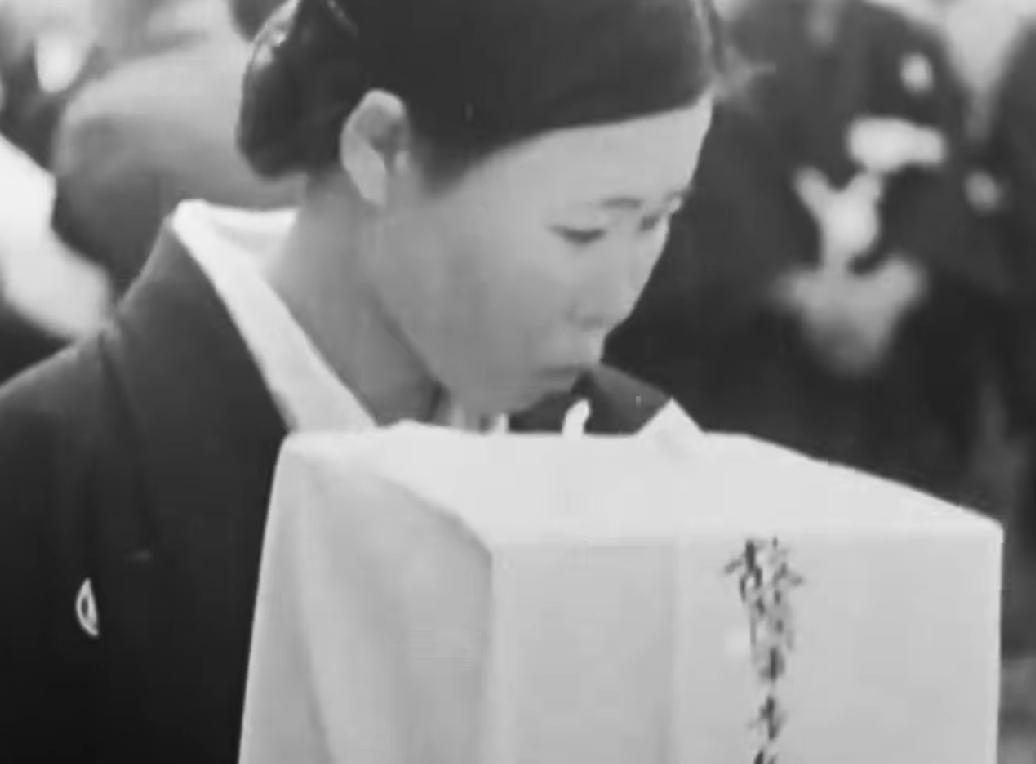
The Japanese carrier attack on Pearl Harbor brought America into the War (December 1941). Unlike in China, in the Pacific Japanese casualties could be massive, much larger than Allied casualties. Only it was in China where the bulk of the Japanese Army was posted. The remains of a fallen Japanese soldier were supposed to be returned to his family in a white-shrouded box (shiroki no hako) with his ashes -- the spirit of the war dead (eirei). In reality the dead were cremated en masse on the battlefield and ashes scooped at random into the boxes. This was justified as the soldier remaining united with his fallen comrades. The soldier’s identity tag or a final letter written by him may have been included in the boxes as relics of the fallen, but in the chaos of war this often did not occur. In China it may have been possible as the Japanese Army was on the offensive and the bodies of the dead could be recovered. This continued to be the case in the first months of the Pacific War, but the situation changed dramatically after decisive naval battle at Midway (June 1942). In contrast to the fighting in China, Japanese casualties were very high. In some campaigns the ratio was 10 Japanese soldiers for every 1 American. The number of soldiers involved in the these campaigns were relatively small compared to the campaign in China. Only on the Philippines and Okinawa were major forces involved. There were also major casualties in Burma and the Indian border. In all these cases there was no way to return the white boxes with the ashes of the fallen. The greatest military casualties came at the end of the War with the Soviet invasion of Manchuria. Most of these men would die in Soviet prison camps. Few would ever return to Japan.
The Japanese launched the Second Sino-Japanese War by invading China proper (1937). Here the nationalist fought and there were casualties on both sides. After heavy combat and the lost of the best Nationalist units, the nationalist began to withdraw into the interior. Fighting continued, but at a lower level. Casualties declined, but continued. More important for the Japanese was the strain on the economy. After 4 years of fighting the casualties mounted, although only a fraction of Nationalist casualties let alone the enormous civilian casualties in China. Japanese civilians were affected by the economic strain and family losses. But as the Chinese had no appreciable navy and air forces there were no loss of life on the Home Islands. The Japanese attack on the American Fleet at Pearl Harbor, as strange as it may sound. was intended to finally end the fighting in China (December 1941). Of course it did not. Casualties at first were limited as the Japanese swept over the Pacific and Southeast Asia, this began to change after Midway (June 1942). The loss of carriers at Midway and declining control of ocean area meant the the Imperial Navy could no longer provide Japanese soldiers the support they needed. And casualties began to mount, especially after high performance aircraft and new ships began to pour out of American factories and shipyards. The losses sustained only added to the steady stream of losses from China. Even so the level of losses should not be overestimated. Japanese garrisons might fight to the death on a Pacific island, but there were only so many men that could be crammed on to a Pacific island, even defeat in Burma did not involve massive losses. There were substantial losses in the Philippines and Okinawa, but not crippling losses.
Japanese casualties until the final year of the War were almost entirely military. Some authors contend that that World War II began with Japanese seizure of Chinese Manchuria (1931). There were casualties in China beginning with the seizure of Manchuria, but no very many. Chang and the Nationalists decided not to contest Manchuria militarily.
The Japanese seized Manchuria, but there was only limited fighting and minimal casualties (1931). Chang and the Nationalists declined to contest the aggression.
Really large casualties began with the invasion of China (1937). A major Japanese slogan during World War II was 'One hundred million hearts beating as one'. The War for the Japanese began with the invasion of China (July 1937). Japanese losses compared to those of the Chinese were low, but not inconsequential given the war unlike what was anticipated continued for nearly 5 years before Pearl Harbor. It was in China that the bulk of the Japanese Army would be deployed and really substantial casualties would begin to be sustained. This was because the fighting was conducted in China and the Pacific Islands far from the Home Islands. Civilians had to make sacrifices. Rationing was instituted as a result of the campaign in China (1938). But there were no significant civilian casualties until the Americans began bombing Japan's industrial cities.
The Japanese carrier attack on Pearl Harbor brought America into the War (December 1941). Unlike in China, in the Pacific Japanese casualties could be massive, much larger than Allied casualties. Only it was in China where the bulk of the Japanese Army was posted.
The remains of a fallen Japanese soldier were supposed to be returned to his family in a white-shrouded box (shiroki no hako) with his ashes -- the spirit of the war dead (eirei). In reality the dead were cremated en masse on the battlefield and ashes scooped at random into the boxes. This was justified as the soldier remaining united with his fallen comrades. The soldier’s identity tag or a final letter written by him may have been included in the boxes as relics of the fallen, but in the chaos of war this often did not occur. In China it may have been possible as the Japanese Army was on the offensive and the bodies of the dead could be recovered. This continued to be the case in the first months of the Pacific War, but the situation changed dramatically after decisive naval battle at Midway (June 1942) and bttle for Guasalcanal (August 1942-January 1943).
The Japanese launched the Second Sino-Japanese War by invading China proper (1937). Controlling China was wht Japan wanted and where most of the Japanese Aemy was fought. Theattack on Perl Harbor was necessary because the Americans were semanding hat the Japoabese wihdraw from CVhina. The Japanese inflicted huge casualties on he Chinese both military and civilian. There were losses were lighter, but in ducvh alarge campaihn and over neearly a decade were substabtialm (1937-45), noy to mention the Soviet intervention in Manchuria (August 1945). Here the Nationalist fought and there were casualties on both sides. After heavy combat and the lost of the best Nationalist units, the nationalist began to withdraw into the interior. Fighting continued, but at a lower level. Casualties declined, but continued. More important for the Japanese was the strain on the economy. After 4 years of fighting the casualties mounted, although only a fraction of Nationalist casualties let alone the enormous civilian casualties in China. Japanese civilians were affected by the economic strain and family losses. But as the Chinese had no appreciable navy and air forces there were no loss of life on the Home Islands. The major campaign Japan fought was in China.
In contrast to the fighting in China, Japanese casualties rates in the Pacific War were very high, alhough fewer men were posted there. In some campaigns the ratio was 10 Japanese soldiers for every 1 American. The number of soldiers involved in the these campaigns were relatively small compared to the campaign in China. Only on the Philippines and Okinawa were major forces involved. There were also major casualties in Burma and the Indian border. In all these cases there was no way to return the white boxes with the ashes of the fallen. The greatest military casualties came at the end of the War with the Soviet invasion of Manchuria. Most of these men would die in Soviet prison camps. Few would ever return to Japan. Casualties at first were limited as the Japanese swept over the Pacific and Southeast Asia, this began to change after Midway (June 1942). The loss of carriers at Midway and declining control of ocean area meant the the Imperial Navy could no longer provide Japanese soldiers the support they needed. And casualties began to mount, especially after high performance aircraft and new ships began to pour out of American factories and shipyards. The losses sustained only added to the steady stream of losses from China. Even so the level of losses should not be overestimated. Japanese garrisons might fight to the death on a Pacific island, but there were only so many men that could be crammed on to a Pacific island, even defeat in Burma did not involve massive losses. There were substantial losses in the Philippines and Okinawa, but not crippling losses.
In ny war, the military forces experience bith combat and non-cvombat losses. In earloer wars, non-combast losses connonly eceeded combat losses. This was notmally not the case in the 20th centyury as wars were commonly btter orgabized and medical servicesand supply chains more organized. This was not the case for Jaoan. One Jaoanese historian estimates tht ofsome 2.3 Japanese military deaths begining with invasion of China (1937) about 1.4 million were caused by starvation and disease (over 60 percent) rather than combat. 【Fujiwara】 In contrast of the 0.4 million American military deaths only about 0.1 million (28 pervent) were non combat. (The 28 percent fifure is based on the non-rounded data.) 【Gitre】 The Americanfigure is more data driven than tghe Japanese figure.) There are several reasons for this discrepany. First the Japanese medical system was not a prioritized as the American. Bady injured soldiers in the Paciufic War were expected to kill themselves. (Weare less sure about the ituarionnin China.) Especially in the Pacific, many Japanese garrisons wre cut off. The Japanese merchant marine was inasequate to begin with. And as the War began to go against Japan, it became impossibke ro supply all the distantgarrisons. Some were able to grow food. Many were not..
Fujiwara, Akira.
Gitre, Ed. Project Director, The American Soldier in World War II Project (2015-18).
Navigate the CIH World War II Section:
CIH -- WW II

[Return to Main Japanese World War II casualty page]
[Return to Main Japanese World War II page]
[Return to Main World War II country page]
[Return to Main World War II Pacific campaign page]
[About Us]
[Biographies]
[Campaigns]
[Children]
[Countries]
[Deciding factors]
[Diplomacy]
[Geo-political crisis]
[Economics]
[Home front]
[Intelligence]
[POWs]
[Resistance]
[Race]
[Refugees]
[Technology]
[Bibliographies]
[Contributions]
[FAQs]
[Images]
[Links]
[Registration]
[Tools]
[Return to Main World War II page]
[Return to Main war essay page]
Created: 5:04 PM 11/12/2023
Last updated: 1:48 AM 10/6/2026