|
Sørøya is Norway's fourth largest island and located in far north Finnmark county. The terrain is very rough, rocky and mountainous. A guerrilla group began operating on the island during the German occupation (especially late-1944). Sørøya was strategically located, in the far nortth wear the important Allied Arctic Convoys turned east into the Arctic Ocean to reach the Soviet ports of Archangel and Murmansk. There were no important German fortification or air fields. We are not sure about radar sites, but there must have least been weather reporting sites. Fighting on Sørøya intensified during the final months of the War. Sørøya, Norway’s fourth-largest island in Finnmark, became strategically significant during World War II because it was a remote stronghold in the far north that Hitler wanted to cling on to not want to lose final possession of Arctic territory. It is interesting that Hitler even bothered with Sørøya. You might have thought that in the final months he would have had more pressing problems. Hitler ordered the evacuation of northern Norway, (Autumn 1944). Norwegian civilians fled to Sørøya. Some 1,000–1,500 people took refuge on lightly populated
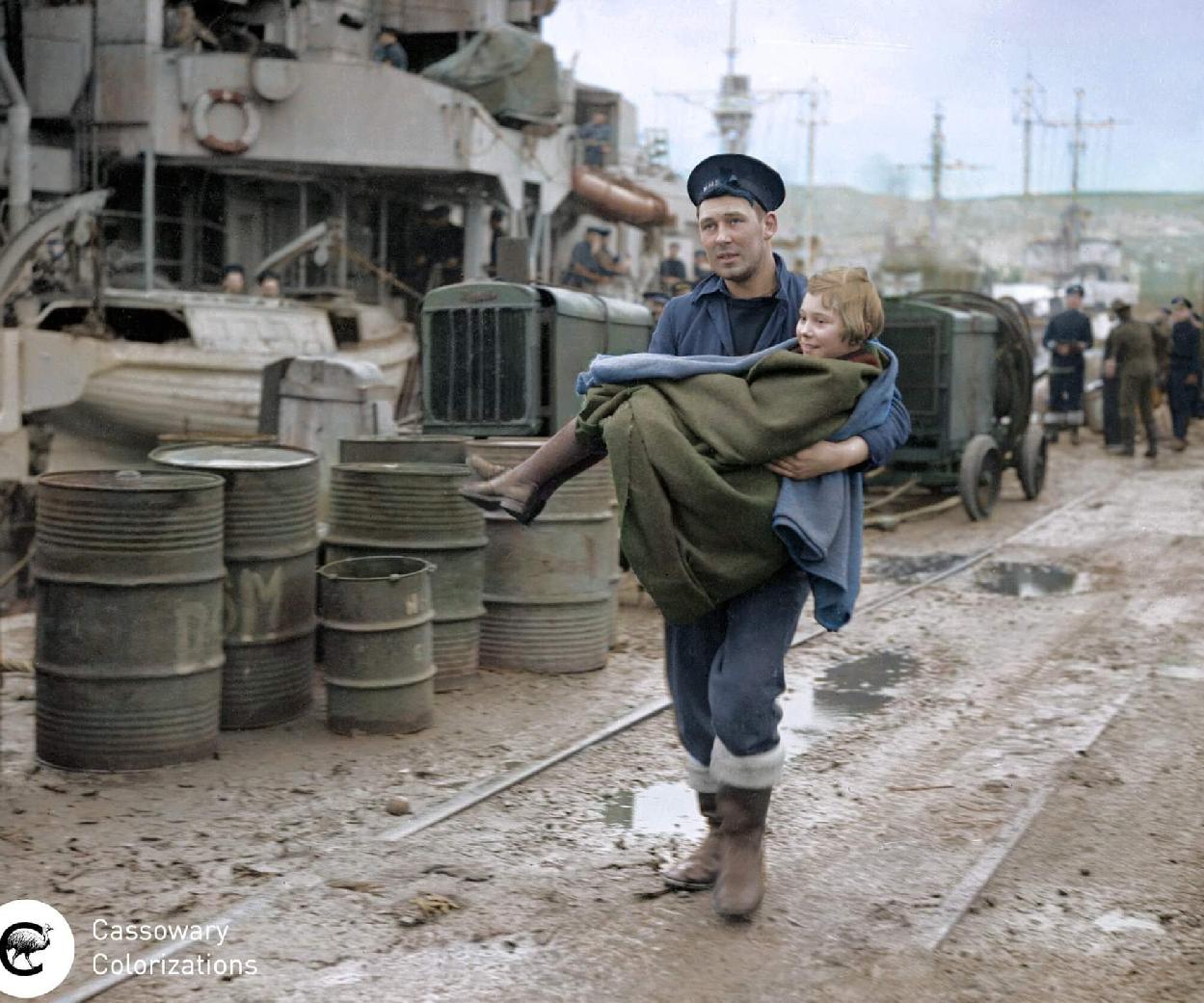
Sørøya. They hid in remote locations like the Nordsandfjordhula Cave. Thre was a Norwegian guerrilla group active on the island. They conducted small-scale attacks and sabotage actions against the lightly armed German forces on the island. Sørøya’s remoteness and rugged terrain made ideal for resistance operations and to hide from ghe Germans. Thevisland ushuge and tghe Germans had ononmly a small garrison Finnmark meant it was part of the northern front where German forces were resisting the advance of Soviet and Finnish forces. Sørøya's isolation made it a refuge for the Norwegians who were defying NAZI evacuation orders. It became a symbol of Norwegian defiance to NAZI oppression. This all affected German operations and disrupted their efforts to evacuate the area. Conditions deteriorated for the civilians on the island. There was no food supplies for the influx of civilians. They were in a terrible dire situation—undernourished, under threat from German patrols, and cut off from supplies. As a result, the British respond to pleas from the Norwegians, sent four Royal Navy destroyers rescue the civilian. They evacuated some 525 Norwegian civilians (February 15, 1945). This was a substantial part of the population. It was a high-risk day-light operation due to the island’s inaccessibility and the presence of German troops. They were brought to safety in Scotland via Murmansk in the Soviet Union. The rescue operation was code named Operation Open Door. Later in February and March, fighting between Norwegian volunteers and German soldiers resulted in 6 dead Norwegians and 14 captured, while between 30 and 100 German soldiers were killed.
【Ytreberg 】 Some 100 civilians decided to stay behind with the Norwegian forces. The Germams mounted an attack 2 weeks later. They captured some of the Norweagian soldiers, the rest and the civilaims scattered, and a low-level camapign was fought (February 1945). After the fighting died down. Sørøya is a huge island and the Germans made no further effiort to hunt the Norwegians down. Resistance fighters, many in their teens, continued to fight German forces on the island, killing between 30 and 100 Germans while losing only 6 of their own men. The last German troops were driven off and the remaining civilians emerged from hiding by the time the NAZIs capitulated (May 1945).

Navigate the CIH World War II Section :
[Return to Main World War II Finnmark page]
[Return to Main World War II Norwegian page ]
[Return to Main World War II German occupation country page]
[Return to Main World War II country page ]
[Return to Main World War II displaced children page]
[About Us]
[Biographies]
[Campaigns]
[Children]
[Countries]
[Deciding factors]
[Diplomacy]
[Geo-political crisis]
[Economics]
[Home front]
[Intelligence]
[POWs]
[Resistance]
[Race]
[Refugees]
[Technology]
[Totalitarian powers]
[Bibliographies]
[Contributions]
[FAQs]
[Images]
[Links]
[Registration]
[Tools]
[Return to Main World War II page]
[Return to Main war essay page]
[Return to CIH Home page]