|
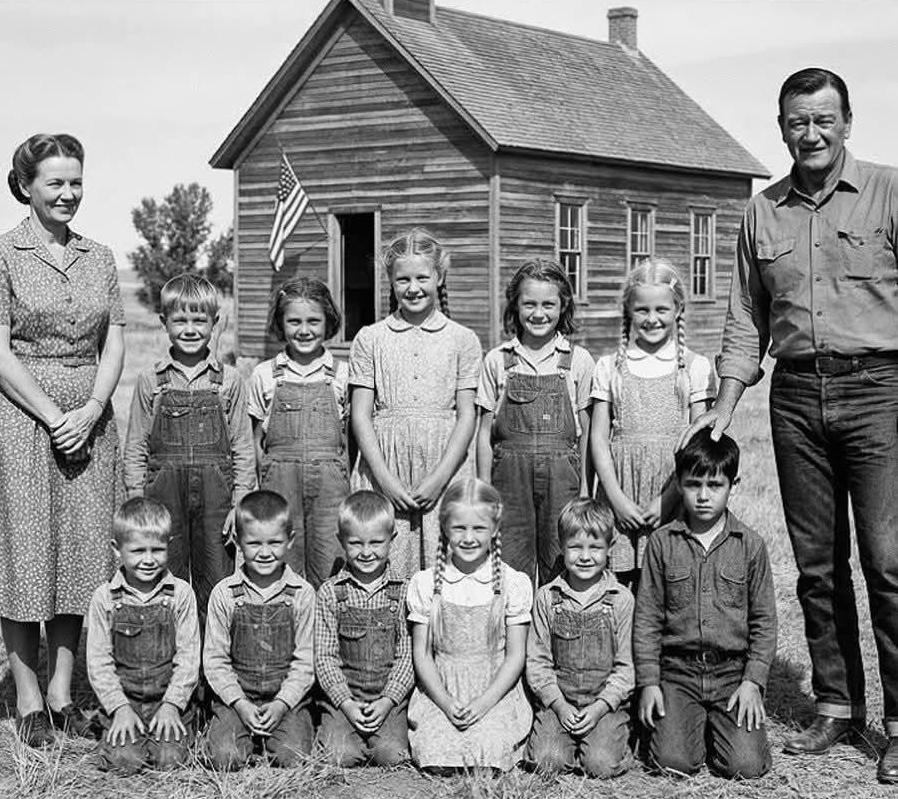
Most Americans children went to rural schools until America first became a country with a majority urban population (1920s). States soon began reassessing the issue of rural education. Small schools serving a handful of children were expensive to maintain. And at about the same time Henry Ford provided a solution. Ford not only created the low-priced Model-T Tin Lizzie (1907), but quickly trucks and busses as well. Other companies followed suit. Cars energized the demographic shit to the suburbs. American trucks impacted World War I (1914-18). And busses were he solution to expensive rural education, States began bussing rural children to consolidated schools in towns (1920s). This was at first on a small scale (1920s), but gradually increased. And was for the most part fully accomplished (1940s). But there were still a few rural schools in isolated places, especially sparsely populated states like Alaska, Montana, and Wyoming. These were not farm states. Alaska is too cold. Montana and Wyoming have large areas devoted to ranching -- raising livestock. American farms at the time, thanks to American legal system, were still mostly modestly sized family farms. This meant that even in rural areas the population was not minimal, making bussing the children feasible. Ranching areas were a different matter. Ranches could be huge, much larger than family farms. Here bussing was less of an option. As a result, we still saw small rural schools in Montana located in ranching areas, apparently not close to a small town with a school. But this school had a really special teacher.
Most Americans children went to rural schools. Theywere the back bone of the education system. America nd Germany were at he forefront of the free public school system brining education to the entire population. This rural oreientation did not change until America became a country with a majority urban population (1920s).
States soon began reassessing the issue of rural education. Small schools serving a handful of children were expensive to maintain.
And at about the same time Henry Ford provided a solution. Ford not only created the low-priced Model-T Tin Lizzie (1907), but quickly trucks and busses as well. Other companies followed suit. Cars energized the demographic shift to the suburbs. American trucks impacted World War I (1914-18). And busses were the solution to expensive rural educatio. States began bussing rural children to consolidated schools in towns (1920s). This was at first on a small scale (1920s), but gradually increased. And was for the most part fully accomplished (1940s).
But there were still a few rural schools in isolated places, especially sparsely populated states like Alaska, Montana, and Wyoming. These were not farm states. Alaska is too cold. Montana and Wyoming have large areas devoted to ranching -- raising livestock. American farms at the time, thanks to American legal system, were still mostly modestly sized family farms. This meant that even in rural areas the population was not minimal, making bussing the children feasible. Ranching areas were a different matter. Ranches could be huge, much larger than family farms. Here bussing was less of an option. As a result, we still saw small rural schools in Montana located in ranching areas, apparently not close to a small town with a school.
The school was located in a ranching area of Montanna--Big Sky Country. Most of the students were from ranching families. Now remember this was in 1961. Well before the advent of personal computers, the internet, and smart phones.
One of the problems with these small schools was that hey were very poorly equipped. It was impossible to provide a small school for a handulof studets the same provisions that a children enjoyed in larger schools. But this school had a really special teacher.
The teacher asks her 12 students to add one sentence to a letter. It was a classroom activity. The letter was to Hollywood star John Wayne. No otherstarhadmore appeal to raching kids than Wayne. The teacher didn't expect Wayne to respond. Writing a letter and compsing a sentence as well as thinking aboutthe content were alla learning experience. The letter was three pages, lined notebook paper, beginning with the teacher's neat writing. "Dear Mr. Wayne, my name is Margaret. I teach at a small school in Montana. 12 students, ages 6 to 14. Most are ranchers' children. We study your films to learn about American history and values. I'm writing to ask if you might have any advice for teaching children about these values. We're just a small school, far from anywhere important, but I believe these lessons matter, especially for children growing up in places people forget about. We have no film projector, so we read your scripts aloud. The children act out scenes. It's not the same as seeing you on screen, but it helps them understand courage, honor, and what it means to be American." Then at the bottom, 12 messages, one from each student, written in children's handwriting. Some shaky, some barely legible, but all sincere. "Dear Mr. Wayne, you are the bravest cowboy." Sarah, age seven. "Mr. Wayne, my dad says you're a real American. I want to be like you." Billy, age 10. "I watch your movies when they come to town. You never give up." Tommy, age 8. 12 messages, 12 children somewhere in Montana learning about America from scripts read aloud in a one- room schoolhouse.
The letter arrived in a few days at Wayne's Hollywood OFFICE. He received hundreds of letters weekly. They inclued fan mail, requests, scripts, and business proposals. Most were handled by office staff by established rotein. They were answered with form letters and machine signed photos. Tthis one caught the eye of the office staff. The envelope is plain, handressed, with a Montana postmark. They decided to sendthe letteron to Wayne.
Wayne reads that history line twice. Studies his films for history, for values. He's made a hundred westerns. Wayne is 53 years old, at the peak of hiscareer, made some 60 westerns. He is no sure of the count, Some good, some forgettable, but he never thought of them as lessons, as teaching tools, as something that mattered much beyond pure entertainment. Now 12 children in Montana are acting out his scripts, learning values, growing up believing in something because of movies he made. He's impressed.
Wayne replies, " Dear Margaret and students, thank you for your letter. I'm honored that you study my films. more honored than you know. You asked for advice about teaching values. Here's what I believe. Courage isn't the absence of fear. It's doing what's right even when you're scared. Honor is keeping your word even when nobody's watching. Being American means believing everyone matters. Even people in small towns far from anywhere. I'm sending you a projector and some films. Not because you asked, but because students like you deserve to see stories on screen, not just read them. You're not just 12 kids in Montana. Y ou're 12 Americans. That's everybody. Keep studying. Keep learning. Keep believing in something bigger than yourselves. That's what makes this country work. Your friend, Duke. "
Only 2 weeks later, a delivery truck arrives at the school surprising the teacher and thechildren. The cotents confirmed wah these these thought of America. Inside was a projecter and 10 films, including: 'Stage coach;. 'Red River'. 'She wore a yellow ribbon'. 'Fort Apache'. 'Rio Grande'. Many of his smash hit big budget films were yet to be made.
Six months later, Wayne is in Montana filming 'How the West was won'. Big production, multiple directors, epic western. They're shooting in the mountains, beautiful country, cold, remote, middle of nowhere. One day, there's no filming, weather delay, and rain. .Wayne visits Margeret and her students.
We note a range of responses to this news item.
Patricia Trish Frohock Hanes: "Sadly, because I wish this were true, it looks like a viral story. Enjoy it for the lesson, but don’t mistake it for truth." We cannot yet confirm the validity of this story. Only that it appeared on the internet. The photograph looks real.
Dennis Walker: "I wonder how they'd have reacted had they known that the Duke was a virulent racist." Now it is true that that Wayne was a man of his time. He said things that a ere unacceptable today. But 'virulent racist' seems unfair. I have seen a lot of his films and do not see racist themes or scenes. Nor do I not any actual actions taken against Blacks or the mistreatment of people of color. If Wayne was virulent, what adjective applies to people who actually mistreat or physically attack people of color? We do know that Wayne stood up for Roscoe Lee Browne during the shooting of 'The Cowboys' (1972).
Keith Barratt: "American history and values? More like WHITE American history & values. What about Native American history & values? Of course not, in many of his films they were only there to be slaughtered en masse, & only allowed to be murderous, scalping savages." Here Keith needs to view some of Wayne's films like 'The searchers' (1956) and Big Jake' (1971). But Keith's knowledge of history is at best even more simplistic and viewed through the Marxist lens standard in our universities. It is undeniable that Native American were treated terribly based on modern standards. But what Keith does not understand is that this was not anything distinctive to America. The entire history of mankind is the history of stronger clans, tribes, and civilizations conquering weaker peoples. It is why most of Africa to day is dominated by the Bantus. And China is dominated by the Han. Keith also knows nothing about Native Americans. What he attributes to white Americans is little different to what strong tribes like the Comanche did to other weaker tribes. Nor is he aware of the fact that America has treated indigenous groups differently than virtually all other countries. What other country signed treaties with defeated indigenous people? Now many of those treaties were violated, mostly in the 19th century. But they have held up over time and now hold the strength of law. There are approximately 567 federally recognized Indian Reservations in the United States today. And there are countless legal decisions that have ruled in the favor of Native Americans. There is no country that can match that record even countries like Bolivia, Ecuador, Guatemala, Mexico, Paraguay, and Peru with majority mestizo/indigenous populations.

Related Chronolgy Pages in the Boys' Historical Web Site
[Main Chronology Page]
[The 1900s]
[The 1910s]
[The 1920s]
[The 1930s]
[The 1940s]
[The 1950s]
[The 1960s]
[The 1970s]
[The 1980s]
[The 1990s]
[The 2000s]
Navigate the Related Boys Historical Clothing Style Pages
[First Communion]
[Confirmation]
[Long pants suits]
[Short pants suits]
[Kneepants]
[Knickers]
[Kneesocks]
[Long stockings]
[Eton suits]
[Jacket and trousers]
[Button-on clothing]
[Blazer]
[School sandals]
[Bangs]
Navigate the HBC Country School Section:
[Main National School Page]
[Australia]
[England]
[France]
[Germany]
[Ireland]
[Italy]
[Japan]
[New Zealand]
[Poland]
[Singapore]
[Scotland]
[Singapore]
Navigate the HBC School Section:e
[About Us]
[Activities]
[Chronology]
[Classrooms and buildings]
[Clothing styles]
[Countries]
[Debate]
[Economics]
[Garment]
[Gender]
[Hair]
[History]
[Home trends]
[Literary characters]
[School types]
[Significance]
[Transport and travel
[Uniform regulations]
[Year level]
[Other topics]
[Images]
[Links]
[Registration]
[Search]
[Tools]
[Return to the Historic Boys' School Home]