|
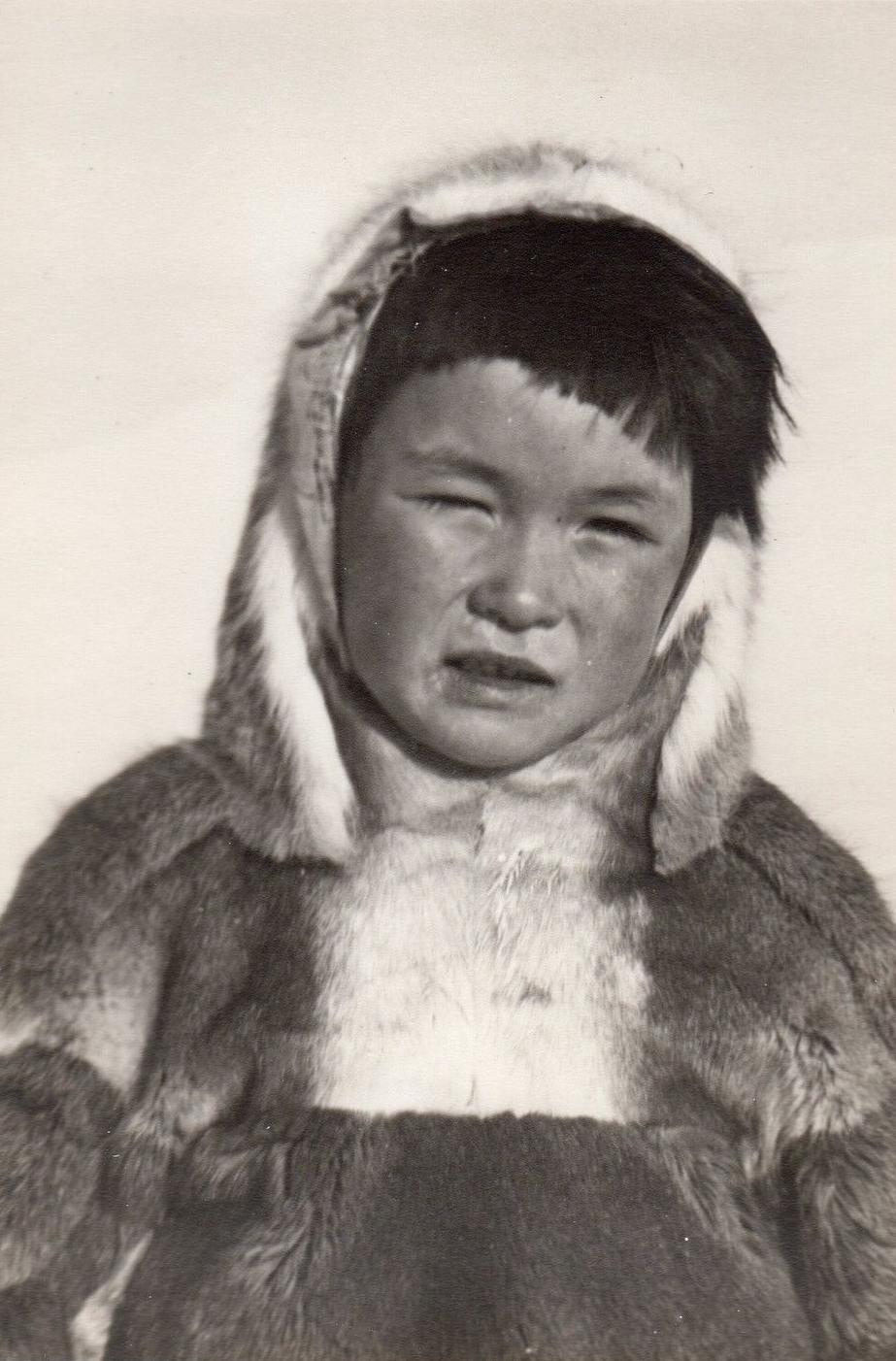
The Inuit people are a Native American group of culturally similar peoples inhabiting the Arctic regions of Greenland, Canada, and the United States. Traditional Inuit culture like that of the other Arctic people is strongly influenced by the severe climate and stark Arctic landscapes. Unuit fokelore feature stories inspired by the aurora. Snow and ice and the cold in general have shaped inuit life, including igloos made from compacted snow. Inuit invented tools using the bones and tusks if the marine mammals they hunt. Unlike virtually all the rest of mankind, the Inuit once survived without eating plants and cereal crops. They did not grow in the Arctic. Their diet consisted almost entirely meat and fat. The Inuit fished and hunted Whales, walruses and seals. Traditional Inuit clothing was made from skins and fur of the animals they hunted. Boots were also made from animal skins. Their most destinctive garment was a large, thick coat with big protective known as parkas. The parka has been adopted by people all over the world, although made in other materals. Parkas were worn as an outer layer.
The Inuit eaked out a subsitence life style on the edge of survival. The Europeans who followed Columbus were primarily nterested in gold. The English and French who poured into North America did not find gold, nut they did find something of great value--fur and beaver pelts. The Fur Trade became the most valuable economic activity in North America. And in the far north, it was the Inuit who knew how to find a profuce the fur. Now what is now Canada was dominated by the French, but in the Arctic the British established a presence-the Hudson Bay Company. This is also part of Canada today, although vitually no Canadaians live there. The Inuit were one of the most isolated Native American people necause of the inhospitable climate. The Canadian Hudson Bay Company at first traded with the Northern Plains proples. Competition eventually forced them to trade wiyh the more more remote northerly located Inuit.
Inuit is the plural noun; the singular noun is Inuk. The Inuit languages are part of the Eskimo-Aleut family. Americans tend to use 'Eskimo' to describe the Native American people in the Arctic. This gets complicated as it includes not only the Aleut (Aleutian Island people, but also the Yupik and Iñupiaq peoples of Alaska. Inuit does not include the Yupik and there is no other collective noun for the Arctic tribes. And further complicating the issue, the Inuit view 'Eskimo' as pejorative. As a result, in Canaada, Inuit has become increasingly common. And the Canadian Constitution Act of 1982 (sections 25 and 35) named the Inuit as a distinctive group of Aboriginal Canadians who are not included under either the First Nations or the Métis. The Inuit today live throughout most of the Canadian Arctic and subarctic including the territory of Nunavutin the northern third of Quebec, Nunatsiavut and NunatuKavut in Labrador; and in various parts of the Northwest Territories, particularly along the Arctic Oceancoast. These areas are known in Inuktitut as the 'Inuit Nunangat'.[ In the United States, Inupiat live on the North Slope in Alaska and on Little Diomede Island. The Inuit also live on Greenland. They are descendants of migrations from what is now Canadian territory. The Greenlandic Inuit are citizens of Denmark, Greeland being a Danish territory. Some of the most intimate early images of Inuit life are the work of Canadian photograpger Geraldine Moody.

Navigate the Boys' Historical Clothing Web Site:
[Introduction]
[Activities]
[Biographies]
[Chronology]
[Clothing styles]
[Countries]
[Bibliographies]
[Contributions]
[FAQs]
[Glossaries]
[Glossary]
[Images]
[Links]
[Registration]
[Tools]
[Boys' Clothing Home]
Navigate the Boys' Historical Clothing ethnic pages:
[Return to the Main Arctic tribe page]
[Return to the Main Native American ethnic page]
[Return to the Main ethnic page]
[German]
[Greek]
[Irish]
[Scottish]
Navigate the Boys' Historical Clothing Native American pages:
[Ethnic]
[Dance]