|
Holiday celebrations in every country are a combination of holidays unique to that country such as inddpendece or national day celebrations as well as holidays celebrated in many different countries. Thesecommon holidays, however, are not always on the same day. Holidays such as New Year, Thanksgiving, are celebrated on different days in different countries. Chritianity is especially prone to this. Easter and even Christmas is celevrated on different days around the world. In this regard Jewish and Islamic holidays are much more standard.
Most Brazilian holidays are observed nationwide, but each state and city can and do establish their own holidays. Most are holidays celebrated in Portugal, mostly Christian. Some of the Christian celebrationse not narional hoidays. There are also several Brazilian secular national holidays. The Brazilian holidays are noted for their small number. The most famous Brazilian holiday is of course Carnival. As in most Christian countries, Christmas is a favorite with the children.
Mexico is probanly noted for Cinco de Mayo (May 5). Cinco de Mayo commemorates the Mexican victory at the Nattle of Puebla in 1862. There Mexican forces led by General Ignacio Zaragoza defeated the French al forces trying to prop up the monarchy of the Austrian royal Maximillian. Many believe that Cimvo de Mayo is Mexico's independence day. It is more of a national day. Independence Day celebrates independence from Spain (September 16). It does not, however, have the prominance of Cinco de Mayo. Another important Mexican holiday is the Día de los Muertos (Day of the Dead) (November 1-2). It is more of an All Souls Day than a Haloween.
We have some information on Christmas.
The standard holidays including New Year, Valentine Day, Easter, Veteran's Day (previously Armistace Day), and Christmas are important in America. Destinctly American holidays include Dr. King's birthday, President's day, St. Patrick's Day, the 4th of July, Columbus day, Halloween, and Thanksgiving. Both St. Patrick's Day and Coloumbus Day honor the contribution of ethnic minorities and their role in building America. St. Patrick's Day is of course a traditional Irish celebration, but it in fact was a minor event in Ireland until popularized by nostalgic immigrants in the large American cities like Boston and New York. The most American of holiday is the 4th of July and all the fireworks, parades, and associated hupla. This major U.S. holiday is about fire works and the rockets red glare. Some one may dress up as Uncle Sam or the Revolutionary war soldiers with fide, drum, and
and bugle scene. The Cubs and Scouts particuate in parades. And of course before the fireworks are picnics and cookouts. Halloween is a major American holiday that has begun to spread to other countries. Thanksgiving is another uniquely Americam holiday. Thanksgiving is an American holiday, giving thanks for the bounty of the land. Children dress up in Pilgrim and Native American costumes at school to celebrate the holiday. At home the centerpice is a huge turkey dinner. Often the entire family gathers at their parents or grandparents house for the event. Unlike some other
holiday, however, the children do not generally dressup, even for the turkey dinner. Contrary to widely held views, America is a deeply religious country. Probably more Americans attend Church than the the citizens of any European country. Thus
the religious nature of Amristmas is important in many American families. Undeniably, however, Santa Claus now plays a central role in an American child's
Christmas. American children diligently take their Christmas lists to Santa Clause. Some now even have computerized lists. Some American children in fact see Santa and his raindeer as a much more important figure than Jesus. Given the media blitz, parents have to work hard to maintain traditions beyound tye commercial extravanganza.
The standard holidays including New Year, Valentine Day, Easter, Thanksgiving, and Christmas are important in Canada. Interestingly, Queen Victoria's birthday (largely forgotten in England) is celebrated in Canada. The Queen ruled Britain and the Empire longer than any other monarch, from 1837-1901. The Queen was born on May 24, but the celebration is the Monday preceeding May 25. Canada's national day is called Canada Day and celebrated on July 1. Canadians celebrate it like July 4 in America, but it is not an independence day because the Canadians did not join the American colonists in the Revolutionary War. Rather the Candians celebrate the day the different British North American provinces were combined to form Canada. Canada Day until 1981 was called Dominion Day because on July 1, 1867 the provinces of British North America merged as the Dominion
of Canada, a title which Canada still has officially. While Canadians celebrate Thanksgiving like Americans, they celebrate on a different day--the second Monday in October, perhaps because the harvest comes earlier in Canada. (That is the date Columbus Day is held in America.)
The Chinese are of course noted for the celebration of New Year.
There are many traditional Japanese holidays. We have mentioned some of them in the Japanese section, but have not yet created pages on them. Several include honoring relatives. Children's day is a holiday of special interest to HBC. Interestingly several holidays likr Chikdren's day relate to age. Almost all are uniquely Japanese. We hope to create separate pages as HBC develops. One is the same as Western holidays, such as New Years. Other Western holidays such as Christmas are not really celebrated, but are used by merchants in advertising. One Japanese holiday, Labor Day is essentially the same as the Western holiday, but observed on different days. Other holidays (Constitution Day and Green Day) are of recent origins, created since Japan's defeat in World war II. The Emperor's birthday is still celebrated, but not as important as it once was. Unlike the holidays in many countries, religion is not a major factor in holiday celebrations.
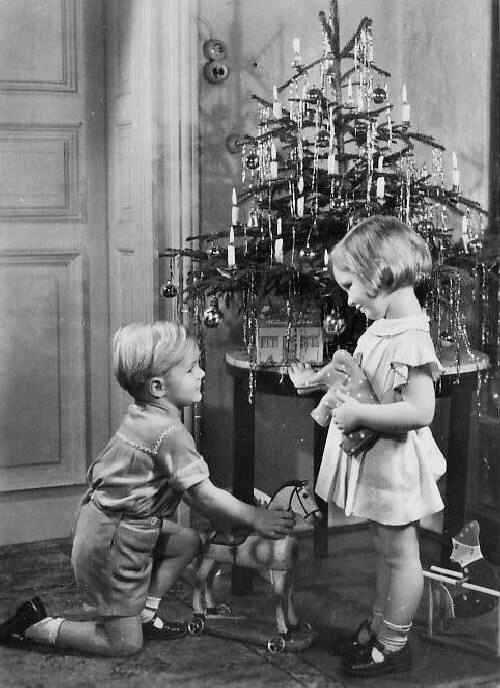
Christianity originated in the Middle East and for several centuries the Middle East and North Africa were an important part of the Christian World. Yhis changed with the rise of Islam and the rapid conquest of the Middle East and North Africa by Muslim armies. As a result, Christianity became a basically European religion. In the early Church, Christmas was not a major event. In gradually grew in importance over time, mostly as part of the development of medieval European Christianity. And as modern Eyropean countries began to take shape, different Christmas traditions developed in the various countries. Another major factor was the evolution of different Christian denominations. First there was the Great Schism, the break between the Eastern and Western Church (11th century). And then there was the Protestant Reformation (16th century). But the Protestant Rformation did not result in just one new denomination, but a multiplicity od new denomintions. All of this affecting how Christmas was viewed and celebrated. In the era before the mass media and limited travel, local communities developed their own traditions. Many of the traditions emerged in the Medieval era, but the Victorian era was also very important in the development of Christian traditions. German traditiins spread to Brirain and then on to America. Most tourists visit Europe in the summer, but Christmas and Winter provide aonderful spctacle. Bright lights are everywhere and snow makes for beautiful spectacles in the north. European cities are archetecurally beautiful in themselves, but with snow and Christmas finery and illuminations they are jeweled masterpieces. And they have wonderful Christmas markets.
The holiday celebration that come to mind most for Austria is Christmas, but we little other specific information at this time. We do note the Ratschenbuben is a primarily German tradition dating from the 12th century. It was also observed in Austria and in German communities in Sitzerland. One
HBC reader tells us that "Ratschenbuben" is an Autrian word meaning "rattle playing boys", a word that is unknown in Germany. Easter and especially Palm Sunday is an important event in largely Catholic Austria. Christmas is undoubtedly the most important holiday in Austria. As in other European nations, December 6th is the day Saint Nicholas, the giver of gifts, makes his rounds. Arrayed in a glittering Bishops robe and accompanied by his devilish assistant, Knecht Rupnecht, he can occasionally be seen roaming the streets giving sweets and apples to good children while his companion playfully beckons "little sinners" to feel the string of his golden rod. In Austria, there is no Santa Claus. Children are taught that their presents have been brought by the "Kristkindl," a olden-haired baby with wings, who symbolizes the new born Christ. The story tells how the Christ child comes down from heaven on Christmas Eve and, with his band of angels, decorates and distributes trees. Christmas in Austria is a very musical time. Many of the world's greatest carols came from here. December 6 is the day when St. Nicholas and his grotesque assistant, Krampus, may pay a visit. But the gifts are brought on Christmas Eve by the Christkind. Sometimes the Christkind will even help decorate the Christmas tree before the big Christmas Eve supper, which will probably feature carp as a main course. Dinner on Christmas Day will be roast goose with all the trimmings.
As a mostly Catholic country, the religious holidays Easter and Christmas are of great importance. The national holiday is National Day, July 21, 1831 when King Leopold I ascended to the new Belgian throne.
The standard holidays including New Year, Valentine Day, Easter, Armistace Day, and Christmas are important in England. England has several well known holidays, including the Queen's Birthday, Guy Fawkes Day, and Boxing Day. An English reader writes, "Bonfire Night. there is nothing quite like it." Another reader writes, "Bonfire Night. Guy Falkes went to school in York. The school celebrate Bonfire Night but there is no guy on top of the fire. Can't burn an old boy of the school!" A British writer provides a wonderful assessment of Bon Fire Night (Guy Fawkes Day). Many modern Christmas traditions are English Christmas traditions developed during the Vicorian era. Here Prince Albert palyed an important role introducing German traditions like a Christmas tree. There have been major changes in recent years. Empire Day is no longer celebrated. And American style Halloween has begun to make inroads.
The standard holidays including New Year, Valentine Day, Easter, Armistace Day, and Christmas are important in France. The best known French holiday is Bastille Day (July 14). The most important French holidays for children are Easter (March/April) and Christmas (December 25).
The standard holidays including New Year, Easter, and Christmas are important in Germany. German holiday celebrations have varied considerably as to the regime in power. During the NAZI era, Hitler's birthday was a major event during which 10 years old were inducted into the Hitler Youth. I assume that the Kaiser's birthday was celebrated during Imperial Germany. After World War II the Communists celebrations of May Day was a major event. Germany or more properly Bavaria is best known for its Ocktoberfest celebrations. The most important holiday for German children is Christmas.
Many countries share the holidays, especially religious holidays. But even shared holidays are sometimes celebrated on different days. Even Christmas and new years are celebrated on different days in some countries. Countries also have some holidays that are only celebrated in individual countries, although imigrant communities in the United States and other countries may also celebrate. Important Greek holidays are Independence Day
(March 25) and Ochi Day ("No Day," remembering the Greek Resistance of World War II, (October 28). Apokries is another popular holiday, especially for Greek children.
And we have some information on holidays in Ireland. Many are comparable to holidays in other European countries, but there are several destinctive Irish holidays as well. There are nine public holidays observed in Ireland. This includes both secular and religious holidays. Ireland is strongly Catholic. As in Britain, Ireland refers to public holidays as bank holidays. This is because the banks and governmnt offices and schools as well as many business close for the day. Public transport often operates on reduced schedules. Unlike most European countries, there is no holidays honoring World War I and World War II sacrifices. The Irish supported Britain in World War I and suffered grevious losses like other beligerant countries. Ireland played no part in the defeat of the NAZIs. Ireland was neutral in World War II and even refused to open bases to the Royal Navy to fight the U-boat threat. The Government even set a congratulartory telegram to Hitler on his Birthdays. Hopefully our Irish readers will send information about their holiday celebratons.
We do not know a great deal about Italian holidays yet. We have not found many family snashots of holiday celebrations. The standard European holidays such as New Years are observed (January 1). Epiphany is based on the story of the three wise men (or kings) offering Jesus gifts of gold, frankincense and myrrh (January 6). Liberation Day is a national holiday (April 25) It marks the fall of Mussolini's Fasist regime (April 25). It also marks the end of the NAZI occupation in Italy towards the end of World War II. As a mostly Catholic country, the religious holidays Easter is obseeved as Food Friday nd Easter Sunday, but Easter Monday is national holiday. The date varies from year to year, but is in April and May. Many Italians commemorate the labor movement’s social and economic achievements on Labor Day, often rferred to as May Day (May 1). The national holiday is the Anniversaty of the Republic (June 2). Known as Festa della Repubblica it celebrates the day when Italians voted to abolish the monarchy in 1946. After King Umberto II lost a plebecite following World War II, a Republic was declared. Many Italians observe Assumption Day meaning the Assumption of Mry. It is known as Ferragosto in Italy (August 15). This national holiday celebrates the Catholic belief that God took the body of Jesus’ mother Mary into heaven at her death. All Saints’ Day, known as Festa di Tutti i Santi, is both a religious and public holiday in Italy (November 1). As the name implies, it collectively celebrates all of the Catholic saints. Manby of the saints are honored individully as local celebrations. The feast of the Immaculate Conception (L'Immacolata Concezione) is another Catholic celebration that is a nationl holiday (December 8). The day commemorates when Mary, the mother of Jesus, was graced by God to lead a life 'free of sin' according to Catholic belief. As is the case throughout Europe, Christmas called Natale is of great importance (December 25). Italians also celebrate St Stephen’s feast Day, Il giorno di Santo Stefano. Iy is celebrated as a public holiday the day after Christmas Day (Decemnber 26). In addition to these nationl hoidays, there are many local holidays which are celbrated, many are associated ith individual saints.
Latvian national holidays include: January 1--New Year's Day; Good Friday; Easter Sunday; May 1--Labor Day; June 24--Midsummer; November 18--Independence Day; December 24-26--Christmas. This holiday is celebrated on 18 November. If the day is on the weekend, then the following Monday is a holiday. Latvia's National Day is also known as Latvijas Republikas pasludināšanas diena (Proclamation of the Republic of Latvia). Independence Day commemorates declaration of independence of the Republic of Latvia from German and Russian occupation at the end of World War I (November 18, 1918). The People's Council of Latvia proclaimed independence in the building that today houses the National Theatre in Riga. The country remained independent until the World War II. As part of the NAZI-Soviet Non-Aggression Pact, the Soviet Red Army seized the country and initiated a brutal suppression of the Latvian people (June 17, 1940). The NAZIs droive out the Soviets (1941), but the Red Army returned (1944). The restoration of Independence of the Republic of Latvia was proclaimed (May 4, 1990). Like the other Baltic republics, Latvia did not regain its independence from the Soviet Union for more than four decades (August 21, 1991). This second independence declaration is commemorated annually as the Restoration of Independence of the Republic of Latvia holiday (May 4) each year. Many festive events are organized throughout the country on Latvia's National Day, including a nationally televised address to the people by the President. In recent years this speech is given before large crowds in the square by the Freedom Monument in Riga. Christmas in one of the most important holidays in Latvia. Like Easter, however, it was discouraged for many years by Soviet authorities promoting athiesm. The Christmas season in Latvia begins with Advent. Many families put up Advent wreaths. Father Christmas is an important Christmas figure for Latvian children. He traditinally brings presents on each of the 12 days of Christmas, beginning on Christmas Eve. The presents are usually put under the family Christmas tree. The children thus get about 2 weeks of presents, but of course most are small treats. Latvians claims to have put up the first Christmas Tree. They insist thsat the first documented use of a evergreen tree at Christmas and New Year was at town square of Riga (1510). Little informatin is available on this first tree ther than it was attended by men wearing black hats and that after an undescribed ceremony, it was burnt. At the time it was a German-dominated Hanseatic town. Latvians attend a church service on Christmas Eve. This is more common than on Christmas Day. The Christmas Day meal is another tradition. Popular foods include potatoes with sauerkraut and pork, brown peas/lentils with bacon (pork) sauce, small pies, cabbage and sausage. Gingerbread is a major Chrstmas tradition. The major gifts are exchanged following the Christmas meal. The children are expected to recite
Liechtenstein is a landlocked principality in Central Europe located betweem the German-speaking Swiss cantons of Switzerland and Austria, just south of Germany. As a result, the traditions and loiday celebrations in Liechstnstein, except for the national day, are basically the same as th German cultural community. The Leichebstein national day is unusua. The Principality has chosen a religious celebration -- the feast day of the Assumption of Mary, also known as Assumption Day. It is the principal feast day of the Virgin Mother Mary, according to Christian tradition. It is celebrated annually in Leichtenstein on or about August 15. The only holiday we have details on at this time is Christmas.
The national holiday in the Netherlands is Queen's day, April 30. The most important holiday seaon for children is of course Christmas.
The most special day during the Christmas season is Sinterklaas (St. Nicholas Day) December 5. For most children more important and exciting than Christmas day itself. That's od course when they receive their presents. Small presents and candy has been given each day one week before. The children would put their (wooden) shoes in front of the fire place and each morning they would find something in there. In return they would put some hay for Sinterklaas' horse before they would go to bed. Saint Nicholas was supposed to ride on his schimmel (grey horse) on the roof of the house, accompanied by Zwarte Piet (Black Peter), his Moorish servant he had brought with him from Spain. Zwarte Piet carried the big sack with the presents and another one to take with him the naughty child that had not behaved. The children would sing some of the numerous Sinterklaas Liedjes (Songs), also at school where they would celebrate. So Sinterklaas is very important to Dutch children.
Poland despite, or perhaps because of, four decades of Communist rule is the most entensely Catholic country in Europe. The religious holidays Easter and Christmas are of thus of great importance. The national holiday is Constitution Day, May 3, 1791 which must be associated with the partitions of Poland.
Portugal has a substantial mumber of national and local holidays. It temporarily revoked four out of concern over productivity. Many of the national holidays are religious holidays. The main religion is the Roman Catholicism. The country since medeval times has been strongly influenced by the Catholic Church. The First Republic (1910-26) launched anti-clerical policies. Despite the fact that the country has become highly secularized like the rest of Westen Europe, religious celebration tend to dominate the holidays celebtated. January 1: New Year's Day (Ano Novo). Variable: Carnival (Carnaval). This annual festival that ends on Shrove Tuesday (called Fat Tuesday in Madeira - Terça-feira Gorda in Portuguese). The day before Ash Wednesday (first day of Lent). This is an optional holiday, although it is usually observed. 47 days before Easter Sunday. Variable: Good Friday (Sexta-feira Santa). Friday before Easter Sunday. Variable: Easter (Domingo de Páscoa). Portugal has several religious holidays. Easter is one of the most important. Children after the Ressurection Mass (Easter) go throughout the streets ringing little bells. April 25: Freedom Day (Dia da Liberdade). This holiday celebrates the left-wing military 1974 coup d'état that ended the Estado Novo government established by long ruling dictator António de Oliveira Salazar (1932-68). The military leaders hen established the Portuguese Third Republic. May 1: Labor Day (Dia do Trabalhador). Portuguese Labor Day is a May Day celebration entirely oriented toward sicalist/communist demonstrations. None of the surviving ruingrituals we see in some other countries. Variable: Corpus Christi Feast (Corpo de Deus). It is held on a Thursday with varying dates, 60 days after Easter Sunday. It is a religion holiday. June 1: Azores Day (Dia dos Açores). It is only celebrated in the Azores, an Atlantic oceanic archepelago.. June 10: Portugal Day (Dia de Portugal, de Camões, e das Comunidades Portuguesas). This is Portugal's National Day. July 1: Madeira Day (Dia da Madeira). Only celebrated in Madeira another archepelago. This one in the Mediterranean. August 15: Assumption ( Assunção de Nossa Senhora). This is another religious holiday. It is based on the Biblical account Mary's assent to heaven. October 5: Republic Day ( Implantação da República). This is a celebration of the end of Monarchy and the beginning of the Portuguese Republic. November 1: All Saints Day (Dia de Todos-os-Santos). Another religious holiday. It celecrates the Catholic saints who have ahieved the beatific vision in heaven. December 1: Restoration of Independence (Restauração da Independéncia). This holiday celebrates the end of the Philippine Dynasty (1580-1640) and the end of Spanish domination. December 8: Immaculate Conception (Imaculada Conceição): Celebrating the Roman Catholic belief that the conception of the Virgin Mary without any stain of original sin. December 25: Christmas Day (Natal). This is Portuguese Christmas anotger important reigious holiday, now with mny secular trapings and a real favorite with children. Christmas is celebrated in much the same way in Portugal as it is in Spain. The Portugese enjoy an additional feast--consoada.
The celebration of holidays in Russia has been significantly affected by political regimes. Tsarist Russia focused on the celebration of religious festivals such as Easter and Christmas. The Tsar's bithday was probably also celebrated. After the Revolution (1917), the Soviets celebtated New Years, Labor Day, and the Revolution. I am not sure to what extent Comrad Stalin's birthday was celebrated. There were of course major changes in Russian holidys after the Communis Revolution (1917) and likewise after the fall of Communism (1991) there have been changes as well. Today in Russia, New Years continued to be the favorite holiday for children. Authorities are also now promoting the celebration of Christmas.
Swedish holidays are similar to those in other European countries. They include both Christian and secular national holidays. The religious holidays are shared with other Christian countries. Most holidays in Sweden as genrally is case in Europe are rooted in religious tradition, although in the modern de-Cristianized age these traditions are no longer fervently celebrated as they once were. Many of the nationl holidays are specific to Sweden. The most important holiday for children as in most of the rest of Europe is jul/yule (Christmas with pre-Christian Nordic features). An important part of the of the Swedish jul (yule)/Christmas tradition is the celebration of Lucia (Saint Lucia Day). White-clad girls and boys sing Christmas songs to spread light in the northern December darkness. St. Lucia is the only saint to be celebrated in Lutheran Sweden, the tradition is also celebrated in Norway and Finland (once part of the Swedish Kingdom). The other Christian holidays are trettondedag jul (Epiphany), påsk (Easter), Kristi himmelsfärds dag (Ascension Day), pingstdagen (Pentecost) and alla helgons dag (All Saints' Day). The national holidays are: nyårsdagen (New Year's Day), första maj (May Day/Labor Day), Sveriges nationaldag (National Day) and midsommar (Midsummer). Midsommar like Lucia is destinctly Swedish. The mythical Midsummer has Swedes dance dancing around a maypole left standing from May Day in June while the the sun never seems to set. Many other lesser holidays are celebrated in Sweden, many at the local level. Like other Europeans, the Swedes now make four-day week ebds when the hoidays fall on Thuesday and Thursda
Switzerland's national day is August 1, when the three original cantons of Schwytz, Uri and Unterwald founded back in 1291 our country. This day is celebrated throughout the
country down to the smallest village with bonfires burning even up some mountains
and hundreds of speeches held by local politicians with nobody listening to and
thousands of sausages etc prepared on BBQs by the local firebrigade volunteers.
For children there is no specific clothing. The younger ones walking proudly around
with "lampions" (paper globe with a candle burning inside). On top of the national day each of the 23 cantons have their specific celebration day at various dates and originating from quite many different roots. Easter and Christmas are celebrated througout Switzerland although there are differences on how theu are celebrated as a result the country's varying ethnic and religious composition. The most important holiday for children is of course Christmas.
Easter is the predominant and most popular springtime feast celebrated by the Ukrainian and Russian People. Holy week, beginning with Palm Sunday, is a time of great activity in Ukrainian and Russian homes, including spring cleaning and baking Easter bread. Easter is a feast of joy and gladness that unites all Ukrainian people in common celebration. It is the most busy and cheerful holiday for Ukrainians and Russians after Christmas. Easter is the time of springtime festivals, a time to welcome back the Tulips, the Crocuses and the Daffodils. A time for people to celebrate the life, death and resurrection of Christ. And a time of Easter cakes and colored eggs!
Several holidays are celebrated in Palestine. Until partition they were mostly religious holidays as Palestine had no national tradition and was a province of larger empires. We are not sure about public holidays during the Ottoman and British mandate era. There are currently thirteen public holidays. They include New Year's Day (January 1), Deir Yassin Rememberance (April 19), Night of the Prophet's Ascension (April 24), Labor Say (May 1), Ramadan (variable), Eid al-Fitr--of Ramadan (variable), Eid al-Adha--Feast of the Sacrifice (variable), Independence Day (November 15), Islamic New Year (November 26), Muhammad's Birth (November 30), and Christmas (December 25). Islamic and some Christian holy days are national holidays. The exact dates of the Islamic holy days change every year and are celebrated according to clerial pronouncement based on the appearance of the moon and the lunar calendar. There are now also a few national public holidays with a secular focus. In the case of all national holidays, it is the National Authority that declares them. However, regional authorities can also declare local or ad hoc holidays. Indepemence Day celebrtes the Palestinian Declaration of Independence which was written by Palestinian poet Mahmoud Darwish and proclaimed by Yasser Arafat (November 15, 1988).
As Australia was settled by the British, Australian holidays are heavily influenced by British holiday observations. Australian holidays include: New Years (January 1), Australia Day (January 28), Easter (March/April), ANZAC Day (April 25), Adelaide Cup (May), the Queens's Birthday (June 10), Labour Day (October 7), Christmas (December 25), and Proclamation Day (December 26). Adelaide Cup Day is only for South Australian and is held on a Monday thus creating a long weekend. All the other holidays listed here are Australia wide. The other states have their own cup holidays like Melbourne, Sydney, and Brisbane as well as Perth. Catholics world wide have Saints feast days but they are not holidays though but some are celebrated. Christmas is one of several holifday observations influenced by British customs. As a result, Christmas in Australia is a bit surealistic because of the summer henisphere season reveral. Thus traditional snowy Christmas scenes make absolutely no sence to Australians who in December face a summer heat
wave. As the weather is warm and snow never falls, there are no sleigh rides, or Yule logs, or any other comforts against the cold. The main articles of decoration
are the Christmas bell and the Christmas bush.

Navigate the Boys' Historical Clothing Web Site:
[Return to the Main national holiday page]
[Return to the Main holiday page]
[About Us]
[Introduction]
[Activities]
[Biographies]
[Chronology]
[Cloth and textiles]
[Garments]
[Countries]
[Topics]
[Bibliographies]
[Contributions]
[FAQs]
[Glossaries]
[Images]
[Links]
[Registration]
[Search]
[Tools]
[Boys' Clothing Home]