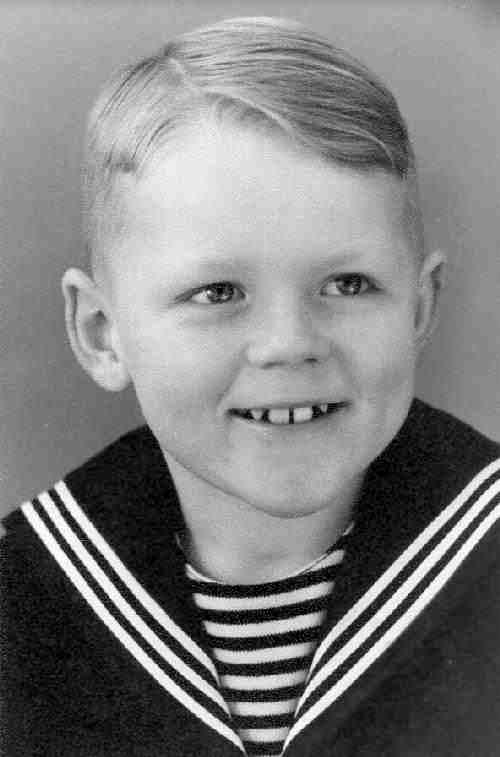
Figure 1.--This European boy wears a narrow stripped dickey. I'm not sure about the type, but it looks to be a narrow one. The portrait looks to have been taken in the 1930s. The dickey looks to be a knitted material, suitable for cool-weather wear. |

|
Some dickies were stripped, almost always horizontal stripes. The stripes varies in width with both narrow and wide stripes being worn. The wide stripped dickies were particularly popular in France and Russia, where the sailors wore the same stripped dickeys. The Tsareavich Alexis, for example, commonly wore sailor suits (until swithing to army uniforms when the war began) almost always wore his sailor suits with stripped dickeys. We have noted dickies with narrow stripes, these may be Dutch or German. These stripped dickeys appear to have been a type of undershirt--seemingly a precursor of the "t"shirts appearing in America before World War II in the late 1930s. We do not have any images of the entire striped garment. All we have at this time is the part of the dickey which can be seen between the "V" sailor collar.
Some dickies were stripped, almost always horizontal stripes. Here there are two primary approaches. One is repeating the stripped detailing on the blouse. The other approach is an entirely different stype of stipes. Here we notice a range of patterns, both narrow and wide stripes. The stripes varied in width with both narrow and wide stripes being worn. The wide stripped dickies were particularly popular in France and Russia, where the sailors wore the same stripped dickeys. The Tsareavich Alexis, for example, commonly wore sailor suits (until swithing to army uniforms when the war began) almost always wore his sailor suits with stripped dickeys. We have noted dickies with narrow stripes, these may be Dutch or German.
These stripped dickeys appear to have been a type of undershirt--seemingly a precursor of the "t"shirts appearing in America after World War II in the late 1930s. This appears to have been an especially popular approasch in some European countries. We do not have any images of the entire striped garment. All we have at this time is the part of the dickey which can be seen between the "V" sailor collar.
The styling of dickies varied from country to country. The striped dickies seem most common in Russia and other Easten European countries. We also see quite a few in Germany. American boys commonly had ickis with embroidered naval or patriotic symbols. Stripes were notvery common. We also do not see a lot of striped dickies in England. One example were Surbiton brothers in 1890.

Navigate the Historic Boys' Clothing Web Site:
[About Us]
[Introduction]
[Activities]
[Biographies]
[Chronology]
[Clothing styles]
[Countries]
[Girls]
[Theatricals]
[Topics]
[Bibliographies]
[Contributions]
[FAQs]
[Glossaries]
[Images]
[Links]
[Registration]
[Tools]
[Boys' Clothing Home]
Navigate the Historic Boys' Clothing Web chronological pages:
[The 1840s]
[The 1850s]
[The 1860s]
[The 1870s]
[The 1880s]
[The 1890s]
[The 1900s]
[The 1910s]
[The 1920s]
[The 1930s]
[The 1940s]
Navigate the Historic Boys' Clothing Web saiolor pages:
[Return to the Sailor dicky style page]
[Return to the Main sailor suit page]
[Reefer jackets]
[Sailor dresses]
[Other sailor styles]
[Sailor hats]
[The Royals]
[Ring bearer/page costumes]