|
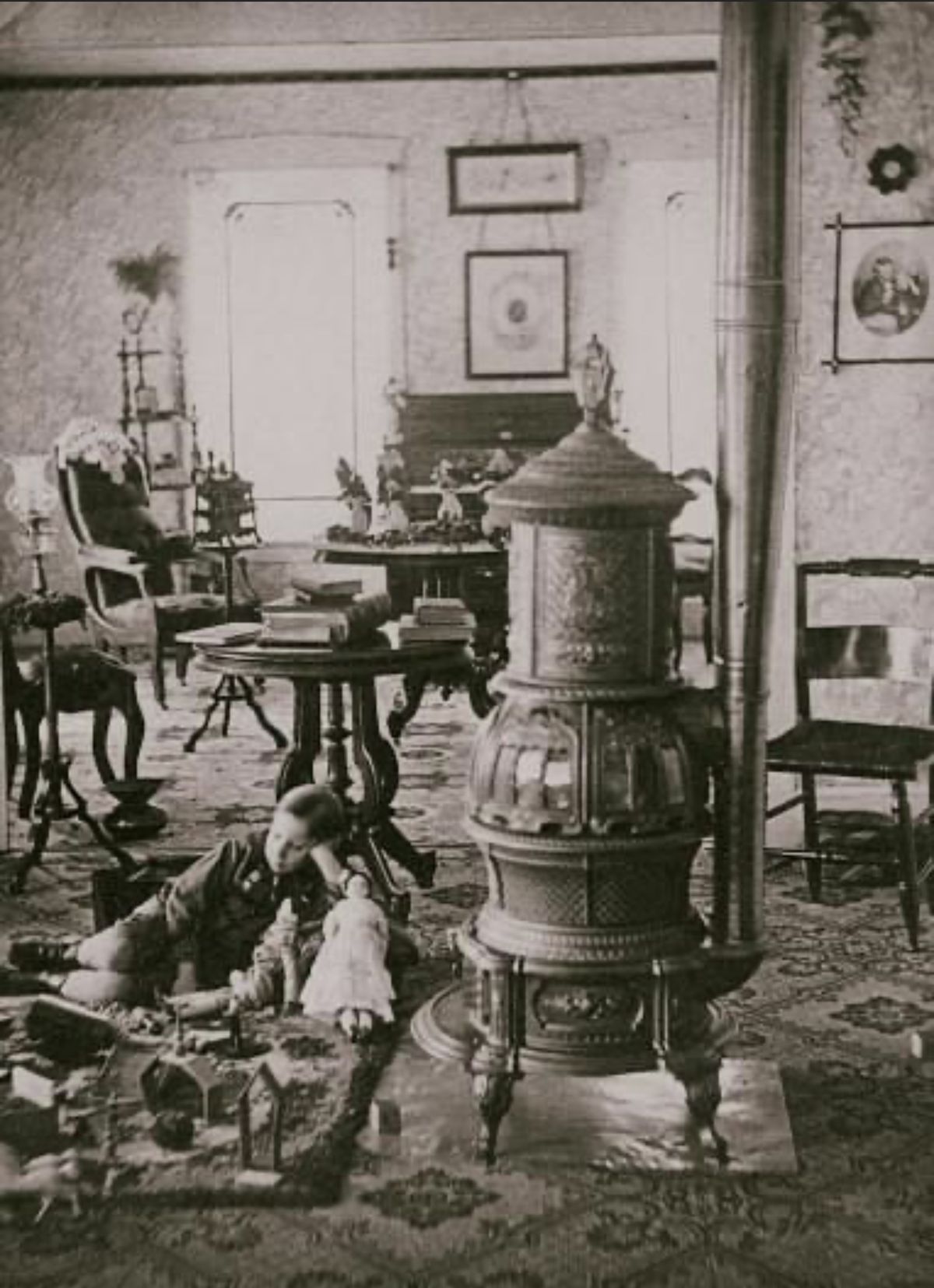
The Victorian parlor was the most formal, beautifully decorated room in 19th-century homes. The name parlor came from of course the French word parler, meaning 'to speak'. It denoted a space where adults could speak and socialize. It was a new family space associated with the rise of the middle class as a result of the Industrial Revolution. This mean that ordinary people could have fine things and share their new possessions with family and friends. It was the family space explicitly reserved for receiving guests and socializing with friends and family and a variety of callers. It is where calling cards and eventually carte de visite (CDV) portraits were deposited if the family was not at home. It was in the parlor that family, friends, and other callers were hosted. It was also where mother most meticulously crafted and devoted the full attention to creating a wonderful atmosphere demonstrating her refinement. Few Victorian mothers worked and they devoted their energies om domestic m functions like creating an inviting parlor. It was also a place where the family wealth could be conspicuously displayed. It was the the most elaborately appointed room in a Victorian home. The parlor is generally associated with the Victorian era. The actual design and function evolved throughout the 19th century and might vary from family to family. Victorian parlors were noted for both layers and colors. The walls were covered with plush velvet draperies, patterned wallpapers, and dark, muted tones. One author described palettes like deep burgundies, French pearl-gray, pale apricot, and dark greens. It is said that nature abhors a vacuum. That certainly was the home decorating philosophy of Victorian ladies. The idea was fully decorated spaces. Victorians packed their parlors full of decorative objects, potted palms, crystal glassware, and fine porcelain. In addition were knick-knacks and objects of sentimental value. This of course varied from family to family, but by mid-century, photography entered the picture. Not only family portraits, but photographic images from all over the world--viewed with stereoscopes. Most families had a collection of stereo view cards. It is in the parlor that the family Bible, musical instruments (especially a piano, and framed portraits of treasured loved ones were kept. There was also formal furniture. Parlor furniture was often selected more for its appearance and craftsmanship than any assessment of physical comfort. Especially important were button-tufted settees, carved armchairs, and center tables. The parlor was often at the center of the 19th century home, but not of family life. Families varied on how the parlor was used. While most used it for company and the children usually did not have free access to it--often excluded except for rare occasions. here were too many enticing objects that little hands might break a well as interrupt conversation. In some cases the parlor was used more of a family room, but this was in a minority of homes. In such cases the children were more welcome--but on their best behavior. After the turn of the 20th century, a transition began with the parlor by the time of World War II emerging as the living room (1940s).

Navigate the Boys' Historical Clothing Web Site:
[Return to the Main parlor page]
[About Us]
[Introduction]
[Activities]
[Biographies]
[Chronology]
[Cloth and textiles]
[Countries]
[Garments]
[Girls]
[Photography]
[Topics]
[Bibliographies]
[Contributions]
[FAQs]
[Glossaries]
[Images]
[Links]
[Registration]
[Search]
[Tools]
[Boys' Clothing Home]