|
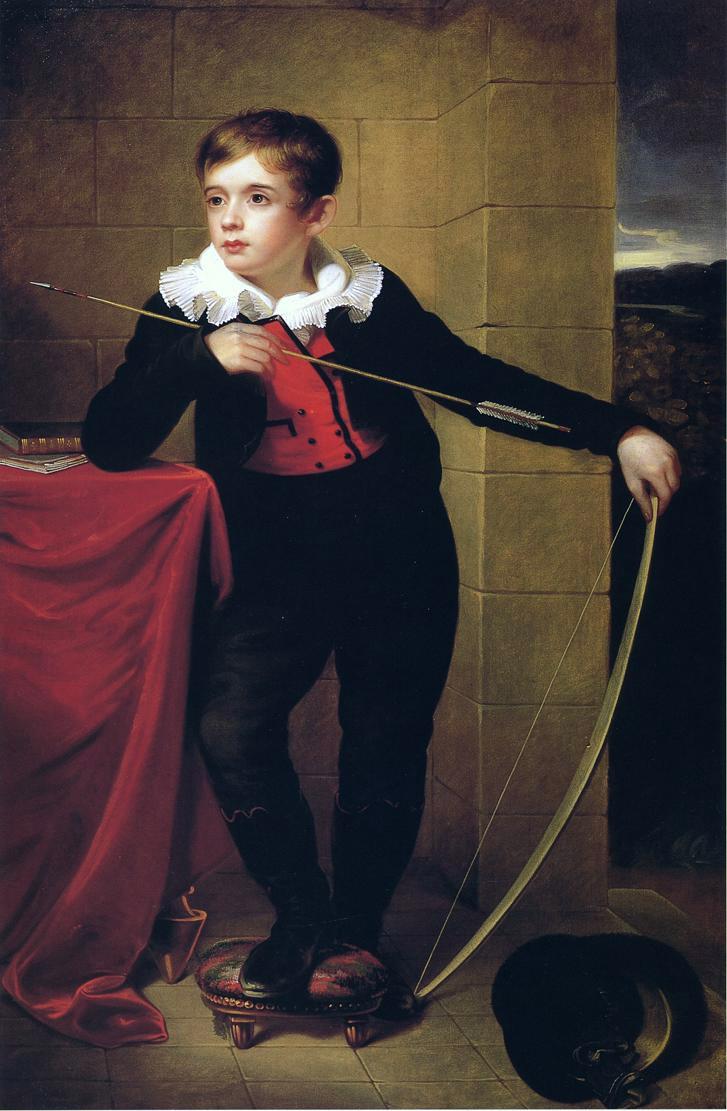
Rembrandt Peale was an important American artist during the early-Republic years. He was born near present-day Richboro, Pennsylvania. He was one of the sons of Charles Wilson Peale that took up art. His fathr wasan ardent patriot and pinted Gen. Washingtom (1787). At this time, He introduced Rembrandt to Washington. Rembrant watched his father paint the future president. A decade later, while still a young, aspirant artist, Rembrant painted an aging Washington, making him look older than he was (1795).The portrait was well received, and Rembrandt had estanlish his reotation. He became one of the most prolific portrait painter, of the early-Republic. He also painted President Jefferson. He is strongly influenced by French neoclassicism after studing in Paris during his early-30s after he had already become an established artist. Here we see one of his portraits (figure 1). He became fixated on painting the difinative portrait of Washington. While in Paris he was impressed with historical painting, but found that they were difficult to sell. As a result he established the Perale Museum in Baltimore. After a decade of effort, he turned over the museum to his er Rubens and returned to portrait painting In New York City out of financiial necesity (1822). In 1831 he finally settled in Philadelphia, where he died (1860).

Navigate the Boys' Historical Clothing artistic pages:
[Return to the Main American art page]
[Return to the Main artistic page]
[Chronologies]
[Individuals]
[National]
[Styles]
Navigate the Boys' Historical Clothing Web Site:
[Return to the Main American M-Z artist page]
[Return to the Main American page]
[About Us]
[Introduction]
[Activities]
[Biographies]
[Chronology]
[Cloth and textiles]
[Countries]
[Garments]
[Girls]
[Photography]
[Topics]
[Bibliographies]
[Contributions]
[FAQs]
[Glossaries]
[Images]
[Links]
[Registration]
[Search]
[Tools]
[Boys' Clothing Home]