|
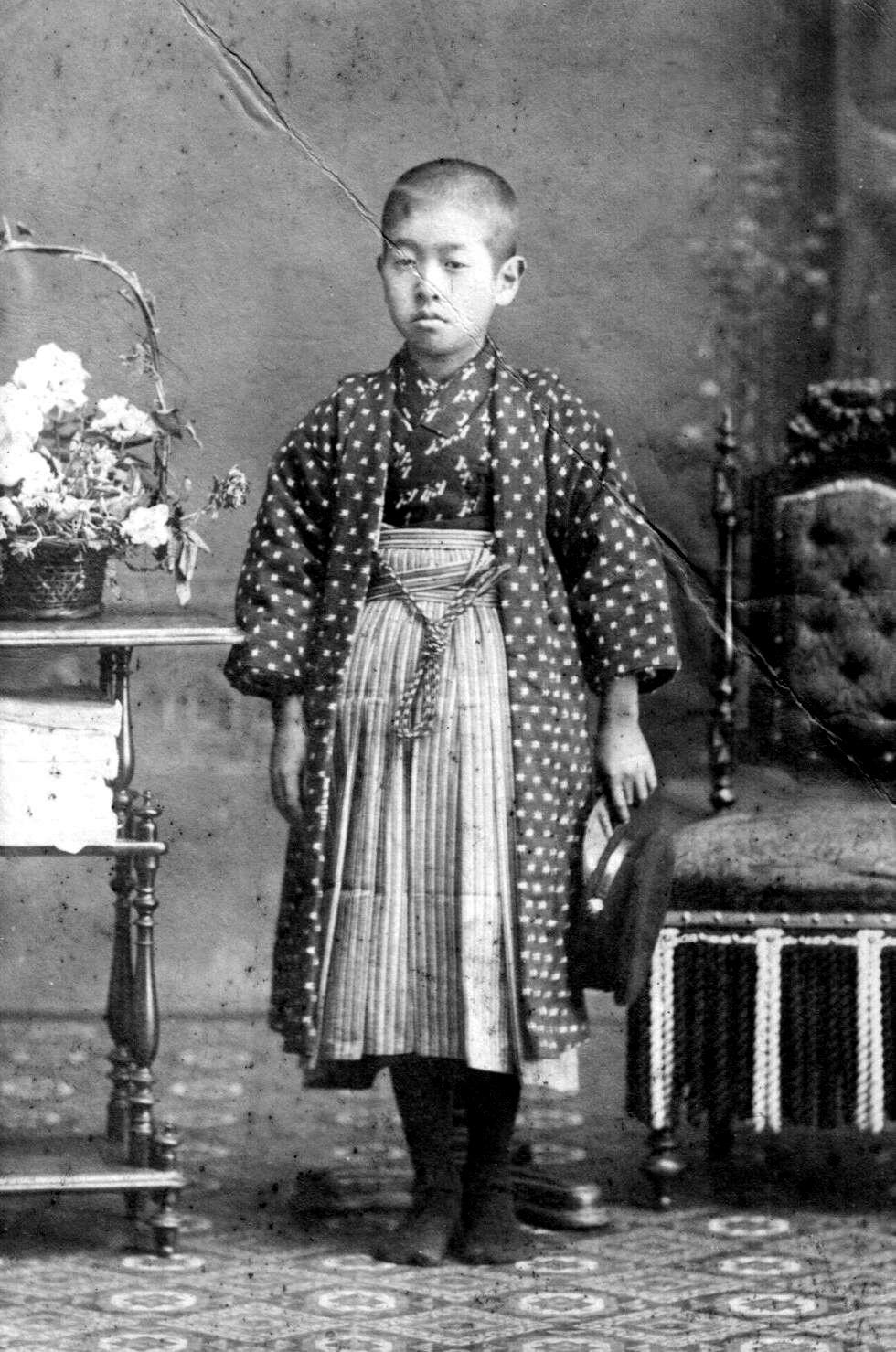
Hakama are traditional Japanese pleated, wide-legged trousers. In available photographs they look more like skirts. And are usully impossible to identify unless indicated. Hskama historically were worn by samurai warrors. They contiunue to be worn in martial arts (Aikido and Kendo) or in formal or ceremonial events. Hakama were traditionll done in silk or cotton. Modern hakama are done in polyester-rayon blends or cotton. The cut is an exacting traditional seven pleats (five front, two back), a stiff backboard (koshiita), and straps (himo). They are worn over a kimono, and tied at the waist with specific traditional knotting techniques. They had tone folded very carefully to maintain the required crisp pleats. Modern fabrics hold the plets better. Hakama were a male garment, but there ewere exceptions. Women occasional wear them, such as teachers in graduation ceremonies and for masrtial arts. Hakama are also worn by miko or shrine maidens. .

Navigate the Boys' Historical Clothing Web Site:
[Introduction]
[Activities]
[Biographies]
[Chronology]
[Clothing styles]
[Countries]
[Bibliographies]
[Contributions]
[FAQs]
[Glossary]
[Images]
[Links]
[Registration]
[Tools]
[Boys' Clothing Home]
Navigate the Boys' Historical Clothing Japanese pages:
[Return to the Main Japanese traditional garment page]
[Return to the Main Japanese traditional costume page]
[Return to the Main Japanese page]
[Activities]
[Choirs]
[Department store catalogs]
[Monarchy]
[Music recitals]
[Youth groups]
[School uniforms]