|
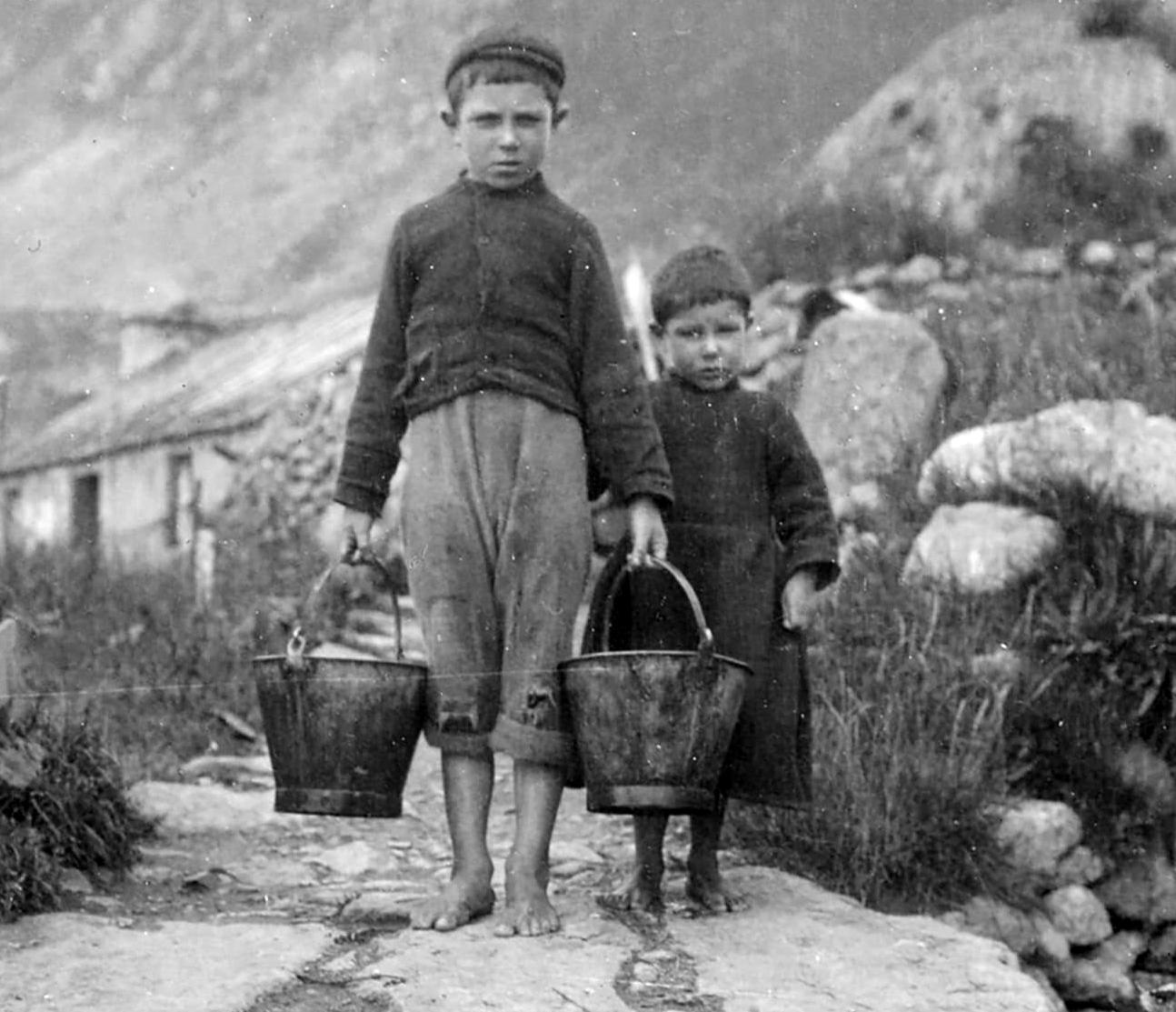
Life on the St. Kilda Archpeligo (mostly Hirta) went on with out change for centuries. The Norse began raiding the British isles in the modern era (9th century) and finally there was settlenent as well. They did not completely replace the indigenous population, but maintained a significant presence in St. Kilda and other Scottish islands (9th-13th centuries). We do not know what they did on St. Kilda. There was not even a poor church to raid. As far as we know, there is no DNA worknon he Islanders. Norse control in the Hebrides ended following the Battle of Largs (1263). This was a clash on the Ayrshire coast between King Haakon IV of Norway and Scotland's King Alexander III. Control of the Hebrides and oyher Scottish islands passed to Scottish clans like the MacLeods. The Norse (Danes and Norwegians) had lost control of England to the south three centuries earlier, but held on to isolated Scottish islands.) The St. Kilda Archipelago was thus traditionally owned by the MacLeod Clan of Dunvegan. For centuries the only contact was the annual visit by the steward sent by the Laird (the owner of the islands). The steward was tasked with collecting the rent for the land in kind (woven fabric, bird feathers, etc.). On such occasions, a priest, or a pastor (after the Reformation) would also visit the island. They would perform baptisms and weddings. For the rest of the year, religious services were organized by the inhabitants themselves and, naturally, blended the ancient Celtic beliefs with Irish Christianity (Scotlamd as Christinized by Irish missionaries) and finally Protestantism. It was not until relatively recently that missionaries venturing forth from the Church of Scotland settled on the island (18th century). Visiting ships caused outbreaks of small pox and cholera (18th century). 【Haswell-Smith】 Real change began (19th century). A perament church was finally erected (1827-28). It was the work of missionary Rev. John Macdonald. The mission was taken over by the Free Church of Scotland, which was dominated by a strict fundamentalist theology (19th century). They were were appalled by the pagan beliefs and Irish Catholic traditions that had survived among the islanders. Some 42 islanders, a substantial part of the population was resettled, many died en route. It was part of a program funded by the Highland and Island Emigration Society. Church of Scotland ministers worked to improve conditions on Hirta. A rather intolerant pastor, Rev. John Mackay, however, disrupted the islander's tranquil lives. As a result of the Industrial Revolution in Britain leading to modern ocean shipping and an increasingly prosperous population real change finally reached Hirta (second half of the 19th century). Particularly from the 1870s onward, the island began to be visited by groups of tourists. St. Kilda was than a day by motorized ships from the mainland Scottish coast. The tourists came not only to see the birds, but the islanders as well. They behaved as if they were at a zoo, interested in seeing those barefoot 'savages'. The leatherbneeded for shoes was an expensive commodity because it could not be produced locally to any extent. The contact with tourists was often rather humiliating for the inhabitants, but there were economic benefits. The Islanders organized themselves to sell handicrafts, especially fabrics, to tourists. This introduced a monetary economy to the island for the first time in its history. With the money from tourists, the islanders could buy some goods from the mainland.
Haswell-Smith, Hamish. The Scottish Islands (Edinburgh: Canongate, 2004).

Navigate the Boys' Historical Clothing Website:
[Return to the Main St. Kilda Archipelago page]
[Return to the Main Outer Hebridies page]
[Return to the Main Hebridies page]
[Return to the Main Scottish regional: Island page]
[Return to the Main Scottish regional page]
[Return to the Main Scottish page]
[Introduction]
[Activities]
[Biographies]
[Chronology]
[Clothing styles]
[Countries]
[Bibliographies]
[Contributions]
[FAQs]
[Glossaries]
[Images]
[Links]
[Registration]
[Tools]
[Boys' Clothing Home]
Navigate the Boys' Historical Clothing kilt pages:
[Main kilt page]
[Kilt suits]
[Scottish kilts]
[Scottish boys clothing]
[Scottish school uniform]
[Highland dance]
[Pipeband]
[Irish kilts]
[Irish boys clothing]
[Irish step dancing]
[Greek kilts]