|
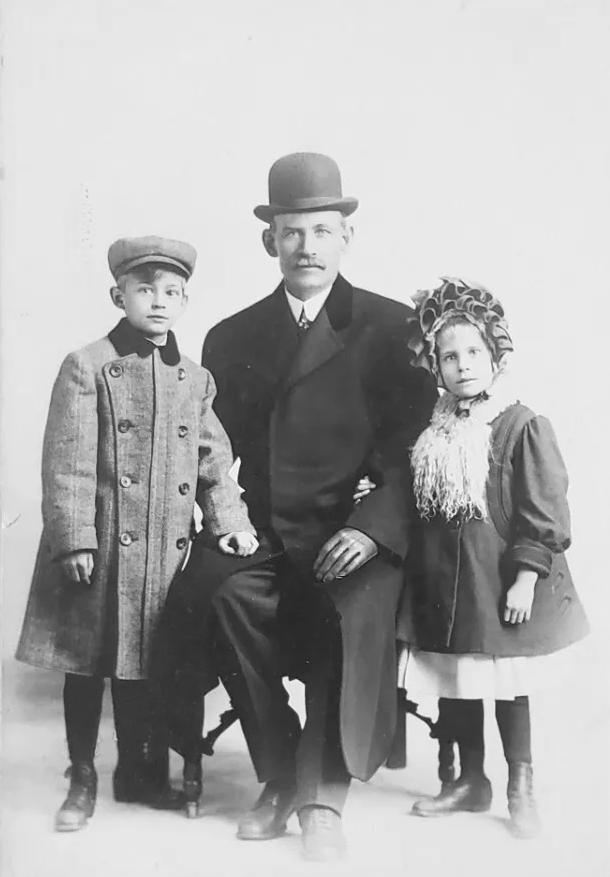
Cold weather outerwear changed over time. We do not yet have information on the 18h century. Thanks to photography we have some informtion on the 19th century, especilly he second half of he century. Overcoats seem especially popular in he 19th century. Coats were important because homes were not well heated. Children normally walked to school. And winters were colder than is he case today. Climate chnge had not yet begn o raie tempersures. We see overcoats, but not all families could aford overcoats. Reefer jackets seem more common. We still see overcoats in the early-20th century. The school portraits which by the end of the century were becoming popular generally do not show head wear and winter overcoats. Coat styles shifted in the 20th century. We still see girls wearing overcoats, but not many boys, especially woking-class boys. . A good example is an Iowa school in 1909. We still see some overcoats (1910s). A good example is ??? Green in 1919. We see a definite shift toward jackets, especially after World War I (1914-18). We see increasingly casual styles (1920s). This means various styles of shorter winter garments. We see some overcoats (1920s), but not as many as in the early-20th century. Some of the jackets we see are very heavy items for cold weather. This is a little difficult to follow as mom's usually took off a child's cold weather outerwear for a studio portrait, but we do see some portraits with cold-weather garments. And the increasingly prevalent snapshots provide information on winter garb. We begin to see rainwater becoming more important than overcoats. Overcoats might be worn in the rain. But dedicated rain coats become very important as overcoats declined. Rain coats were common at moid-century. They were needed when chilen ewalked to school. By by mid-20th century, children might or might not have overcoats, but many had rain coats. Jackets became increasingly popular in the 20th century gradually replaced overcoats, even with suits, but suits were also becoming less common. There were heavy jackets. They were very common in the northern states, but less necessary in the southern states. After mid-century especially during the 1960s, long overcoats basically went out of style for children. A factor here was the trend toward casual clothes and fewer boys wearing suits. Rather we see heavy jackets. Ski-styles become popular.
We do not yet have information on the 18h century.
Thanks to photography we have some informtion on the 19th century, especilly he second half of he century. Overcoats seem especially popular in he 19th century. Coats were important because homes were not well heated. Children normally walked to school. And winters were colder than is he case today. Climate chnge had not yet begn o raie tempersures. We see overcoats, but not all families could aford overcoats. Reefer jackets seem more common. We still see overcoats in the early-20th century. The school portraits which by the end of the century were becoming popular generally do not show head wear and winter overcoats.
Coat styles shifted in the 20th century. We still see girls wearing overcoats, but not many boys, especially woking-class boys. . A good example is an Iowa school in 1909. We still see some overcoats (1910s). A good example is ??? Green in 1919. We see a definite shift toward jackets, especially after World War I (1914-18). We see increasingly casual styles (1920s). This means various styles of shorter winter garments. We see some overcoats (1920s), but not as many as in the early-20th century. Some of the jackets we see are very heavy items for cold weather. This is a little difficult to follow as mom's usually took off a child's cold weather outerwear for a studio portrait, but we do see some portraits with cold-weather garments. And the increasingly prevalent snapshots provide information on winter garb. We begin to see rainwater becoming more important than overcoats. Overcoats might be worn in the rain. But dedicated rain coats become very important as overcoats declined. Notice the rain coats whih were common at mid-century.. By by mid-20th century, children might or might not have overcoats, but many had rain coats. Jackets became increasingly popular in the 20th century gradually replaced overcoats, even with suits, but suits were also becoming less common. There were heavy jackets. They were very common in the northern states, but less necessary in the southern states. After mid-century especially during the 1960s, long overcoats basically went out of style for children. A factor here was the trend toward casual clothes and fewer boys wearing suits. Rather we see heavy jackets. Ski-styles become popular.

Navigate the Boys' Historical Clothing Web Site:
[Return to the Main U.S. outerwear page]
[Return to the Main U.S. country cold weather page]
[Return to the Main U.S. seasonal and inclement weather garment page]
[Return to the Main U.S. country garment page]
[Introduction]
[Activities]
[Biographies]
[Chronology]
[Clothing styles]
[Countries]
[Bibliographies]
[Contributions]
[FAQs]
[Glossary]
[Images]
[Links]
[Registration]
[Tools]
[Boys' Clothing Home]