|
"My Luftwaffe is invincible .... And so now we turn to England. How long will this one last two, three weeks?"
-- Herman Göring, Reichmarshal, June 1, 1940
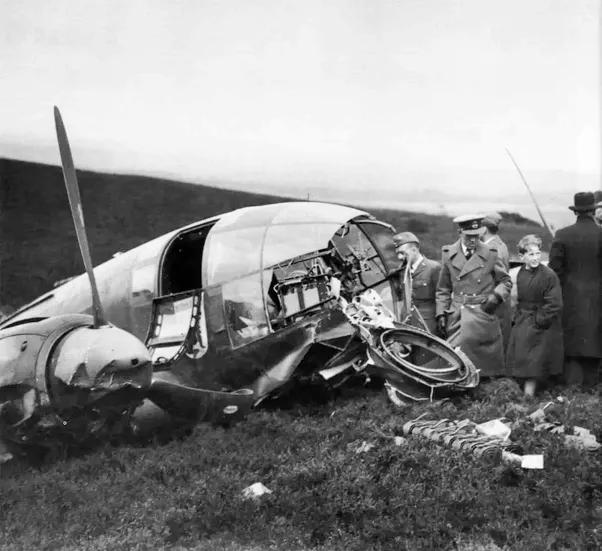
The German Luftwaffe at the start of the Battle of Britain was the most powerful airforce on the War. It had at the time was seen as a vast air armada to hurl at the British. The Luftwaffe deployed 2,355 planes, including 1,000 bombers and over 700 front-line fighters. It was the largest and most effctive airforce in the world. This was the force that had so frightned the British and French at Munich. The Luftwaffe had superbly trained and more experienced pilots. Their fighter pilots had a well-conceived tactical doctrine. The RAF was ill prepared for the campaign. They had been bloodied in France. The Lufwaffe had, however, severe weaknesses. It was conceived as a tactical air force and was not equipped for a strategic bombing campaign, especially one at substantial distances from their bases. The German air offensive was to be conducted with two engine medium bombers that proved highly effective in short range tactical operations, but were not well suited for long-range strategic bombing. They had no strategic bomber fleet with the ability to strike inforce throughout Britain. The Me-109 was, however, the preminent fighter in the opening years of the War, although its edge over British and French fighters is commonly overstated. The reason the Luftwaffe did so well in France was the concentration of force and its attack mode which put the the Allied fiughters at a disadvantage, easy targets on the ground, without radar. The British Spitfire was the first oposing fighter of comparable capabilities. It was over Britain that the inadequacies of the Luftwaffe first became apparent. The Me-109 had several advantages, including fuel injection and canon rather than machine guns. Its major disadvantage was its limited range which meant that over England it had only minutes of combat to protect the bombers. Over Kent this was manageable, but further north the fighters could not stay with the bombers very long and north of London fighter escorts were ot possible. And it was in the industrial Midlands north of industry when British industry was located. No matter how good the Me-109 was, it was valuless after it had to wihdraw across the Channel. The greatest problem for the Germans, however, was the chief of the Luftwaffe was incompetent and more concerned with maintaing his relationship with Hitler than listening to his competent commanders. And not fully understood at the onset of the Battle was that their bombers (Do-17, Ju-87, Ju-88, and He-111) were totally unsuited for the campaign. All four were not only slow, but carried only small bomb loads. And most importantly they were vulnerable to the British fighters. Lufwaffe bombers had 6-7 hours of fuel bringing most British cities within range. Luftwaffe fighters, however, could only cover the bombers raiding southern England and not beyond London. And even then they only had fuel for a few minutes of aerial combat. Another problem was that the German planes were beautifully engineered, but were complicated and required extensive maintenance. This meant that the Luftwaffe was unable to strike with the full force, especially after the opening raids. .
The German Luftwaffe at the start of the Battle of Britain was the most powerful airforce on the War. The Germans during World War I created a highly effective air arm (1914-18). The airplane was first used in any significant way in World War I. It played a useful, but marginal role. The Allies were able to outproduce the Germans, but both side made important technological strides. The German air ace the Red Baron (von Rictoff) was the most famous pilot of the War. When he was killed, Herman Göring took over command of the the Flying Circus. The German air forces were dissolved after the War, as required by the Treaty of Versailles. Even so the German military continued to develop technology through secret arrangements with foreign countries. German companies built planes in other countries, especially the Netherlands. Glider clubs throughout Germany provided training for future pilots. The operations were expanded when the NAZIs seized control (1933). Soviets and Japanese. Adolt Hiter ordered Göring to formally establish the Luftwaffe (February 26, 1935). The Versailles Treatu was still in force. Great priority was given to building advanced all-metal planes. By the time the Allies attempted to face up to Hitler at Munich (October 1938), Germany had the largest, most modern air force in the world. It was a major reason why the Allies decided to appease Hitler. When World War II finally broke out in Poland (September 1939), the Luftwaffe played a major in the early German victories. , on the eve of the outbreak of World War II, the Luftwaffe had become the most advanced, powerful air force in the world. As such it played a major role in Germany's early successes in the war, and formed a key part of the Blitzkrieg concept, much thanks to the use of the innovative Junkers Ju 87 dive bomber (Sturzkampfflugzeug - "Stuka"). A contingent from the Luftwaffe (The Legion Condor) was sent to support Franco's forces in the Spanish Civil War with planes (notably the Ju 87) and personnel which not provided critical support for Franco, but provided important battle experience for the Luftwaffe that the French Air Force and British Royal Air Force did not have. The Luftwaffe would prove an essential component to Blitkrieg. German artillery, in many cases move by horses, could not keep up with the Panzers. The Luftwaffe could. By the end of the War, the Luftwaffe was decimated. The fundamental weakness was the inability of German industry to create a force large enough to support the many campaigns to which Hitler committed German armed forces.
It had at the time was seen as a vast air armada to hurl at the British. The Luftwaffe deployed 2,355 planes, including 1,000 bombers and over 700 front-line fighters. It was the largest and most effctive air force in the world. This was the force that had so frightened the British and French at Munich.
The Luftwaffe deployed a number of different fighters and bombers in the Battle of Britain. The principal fighter was the Me-109. The Me-109 was, however, the preeminent fighter in the opening years of the War, although its edge over British and French fighters is commonly overstated. It had several advantages, including fuel injection and canon rather than machine guns. The reason the Luftwaffe did so well in France was the concentration of force and its attack mode which put the the Allied fighters at a disadvantage, easy targets on the ground, without radar. Göring had high hopes for the longer-range twin-engine Me-110, but it proved embarrassingly disappointing. It required Me-109 escorts. The bombers included the Do-17, Ju-87, Ju-88, and He-111). The Ju-87 was single engine Ju-87 Stuka. It was a very effective dive bomber, but could only be used where the Germans had established air superiority which the Germans learned at considerable cost in the opening phase of the battle. The slow-flying Stuka was vulnerable to British fighters. Stuka squadrons when committed over Britain were decimated. This was not the end of the Stuka story. Göring had a habit of choosing friends over competency for important Luftwaffe posts. One such friend was a fellow World War I ace -- Ernst Udet. Even having no technical expertise, Göring put Udet in charge of aircraft development and procurement (1939). Udet was so impressed with the Stuka that he insisted that all new bombers have dive bombing capability. This was possible with a small plane like the Stuka. It was impossible for a heavy bomber which German aircraft designers tried ti tell Udet to no avail. The result was that Udet wrecked new plain development. He is a major reason that German did not development a heavy bomber. This all blew up on him when Barbarossa began unraveling. He shot himself (November 1941). The Do-17, Ju-88, and He-111 were twin engine medium bombers. The Luftwaffe failed to develop an effective strategic bomber. The Ju-88 was an effective medium bomber, but only available for the Battle of Britain in limited numbers. At the time of th Battle of Britain only the United States had a heavy bomber--the B-17 Flying Fortress. THE RAF began flight testing the Avro Lancaster during the Blitz (February 1941).
The Luftwaffe had superbly trained and more experienced pilots at the advent of Battle of Britain. The training program based upon theneeds forafew hort, sharp wars. The campigns to his pointdid not suggest that pilot would be needed fora long debilitaring war of attritiion. Their fighter pilots had a well-conceived and perfected tactical doctrine. The RAF was ill prepared for the campaign. They had been bloodied in France where they took subtantial losses.
The Lufwaffe with all its strengths had, however, had severe weaknesses. It was conceived as a tactical air force and was not equipped for a strategic bombing campaign, especially one at substantial distances from their bases. The German air offensive was to be conducted with two engine medium bombers that proved highly effective in short range tactical operations, but were not well suited for long-range strategic bombing. They had no strategic bomber fleet with the ability to strike inforce throughout Britain. The Me-109 was a superb fighter. But much of itsearly successwas in facing obselete aircraft and tactics. The British Spitfire was the first oposing fighter of comparable capabilities. And the RAF was thefirst time the Luftwaffe faced an opponent with an integrated air defense. It was over Britain that the inadequacies of the Luftwaffe first became apparent. The Me-109 was one of the superb fighters of the War. The major problem over Britain washowit was used. Its major disadvantage was its limited range which meant that over England it had only minutes of combat to protect the bombers. Over Kent this was manageable, but further north the fighters could not stay with the bombers very long and north of London fighter escorts were ot possible. And it was in the industrial Midlands north of industry when British industry was located. No matter how good the Me-109 was, it was valuless after it had to wihdraw across the Channel. The greatest problem for the Germans, however, was the chief of the Luftwaffe was incompetent, not stupid but incompetent. Görimg was more concerned with maintaing his relationship with Hitler than listening to his knowledgeable commanders. And not fully understood at the onset of the Battle was that their bombers were totally unsuited for the campaign. All four were not only slow, but carried only small bomb loads. And most importantly they were vulnerable to the British fighters. Lufwaffe bombers had 6-7 hours of fuel bringing most British cities within range. Luftwaffe fighters, however, could only cover the bombers raiding southern England and not beyond London. And even then they only had fuel for a few minutes of aerial combat. Another problem was that the German planes were beautifully engineered, but were complicated and required extensive maintenance. This meant that the Luftwaffe was unable to strike with the full force, especially after the opening raids.

Navigate the CIH World War II Section:
[Return to Main Battle of Britain forces page]
[Return to Main Battle of Britain page]
[Return to Main World War II air page]
[Biographies]
[Campaigns]
[Children]
[Countries]
[Deciding factors]
[Diplomacy]
[Geo-political crisis]
[Economics]
[Home front]
[Intelligence]
[Resistance]
[Race]
[Refugees]
[Technology]
[Bibliographies]
[Contributions]
[FAQs]
[Images]
[Links]
[Registration]
[Tools]
[Return to the Main World War II page]