|
Finland was involved in World War II almost from the beginning. The Finnish war experience was one of the most unusual of the War. The Finns fought with and against both the Sovietrs and NAZIs at different stages of the War. Finland was actually involved in three different wars: the Winter War (1939-40), the Continuation War (1941-44), and the Lappland War (1944-45). After seizing eastern Poland as part of a deal with the NAZIs, Russia next turned on Finland in the Winter War. The Allies almost sent forces to aid the Finns. The Red Army energed victorious from the Winter War (1939-40), but at considerable cost. The poor showing of the Red Army was noted by Hitler. After the NAZI's launched Operation Barbarossa (June 1941), Finland joined the Germans to regain the territory lost in the Winter war. The Finns refer to this as the Coninuation War. The Finns refused, however, to go beyond the lost territory, much to Hitler's despleasure. This was a major reason that the NAZIs failed to capture Lenningrad. The Finns also refused to turn their Jews over to the NAZIs, despite repeated German demands. Finally as the War went against the NAZIs, the Finns fought the Germans in the Lappland War.
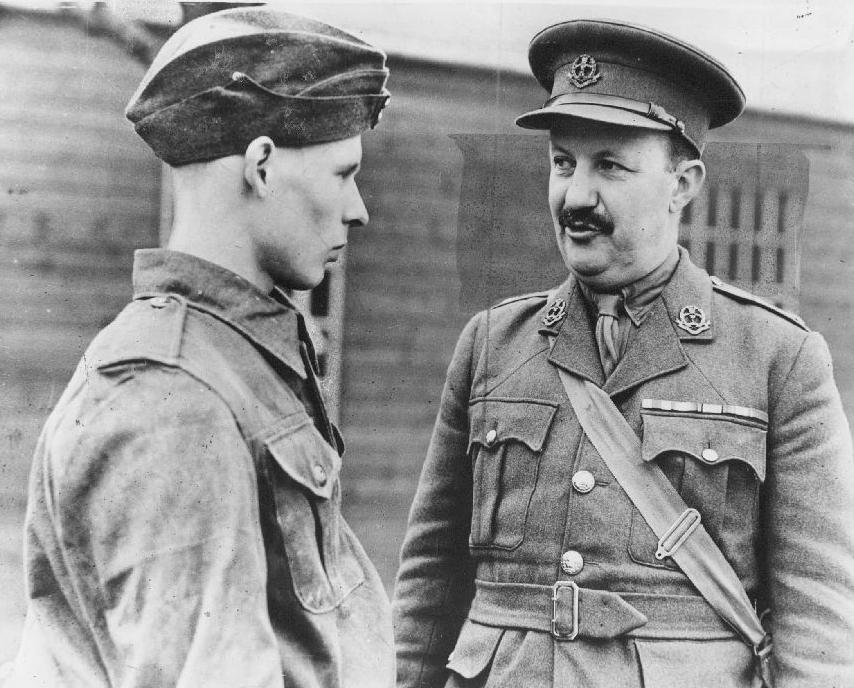
Finland was part of the Russian Empire. Thus Finns fought with the Tsarist Army when war broke out (August 1914). The most noted Finnish soldier involved in the War was Gustaf Mannerheim. He was promoted to Major General (1911). He was the commander of the Emperor's Uhlans of the Guard which was deployed in Warsaw. Perhaps because he was not Russian he had good relations with the Poles. He was thus in Poland when World War broke out. He fought against the Austrians, first as a brigade commander and then as the commander of the 12th Cavalry Division. He was awarded the the Cross of St George, the highest Tsarist military decoration (1914). He was promoted to Lieutenant-General and and commanded the 6th Cavalry Corps deployed on the southern front. With the collapse of the Russoan Army and the Bolshevik Revolution (October 1917), Mannerheim made his way back to Finland (December 1917). Finland had declared its independence. The result was chaos. There were 40,000 Russian soldiers in Finland and the Bolsheviks were contesting the streets with the new Government. Mannerheim was the highest ranking Finnish Tsarist officer. The Finnish Senate assigned Mannerheim the responsibility of forming a Finnish national army and establishing order. Mannerheim's used his troops to disarm the Russian garrisons in the north. When the revolutionary Red Guards attempted to seize power in the south, civil war broke out. Fighting lasted 3 moths. Mannerheim's White Army emerged victorious (May 1918). After this achievement, Mannerheim's relations with the Senate souered. The primary issue was the Sente's generally pro-German policy. Germany's defeat of the Russians had made Finnish independence policy. Mannerheim believed that a pro-German policy left Finland vulnerable if Germany lost the War in the West, which of corse is precisely what transpired. Mannerheim resigned and left Finland. He was able to influence Allied policy toward Finland.
When Germany capitulated (November 1918), the political situation shifted and Mannerheim was called back (December 1918). He was appointed regent. (Finland was still theoreticlly a dependency of the Russian monarchy.) Finland's held its first presidential election (Summer 1919). Mannerheim was defeated by K.J. Ståhlberg. Mannerheim participated in creating the constitution of the Republic of Finland (July 1919). Mannerheim wanted Finland to fight the Bolshevicks in the Russian Civil War. He failed in this effort and retired to private life. He worked with charities, including the Red Cross. He founded the Mannerheim League for Child Welfare (1920).
Finland joined the League of Nations. The Government gave little attention to the military. The country maintained only a small army and did not have modern airplanes or tanks.
Carl Gustaf Mannerheim, just as with his country's independence, would play a central role in Finland's resisrance to Soviet aggression. The Finnish Government awarded him the title of Field Marshall (1933). It was largely an honorific recognizing his servive to Finland. Finland at the time had only a small army with few modern weapon. At the same time the Soviet Union accros the long border were building a massive military with modern weapons including aircraft, tanks, and artillery. Mannerheiim's major effort with the limited funds available was to construct a series of defensiv mplcements across the southeastern bordernorth of Lenningrad. This was the most heavily populated sector of the Finno-Soviet border. This became known as the Mannerheim Line. At the end of the World War I, it was Mannerheim which moved away from the Germans. And with the NAZI seizure of power (1933), he became critical of the NAZIs. Finland was, however, a small country with a long birder with the Soviet Union and thus had no choice, but to develop relations with other possible sources of support. He as a major Finnish official, participated in visits to Finland by NAZI dignaries. This included Goering's well-publicized hunting trips. After Hitler and Stalin launched World War II by attacking Poland *September 1939, both dictators began the process if carving up the rest of Europe. Stalin's next victim was Finland and the Red Army invaded Filand (November 1939). Finland again turned to Mannerheim for its deliverence. Finland appointed Mannerheim its Commander-in-Chief. The Finns who Stalin expected to iverwelm in days, fought a gallant defensive campaign. The Red Army despite emense supporority in men and equipment were stopped at the Mannerheim Line defenses and by innovative Finnish tactics. They suffered enornous losses which hd never been fully admitted. Eventually the Red Army byweight of numbers smashed through the Mannerheim line. The Finns were firced to ceed large ares to the Soviets bd grnt basing rights. It is unclear why Stalin did not takeover the whole country as he did in Eastern Poland and the Baltic. NAZI diplomacy may have been a factor as well as the intense criticism in the forign press. The ppor performance of the Redamy was afctor in Hitl's decisson o invade the Soviet Union. The NAZIs courted Mannerheim, offered him the opportuniyto regain loss territory. The Finns this participated in Barbarossa, and did regain the lost territory. Mannerheim made it clear that Finland was xaobligerent and not a NAZI ally like Hungary and Romania. Hitler and OKW ws outraged that Mannerheim did not pursue the War beyond the territory the Soviets had seized in the Winter War. The Finnish Government appointed Mannerheim Marshall of Finland (1942). Hitler visited Finland to offer his congratulations and to secure greatr Finnish participation in the War. Secret recordings made by the Germans revel Hitler expessing surprise at the oviet resistance abd tank priduction. Mannerheim visited Grnany and was received by Hitler. Hitler was unable, however, to convince Mannerheim to attack beyond the territitory recivered from the Soviets. As the tide turned in th Eat, Mannerheim ralized that Finland would have to get out if the war. Th Funnush Parlianent appointed him President of Finland (August 1944). He concluded a separate peace with the Soviets (September 1944). Mannerheim resigned as president due to declining health. He went to Switzerland and spent his last years there away from the spotlife of public life. He ied (1951).
NAZI Foreign Minister Ribbentrop and newly appointed Soviet Commissar for Foreign Affairs Molotov on August 23, 1939, signed the Nazi-Soviet Non-Aggression Pact. At the time of the signing, British and French delegations were in Moscow trying to reach an understanding with Stalin. He was convinced, however, that they were tring to draw him into a war with Hitler. The two countries which until that time had been bitter foes, pledged not attack each other. Any problems developing between the two countries were to be delt with amicably. It was last for 10 years. The Pact shocked the world and the purpose was immedietly apparent. It meant that Germany could attack Poland without fear of Soviet intervention. Thus after defeating Poland, Germany did not have to fear a full-scale European war on two fronts. What was not known at the time was that there was a secret protocol to the pact which in effect divided Eastern Europe betwen the two countries. This protocol was discoered after the end of the World War II in 1945. The Soviets continued to deny this protocol until 1989. The NAZIs 8 days after signing the Pact invade Poland on September 1, 1939, launching World War II. Although the Soviet's did not enter the War against Britain and France, the Soviets were virtual NAZI allies as they provided large quantaies of strategic materials, especially oil. Communist parties in Britainand France opposedthe war effort. The Communst Party in America opposed President Roosevelt's efforts to expand defense spending and assist Britain and France
It was the Soviet Union not Germany that first struck after the invasion of Poland. Only 2 months after seizing eastern Poland, the Soviet Union on November 30, 1939 invaded Finland, launching the Winter War. Stalin sought a security belt to the west. Finland was the next step in that process. Soviet planes and naval vessels bombarded Finish cities. Roosevelt called in the "rape of Finland". [Freidel, p. 324.] Former Ameican President Herbert Hoover, who had organized American relief efforts for Belgium during World War I, headed voluntary war relief for the Finns. (The President hoped that Hoover would work with Mrs. Roosevelt to work on Government sponsored civilian war relief for the Allies. Such was Hoover animosity toward Roosevelt that he refused. If he had agreed, he suely would haave eventually headed American World War II relief efforts. [Freidel, p.325.] The Finns and Soviets reached a peace agreement in March 1940. The Soviets got the security belt they wanted around Lenningrad. The Soviet invasion of Finland had significant repercussions. The Allies for a time considered actively aiding Finland, but the Germans offensives in the West soon made that impossible. The Red Army energed victorious from the Winter War (1939-40), but at considerable cost. The poor performance of the Red Army in Finland was a factor in Hitler's decission to attack the Soviet Union before Britain had been defeated.
The NAZI-Soviet Non-Aggression Pact was essentially the cyical partition of Eastern and Central Europe by Hitler and Stalin(August 1939). And it sent in motion a series of terrutorial changes, refgugees, and evacution begun with the Winter war, one of several naked aggressions ordered by Stalin (November 1939). After Hitler and Stalin launched World War II by invading Poland (September 1939). Finland like most of Eastern Europe attempted to remain neutral. Stalin had other ideas, including designs on neighboring Finland. This sent in motion a series of evictions and deportations affecting the Finnish people as well as as the Russians. Finland was different in that the country resisted the Red Army and fought back. And the country was never totally overwealmed and was able to protect and assist the refugees. Finland was a small country and totally outclased by the Soviet behoumouth and massive Army. As a result, Stalin forced theFinns into the hands of the Germans. Finland refused, however, to join the Axis, but to regain its lost terrutory became a co-belligerant after Hitler launched Operation Barbrossa (June 1941).
The Soviet attack on Finland was followed by a series of other aggressions. Although it is the NAZI aggressions that are most commonly addressed in World War II histories, the Soviet Union compiled nearly as long a list of aggressions as the NAZIs. Operating within secret protocols to the Non-agression Pact, Hitler and Stalin were in fact close partners in the waging of aggressive war. The Great Patriotic War fought against the NAZIs after the 1941 German invsion came to be an icon in Soviet history. Left unsaid was the fact that Hitler and Stalin were partners in the virtul partition of Europe.
The Treaty of Moscow (March 1940) did not end Soviet demands on the Finns. The Soviets interfered in domestic Finnish politics as they did in the Baltics. They ordered the Finns to renove Väinö Tanner from the government. The Soviets used Finnish Communists to cause public disturbances. The Suomen-Neuvostoliiton rauhan ja ystavyyden seura (SNS--Finnish-Soviet Peace and Friendship Society) was a Soviet-controlled communist-front organization. Some Finns joined thinking thatthe Communists were about to take power. They began to defy the Finnish government and carried out a range of subversive activities. The Government banned the SNS (August 1940). The Soviets also began to make demands not specified in the Treaty of Moscow. They demanded that the Finns demilitarization the Aland Islands, an archipelago at the entrance to the Gulf of Bothnia between Finland and Sweden. They demanded control of the Petsamo nickel mines. Then they demanded the right to send troop trains through Finnish territory to the Soviet base at Hanko without any limitations. The Finns while banning the SNS complied with the Soviet demands. And the Finns saw the Soviets demands as identical to the tactics the Soviets used before invading the Baltic Republics. The Finns justifiably begin to fear that they would be the next target. The Finns began to resist further demand, however, after negotiations with the Germans led them to believe that they could rely on German assistance if the Soviets attacked again.
There is good reason to believe that Stalin was indeed planning a takeover of Finland. Soviet Foreign Minister Viacheslav Molotov visited Berlin for bilateral discussions on a range of bilateral issues (November 1940). Finlnd was high on the Soviet agenda. Molotov told Hitler that the Soviet Union planned to crush Finland. Hitler who was at the time moving German troops into Finland vetoed any such action.
The Finns attempted to negotiate defensive alliances with other countries. There was considerable sypathy for the Finns. The League of Nations had expelled the Soviets, but effective support or alliances did not prove feasible. The Sweedes who bordered Finland on the west were best position to help, but they were intent on remaining neutral and in case of a major Sovit attack, Swedih assistance would not be asequte. The Finnbs wanted assistance from Britain and France, but the Allies had been unable tgo help Poland when the NAZIs attacked and German control of the Baltic mean that Allied support was not feasible. In addition the Allies hard pressed by the NAZIs were reluctant to tak on the Soviet Union, although before the Soviet offensive in the West, they came very close to doing so.
There was only one county willing and capable of providing effective militart assistance--NAZI Germany.
Hitler for strategicic and racial reasons was sympathetic toward the Finns. After the occupation of Norway (April 1940) and success in the West (May-June 1940), Hitler began negotiations with the Finns. To preclude further Soviet demands on Finland the Germans agreed to an informal understanding (August 1940) which was formalized the next month (September 1940). Finland gave the Germans the right to move troops through its territory. The obstensibe reason was to support German operations in northern Norway. This also had obvious potential consequences for the Soviet Union. An additional aggreement permitted the Germans to station troops in Finland. The Soviets protested. And substantial German forces began arriving in Filand during early 1941. The details of these agreements were not widely publicized, but most Finns were releived to see German soldiers arriving in their country because they understandably feared another Soviet attack. In addition, many Finns especially those displaced still hoped to recover the territory seized by the Soviet Union in the Winter War.
Race is often treated as a footnote to World War II. It was not. Race was central to Hitker and NAZI thinking and the war effort that they pursued. Rhe greatest German objective was to seize the land and resources of the East. The people were another matter they were to be removed and murdered in large numbers--Generalplan Ost. Those who were not to be murdered, were to be enslaved. The major problems the NAZIs faced were numbers--there was just not enough of them to achieve their horendous goals. Thus there was interest in gaining control over the Germans outsude the Reich. This effort was uses as an excuse to seize Austria and the Czech Sudetenland (1938). It soon became obvious, however, that it was in part a cover to seize neigboring countries--but it was at the same time also a very real desire. And it was a reason the NAZIs were interested in Scadanavia to the north. There were resources there, but also what the NAZIs called 'genetically valuable material'--the people. Scandanavia was settled by the north German tribes. These were German tribes unknown to the Romans, but would burst on to the Europoean scene as the Vikings in the medieval era. And unlike Germany itself, Scandanavia had a more Germanic population than Germany itself which was more mixed with other European peoples. Finland was, however, not part of Scandanavia, although bordering on it. And the Finnish people were not the descendents of Germanic tribes. They are a Nordic, but not a Germanic people. They are Proto-Uralic peoples. The NAZIs were determined to kill Slavs and other such people, but the Finns looked like Scandanavians--the blond hair and bklue eyes the NAZIS sp admired. And located strategically north of the evolving Barbarossa plan, it was a valuable potential ally. The Finns like other European people had no desire for war. but the Sovier invasion and seizure of Karelia (1939-40) left the Finns willing to cooperate.
German military discussions with the Finns began after the signing of the military cooperation agreementi (September 1940). The Finns were primarily interested in German military equipment and support to prevent aSoviet invasion. It is not clear just when the Finnish Government agreed to participate in the German invasion of the Soviet Union. As far as we can tell, this was not involved in the 1940 agreements. The Germans had to be concerned with security. The German plans for the attack on the Soviet Union envisioned by December 1940 Finninish military participation. Hitler did not permit his generals, however, to infrm the Finns and initiate talks until several months later (April 1941). [Weinberg, pp. 127-128.] The Finns kept their army outside the German command structure even after entering the War, despite pressure from the Germans for greater control. It is not altogether clear what the Finnish war gains were and what if any was agreed to with the NAZIs. It is certain that they wanted the lost territory. If they planned to acquire ant additional territory, we do not know. In all probability give earlier NAZI successes, the Finns seem to have believed that the NAZIs were going to succeeed in one massive blow.
The poor showing of the Red Army in the Winter War was noted by Hitler. The Battle of Britain in many ways changed the course of the War. An invasion of Britain was impossible without air superiority. Hitler, fearing a cross-Channel invasion, decided that the only way to force the British to seek terms was to destroy he Soviet Union. He began shifting the Wehrmacht eastward to face the enemy that he had longed to fight from the onset--Soviet Russia. The nature of the War changed decisevely in the second half of 1941. The Germans invaded Russia in June 1941, launching the most sweeping military campaign in history. The Soviets were surprised and devestated. Stalin ignored warnings from the British who as a result of Ultra had details on the Germna preparations. Stalin was convinced that they were trying to draw him into the War and until the actual attack could not believe that Hitle would attack him. The attack was an enormous tactical success. The Soviets were surprised and devestated. The Soviet Air Force was destoyed, largely on the ground. The German scaptured 3.8 million Soviet soldiers in the first few months of the campaign. No not knowing the true size of the Red Army, they thought they had essentally won the War. German columns too the major cities of western Russia and drove toward Leningrad and Moscow. But here the Soviets held. The Japanese decission to strike America, allowed the Sovierts to shift Siberian reserves and in December 1941 launch a winter offensive stopping the Whermacht at the gates of Moscow--inflicting irreplaceable losses. The army that invaded the Soviet Union had by January 1942 lost a quarter of its strength. Hitler on December 11 declared war on America--the only country he ever formally declared war on. In an impassioned speech, he complained of a long list of violations of neutality and actual acts of war. [Domarus, pp. 1804-08.] The list was actually fairly accurate. His conclusion, however, that actual American entry into the War would make little difference proved to a diasterous miscalculation. The Germans who months before had faced only a battered, but unbowed Britain now was locked into mortal combat with the two most powerful nations of the world. The British now had the allies that made a German and Japanese victory virtually impossible. After the Russian offensive of December 1941 and apauling German losses--skeptics began to appear and were give the derisory term " Gröfaz ".
The NAZI's launched Operation Barbarossa (June 22, 1941). Finland joined the Germans only 3 days later (June 25). Actually the Finns claim that the Soviets initiated hostilities with air attacks on Finnish cities. Prime minister Rangell then declared in a sppech to Parliament that Finland was at war with Soviet Union. I'm not sure if any historian has fully accessed the motives of the Finnish Government. Surely the desire to recover the lost territory was the primary factor. There may have been other factors such as the view at the time that the Stalin and the Soviet Union was a mortal threat to Finland. Finland joined the Germans as a co-beligerent but not an ally or member of the Axis. The Finns refer to this as the Coninuation War. The Finnish Army initiated an offensive om the cease-fire line (June 30). The Finns refused, however, to go significantly beyond the lost territory, much to Hitler's despleasure. This was a major reason that the NAZIs failed to capture Lenningrad.
The border area between southern Finland and the Soviet Union is Karelia. It is the area between the White Sea and the Gulf of Finland. It is an extensive area which includes the two largest lakes in Europe, Lake Ladoga and Lake Onega. What is often referred to as the Karelian Isthmus is located between the Baltic Gulf of Finland and Lake Ladoga. To the south is Ingria, the land of the closely related Ingrian people. The traditional western boundary was the Neva river itself but was eventually shifted northward into the Karelian isthmus to follow the Sestra River which since Napoleonic times was the Russo-Finnish border.The River Svir on the other side of Lake Lagoda completed the souther border of Karlia. Lake Saimaa marked the Western border while Lake Onega and the White Sea mark the Eastern border. The land to the north was occupied by nomadic Samis (Lapps), but unlike the south there were no natural border onky trackless woods (taiga) and tundra. Karelia became the primary bone of comtention between Finland an the Soviet Union during World War II. This clash was not new. Russian Novograd and the Sweses fought over the area during the medieval era. It was the border area between Swedish controled Finland and the Tsarist Empire. The issue was settled for a time by the Great Northern War in which Russia seized Finland. With Finland part of the Tsarist Empire, Karelia became a dead issue. This changed after the Russian Revolution when Finland managed to achieve its independence and Karelia again became an international border area. Finland had almost all of Karelia and it included because of its southern location, a substantial part of the best aricultural land in Finlnd. This was the border Stalin demanded, taking advantage of the NAZI-Soviet Non-Aggression Pact and the Allies (Britain and France) need to focus on NAZI Germany. Stalin demanded among other matters that the border be shifted further north, encompassing almost all of Karelia. When the Finns refused, Stalin invaded, setting off the Winter War (1939-40). The Finns were forced to ceed most of Karelia and evacuated their people. Karelia would be fought over again in the Continuation War (1941-44)
Finland faced many of the same World War II problems on the home front that were experienced by other European countries. Unlike most other countries, however, it was not occupied by either the Germans or Soviets. It lost important territory to the Soviets, but what remained was not occupied. Thus while under terrible pressure and facing adverse circumstances, the Finnish Government was left intact and able to manage the sutuariin to mitigate the impact on the population. This meant that Government played a much larger role in people's lives than was the case before the War. The most serious problem on the homefront was food shortages. The Soviet seizure of Karelia meant the loss of a substantial portion of the country's most productive agricultural land. This and the conscription of men for the Army substantially reduced food production. Disaster was overted by German food aid. Finland was the only country which Germany provided substantial food aid. Even so, there were serious food shortages which required strict rationing regulations. Food was also a factor in evacuating Finnish children, primarily to Sweden. Many of the children taken in by the swedes had serious health problems as a result of malnutrition. Finland was primarily an agricultural country, but there was some industry which wa also adversely affected by conscription. And because the economy was put on a war footing with manufacturing shiftted to war produvtion, shortages develoed for almost everything, not just food. Health care also proved a serious problem as the country's medical establishment bwas hard pressed to care for battlefield casualties. Even so the Finns managed as best they could. According to one historian, "In wartime Finland , the mobilization of economic and human resources suceeded well. The cohesion between the two fronts was never severely disrupted and the stability of the home front, even if burdened, never fell apart. The home front could create a wartime normality, which was needed to maintain stabiliy." [Kinnunen and Kivimäki, p. 231.] Religion was a factor on the home front. The overwealming factor forginging a national consendus and justufying enormous scrifice was fear of the Soviet Union. Despite the extensive war damage, casulties, and Soviet seizures, and impositions, a strong recovery began after Finland reached an accord with the Soviet Union ending the Continuation War (1944). The economy began to recover even while the Finns were still fighting the Germans in the north. One economic assessment maintains that the Finnish economy had reached pre-War levels only a year after the War (1946) and a real boom followed. [Nummela]
Finland's record with regard to its small Jewish community is one of the most laudable in Europe. Finland was dependent upon Germany for food and arms during the War. Tragically Finland, unlike many other European countries had very few Jews--about 2,000 people. The only exception was eight refugee Jews, we believe German Jews. The Finnish police deported 27 individuals to NAZI Germany (November 1942). Among them were 8 Jews, 7 of whom the Germans immediately murdered. The head of the Finnish police made the decesion. [Cohen] The 8 Jews were were Georg Kollman; Frans Olof Kollman; Frans Kollman's mother; Hans Eduard Szubilski; Henrich Huppert; Kurt Huppert; Hans Robert Martin Korn (who had been a volunteer in the Winter War); and an unidentified individual. [Gilbert, p. 534.] This was done quiettly, but the Finnish press found out about it and reported the news. It caused a national furor. Ministers resigned in protest. Lutheran ministers, the Archbishop, and the Social Democratic Party all protested to the Goverment. As a result, the Finns ended the deportation of foreign Jewish refugees. Some 500 foreign Jews managed to reach Finland during the War. About 350 moved on to other countries. Nearly half, about 160 who were transferred to neutral Sweden on the personl orders of Marshal Mannerheim. Some 40 of those remaining in Finland were conscripted for labor service in Salla, Lapland (March 1942). The Jewish refugees were moved to Kemijärvi (June) and eventually to Suursaari Island in the Gulf of Finland. SS Commander Heinrich Himmler took a personal interest in the Finnsh Jews. He twice traveled to Finland, obsensibly to visit Wafen-SS units operating there. While in Finland, he demanded authorities turn over the Finnish Jews. Given Finnish dependance on the Germans, he apparently thought he could force the issue. Surely this was the greatest effort he made for such as small number of Jews during the War. He was politely, but flatly turned down. Himmler had little experience in being turned down in this way. After the deportation of the 8 Jews earlier, the Finish police refused to cooperate with the Gwemany in rounding up Jews, even the remaining refugee Jews. As a result, the Finnish Jews nd nearly all the refugee Jews survived the War. There were Finnish Jewish soldiers that fought in the Continuation War with the Soviets. Some of the Jewish officers were in contact with the Wehrmacht.
Soviet partisans participated in the Continuation War (1941-44) . They were especially active in Karelia. Stalin expected a quick victory when he ordered the Red army to invade Finland with its small army. There was thus no partisan effort organized. This chnged with the Continuation War. The first such effort was a disaster. The Finns destroyed the 1st Partisan Brigade at Lake Seesj�rvi (August 1942). The Soviet Partisans distributed propaganda newspapers, including Pravda in Finnish and Lenin's Banner in Russian. One of the leaders of the partisan movement in Finland and Karelia was future KGB chief and Soviet leader Yuri Andropov.
The Soviet Union began World War II with the largest air force in the world. It included many obselete types, but more modern aircradt was being developed. Finland on the other hand had only a small airfirce with largely obselete types. While the Finns could not afford a modern air force, they did make some fortuitous effort in the area of civil defense that would save many lives during the War. Finnish officials watched the expansion of the Soviet military under Stalin with cnsiderable trepedaion, especially the Red Air Foce. And as in other countries, there primarily comnvern was the bombers and attacks on major cities. Helsinki organized an extensive civil defense system. A city decree before the War mandated that shelters had to be constructed in all high-rise building basements. These were not elaborate facilities, consisting of simple basement rooms with reinforced walls. They would not withstand a direct hit, but could hold up when nearby buildings were hit. The city government required that buildings have a civil protection supervisor. They could not be in the reserves or the armed forces and this would not be called away in case of a war emergency. The individuals chosen had the responsibility to ensure tht the occupants of apartment complexes had access to shelters. Many lives were saved as a result. Some larger shelters were built into solid rock, but this was an expensive undertaking and only accomodated a small parr of the population. Attention was given to the city hospitals. Underground shelters were built where patients could be moved to in the advent of air raids. Another alternative was to relocate the entire hospital. The Children's hospital was moved to the countryside. One hospital was built from scratch underneath the Finnish Red Cross building.
These precautions saved many lives when the Soviets launched the Winter War (1939-40). Only 3 hous after the Red Army smashed across the Finnish frontier, the Red Air Force bombed Helsinki. The major attacks occurred during the first few days of the War. The Soviets bombed Helsinki eight times during the Winter War. They dropped 350 bombs and 97 people killed, 260 were wounded. The attacks destroyed 55. [Helsingin, p. 22.] Given the size of the Red Air Force and the small number of Finnish cities, it is unclear why the Red Air Force attacks were so limited. This was not apparent at the time. Information on German bombings of Warsaw and other Polish cities was not widely reported as the foreign press largely fled Poland. The same was not true of Finland and the Soviet bombing of Finnish cities was widely condemned. President President Roosevelt asked the Soviets not to bomb Finnish cities. Foreign Minister Molotov reportedly replied, "Soviet aircraft have not been bombing cities, but airfields, you can't see that from 8,000 kilometers away in America." Far more Soviet attacks occurred during the Continuation War (1941-44), although again raids were fairly limited given the size of the Red Air Force. This was primarily because the Luftwaffe did such a thorough job of destrying the Red Air Force in the opening phase of Barbarossa. As the Soviets rebuilt the Red air Force, their primary focus was on tactical forces to pound the German Wehrmacht. The Soviets bombed Helsinki 39 times during the Continuation War. They killed 245 people and wounded 646. The primary Red Air Force effort was in 1944 and aimed at knocking Finland out of the war so the Soviets could focus on the Germans.
Stalin wanted to knock the Finns out of the war to better focus on the Germans. The whole idea of bombing Finnish cities was sensitive give the criticism aroused during the winter war. The Allies were providing the Soviets vast quantities of war material which Stalin did not want emperiled. Allied attitudes toward bombing changed with the Blitz and by the time of the Tehran Conference (November-December 1943), the Allies had begun the sytematic distruction of Germany's war ecomnomy which was largely located in the cities. The Allies accented to the Soviet bombing of Finland. Stalin ordered the largest Soviet raids of the War (February 6-7, 16-17 and 26-27, 1944).
The Finns sucessfully deceived Soviet pathfinders leading the bomber streams. The Soviets had only limited experiebce with strategic bombing. Their primary focus was on tactical operations supporting the Red Army. The Finns pursued
various tactics. They lit fires on the islands beyond the city. and they only used the bomber locating searchlights operated with anti-aircradt guns to the east of the city. Both tactics dislocated the Red Air Force pathfinders and a large part of the Soviet bombs missed Helsiki. The pathfinders as a result directed the bombers ro areas beyond the city. Only 530 bombs fell within the city itself. The majority of the population of Helsinki thus escaped the bombing. This combined with the city's bomb shelters limited civilian casualties
In end it was the Soviet distruction of Germam Army Group Center (June-July 1944) and realization that the Germans had irrevocably lost the War that finally forced the Finns to seek an armitice with the Soviets.
As a result of its northerly location, Lapland and the Sámi people have genrally not been involved in wider Europen history. This changed with World War II which includes struggles in the Arctic. The Lapland War was fought at the end of the War. The German reversals in the East were primarily in the south (1942-43). The Red Army began to focus on the north after finally relieving Lenningrad (1944). The Finns soon realized that they did not have the power of holding back the Red Army and sought to end the War. The Soviet destruction of Army Group Center with Operation Bagration (June-August 1944) essentially left the Finns on their own. The Germans anticipated that the Finns would seek a separate peace with the Soviet Union. The Germans thus made plans to protect their key interests in northern Finland even after the Finns withdrew from the War--especially the Petsamo nickel mines in the north. The Germans improved the rudimentary roads in the north and stockpiled large quantities of supplies, arms, and munitions. This was all in place were the Finns signed an armistice with the Soviets (September 19, 1944). As part of the Armistice, the Finns were required to drive the Germans out of their country. This allowed the Red Army to concntrate on the drive west toward Berlin. Surely part of Salin's calculation was also to punish the Finns for siding with the the Germans. Lapland thus became the scene of heavy fighting between the former co-beligerants. This left German forces fighting in the north after their failed attempt to take Murmansk. Hitler refused to allow the German units to withdraw. Thus the Finns had to fight the Germans in the far north. The Finns evacuate civilians. This time it was not just the children. Fighting began (September 27). The Germans as they retreated toward northern Norway burned everything in their path and heavily mined the entire area. The fighting dragged on until the last remanent of the German Army in Finland withdrew into occupied northern Norway (April 27, 1945). The Germans surrendered shortly aftr this (May 7). As a result, of the war, the Soviets forced the Finns to cede the Petsamo and Salla areas.
We note one chilhood rememberance about the Soviet launch of the World war II invasion of Finland. This followed on the Soviet invasion of Poland and was followed by similar actions against the countries of Eastern Europe. "At 9:30 a.m. on Nov. 30, 1939, at my school in Helsinki, my classmates and I were startled by the sound of gunfire. We ran to the corner window and saw, on the rooftop of the high school across the street, machine guns firing at airplanes overhead.
Our teacher told us that Helsinki was under bombardment -- war between Finland and the Soviet Union had started. She told us to hurry down to the lobby and remain there. At 2 p.m., a policeman on a bicycle came to tell us that we should hurry home. At 3 p.m., our now-empty school was hit and destroyed.
The next day, all children younger than 16 were evacuated from the city. When we returned in January 1940, the government had managed to find us a "new" school -- a dilapidated factory with beat-up desks. We didn't care. We were simply happy to be alive and see each other again. Finland and the Soviet Union signed a cease-fire that lasted under midsummer 1941 (March 1940). Then the war started again and lasted until the fall of 1945. By that time, I had graduated from high school. But I think we were all affected by the first day of the war, realizing that our sunny childhood was over -- and that everything can change in one split second." [Stone]
Finland was one of the many countries attacked by World War II aggresspr nations, in Finland's case the Soviet Union. The country could have avoided war by surrendering to Soviet demands issued over the barrel of a gun, but the countrues that did so sufferecthe depradations of NKVD attrocuities and rin some cases their national existence. Nerarly 0.1 million Finns perished in World War II. That of course is small by World War II standards, but it is very significant as a percentage of the Finnish population--nearly 3 percent. This is one of the highest casualt rates of the War and reflects the fact that the Finns with limited resources had to fight the masive Sovirt Red rmy over a lengthy border and severe Arctic conditions. The Finnish National Archives website lists the names of the 95,000 known Finnish military war dead. These numbers include casualties from the three different campaigns: The Winter War (1939-40)--22,800; the Continuation War (1941-44)--58,770, and the Lapland War (1944-45)--1,000. The Finns were better armed during the Continuation War and had the Germans allies, but the war lasted longer than the Winter War and the Finns after Slaingrad and Kursk had to fight a revived and much more profecient Red army. The Soviets report taking 2,400 Finns prisoner, some 400 of whom died. Anpther 2,000 civilians died, most killed in Soviet bombing of Helsinki.
The Paris Peace Treaty ending the War recognized Finland as an ally of Nazi Germany and thus had responsibility for the War and the damage done. This of course was only partially true. It was the Soviet Union that had invaded Finland by launching the Winter War (1939-40). A fdefeated Finland on the Soviet border, however, had mno choice but to accept the Soviet interpertation. The alterntive was to face a Soviet invasion and becoming another Soviet satellite and NKVD police state. The Treaty imposed heavy war reparations on Finland and included a Soviet lease of the Porkkala area near the Finnish capital Helsinki. This authorized a military base and the stationing of Soviet troops for 50 years.[20] The Finns and Soviets initually thought that the reparations would cripple the economy. The Soviet view was that that without a Socialist economy the Finns would fail and the Finnish Communist Party would be able to win over the Finns when they saw the expected success across the border in the Soviet Union demostrating the superiority of the socialist system. This is, however, not what occurred. The Finns managed a successful market economy and substantial economomic growth. And they were able to ,eet payment obligations. The Soviets reduced the parations 25 percent (1948). We are not sure why they made this concession. At this time the Soviets were pursuing hard-line Stalinist policies, including purges in Eastern Rurope, pressure on Yugoslavia, and attempting to drive the Western Allies out of Berlin. The Finns pid off the reparations (1952). And after Stalin's death, the Soviets withdrew from Porkkala and returned it to Finnish control (1956).
Finlandlandization became a Cold War term for a country neutralized by the Soviet Union, but able to retain a democratic government with civil liberties. Less discussed at the time was how forced Soviet economic poilicies meant economic stagmation and poverty, the same failures that would eventually lead to the collapse of the Soviet Empire andthe Soviet Union itelf. Stalin after signing the Non-Aggression Pact with Hitler first invaded Poland (September 1939). His next target was Finland (November 1939). The Finns contrary to Stalin's expectations fought and proved a tough adversary and fough back in the Winter War (1939-40). In the end the Soviets with the enormous Red Army prevailed over the tiny Finnish Army. annexed Finnish borderlands, but the Finns remained independent, which probably would not have occurred had they not fought. The Finns subsequently joined the NAZIs in the invasion of the Soviet Union (June 1941), but restricted their participation to recovering Finnish territory. They eventually withfrew from the alliance with the NAZIs and had to turn more territory over to the Soviets. The Finns managed to maintain their independence even as NAZI Germany was destroyed. The Finns managed to maintain their independence. Stalin demaned a high price, including more territory. Probably because of his World War II alliance with the West and post-War image, he decided to tolerate Finnish independence, albeit under tight control. The process became known as Finlandization. Finland was allowed a free hand in its domestic policies as long as it did not ally with the West or critisize Soviet conduct in international fora. As a resilt, Finland persued neutral policies during the Cold War. The Finns were allowed to control their domestic policies as long as they essentially accepted Soviet influence if not control of their foreign policy. The Finns thus did not paricipate in the Marshal Plan or join NATO (1948-49). They benefited, however, because of NATO blockading further Soviet control in Europe. This left space for both Austrian, Finnish and Swedish neutrality on theIron Curtain borderlands. Of the three, the Soviets exercized more contol over Finland. This meant that for nearly two decades, the Finns did not participate in the American-led post-War European economic recovery beginning with the German Economic Mircle. The Finns manged, however, to retain their precious democracy. The Soviet Union offered an alternative to the Marshall plan--the Molotov Plan. The Soviets claimed to offer subsidies and trade preferences. It eventually evolved into the COMECON. In actuality the Soviet economic relationship developed into Finnish and ter Easern European subsidies to the Soviets. The Finns had to export to the Soviets what might have earned them valuble hard currency in the West. In return they got low-quality, high cost Soviet manufactured goods. The result was that the Swedish and Finnish economies that had become cloesly linked developed very differently. Sweden like the rest of Western Europe boomed. Finns endured low wages and high unemploymnt (1950s-60s). The kinds of control the Soviets maintained in Fnland are similar to what Russia today is seeking to acheve in Ukraine, although they tolerated Finnish democracy. Gradually Finland gained more control over economic policy. It was, however, only after the collapse of the Soviet Union that Finland was able to join the European Union (1995).
Cohen, William B. and Jörgen Svensson. "Finland and the Holocaust" in Holocaust and Genocide Studies Vol. 9, No. 1 (1995), pp. 70-93.
Domarus, Max. Hitler Reden und Proklamationen 1932-45 Vol. 1-2 (Neustadt a.d. Aisch: Velagsdruckerei Schmidt, 1962-63).
Fridel, Frank. Franklin D. Roosevelt: Rendezuous with Destiny (Little Brown: Boston, 1990), 710p.
Gilbert, Martin. The Holocaust (Holt: 1985).
Kinnunen, Tiina and Ville Kivimäki, eds. Finland in World war II: History. Memory, Interpretations (Brill: Boston, 2012), 596p.
Nummela, Ilkka. This professor at the University of Jyväskylä has worked on Finnish economic history inclusing the economic impact of Wotrkd war II on Finland.
Stone, Rhode. "A childhood strafed by war," The Washington Post (May 28, 2004, p. W11.
Weinberg, Gerhard L. Germany and the Soviet Union, 1938-1941 (Leyde, 1954).
Helsingin suurpommitukset Helmikuussa (1944).

Navigate the CIH World War II Section:
[Return to Main World War II country page ]
[Return to Main World War II displaced children page]
[Return to Main Finnish history page]
[About Us]
[Biographies]
[Campaigns]
[Children]
[Countries]
[Deciding factors]
[Diplomacy]
[Geo-political crisis]
[Economics]
[Home front]
[Intelligence]
[POWs]
[Resistance]
[Race]
[Refugees]
[Technology]
[Bibliographies]
[Contributions]
[FAQs]
[Images]
[Links]
[Registration]
[Tools]
[Return to Main World War II page]
[Return to Main war essay page]