|
We notice boys wearing a wide range of hosiery for school and as part of formal school uniformss. This has included ankle socks. kneesocks, long stockings, tights, and other hosiery types. I am not sure when ankle socks first appeared, but believe they were widely worn by boys in the early 19th century as long trousers became standard wear. The prevelance of long trousers make it difficult to follow hosery trends, but HBC believes that the dominate form of hosery with long pants is ankle socks. British schools requiring shorts usually also required the boys to wear kneesocks as part of the uniform. There is some variety here. A few schools had the boys wearing ankle socks, especially during the summer--often with T-strap school sandals. Proper kneesocks (a term not used for boys in Britspeak) were turn-over-top socks or stockings. Schools chose several different styles of kneesocks. Many boys in the late 19th century wearing kneepants wore long stockings held up with stocking supporters. American boys, although they did not commonly wear school uniforms, by the 1870s were commonly wearing kneepants and long stockings to school. British schools varied greatly in school uniform requirements. Many schools did not rigidly enforce uniforms. Many school boys wore long pants and thus kong stockings do not appear to have been as common as in the United States. Long stockings began to disappear in the early 20th century as knickers and short pants began to replace kneepants. Tights for children are a relatively new garment, appearing after World War II. They replaced the cumbersome long stockings that children had formerly worn. Tights are primarily associated with girls. They were worn by younger boys in countries like Germany, Poland and Russia. They still are worn by younger boys in a few countries such as Japan, Korea, and Russia.
I am not sure when ankle socks first appeared, but believe they were widely worn by boys in the early 19th century as long trousers became standard wear. The prevelance of long trousers make it difficult to follow hosery trends, but HBC believes that the dominant form of hosery with long pants is ankle socks. We see many boys in many countries, including America and Germany, wearing long stockings in the late-19th and early 20th century. British boys generally wore kneesocks with short pants, but by the 1980s many schools changed to ankle socks during the warmer summer term. I'm not sure when this practice began. Generally boys wore plain grey ankle socks, although a few schools had colored bands on ankle socks as well. We see American boys shifting to anklesocks in the 1930s and they were dominant by the 1940s. Other countries generally made the same transition, but the time line varied from country to country.
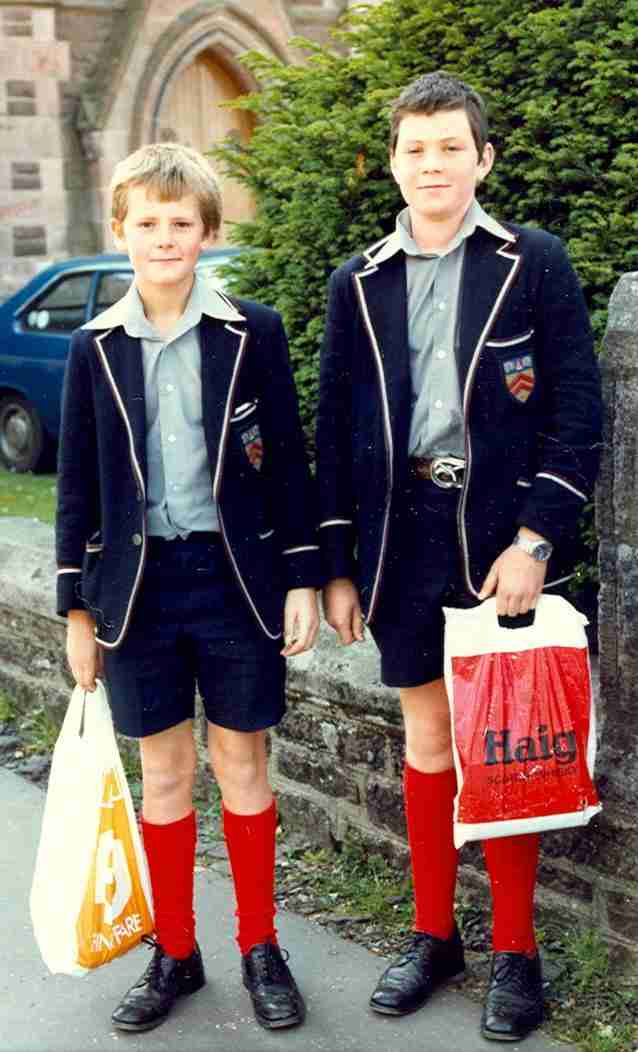
Knee socks were probably most commonly worn in Britain by both boys and girls as part of a school uniform. YThere were vsrious colors, slthough grfey was the primary color for boys and white for the girls. Girls might wear grey knee socks as well, but the boys very rarely wore white knee socks. Often color in the uniform was reserved for the cap, blazer, and tie. British schools requiring shorts usually also required the boys to wear knee socks as part of the uniform, although some schools had a summer uniform. There is some variety here. A few schools ha the boys wearing ankle socks, especially during the summer--often with T strap school sandals. Proper knee socks (a term not used for boys in Britspeak) were 'turn-over-top socks' or 'stockings'. Also often 'school socks'. Schools chose several different styles of knee socks. Knee socks were also commonly worn to school in France, Italy, and Germany, but not as part of a uniform. American boys also wore them, but generally with knickers. Bright colored patterns becme popular with knickers.
Many boys in the late 19th century wearing kneepants wore long stockings held up with stocking supporters. This was very common in both Europe and America for both boys and girls. There was some differences from country to country. Here climate was a factor. American boys, although they did not commonly wear school uniforms, by the 1870s were commonly wearing kneepants and long stockings to school. British schools varied greatly in school uniform requirements. Many schools did not rigidly enforce uniforms. Many school boys wore long pants and thus long stockings do not appear to have been as common as in the United States. Long stockings began to disappear in the early 20th century as knickers and short pants began to replace kneepants. Long stockings continued to be worn to school in several countries with severe winters, the Scandanavian countries, Poland, Germany, Russia, and a few other countries. We also notice long stockungs in Japan. They were worn to school, but usually not as part of a school uniform. We note them declining in popularity in America during the 1930s. We continue to see them in Germanu into the 1950sand in the Soviet Union even in the 60s.
Tights for children are a relatively new garment, appearing after World War II. They replaced the cumbersome long stockings that many bchildren had formerly worn in the 19th and early-20th century. Tights are primarily associated with girls, but this varied frfom country to country. Tights in American and Britain were exclusively worn by girls. They were very common in America and continue to be, but only for girls. Some girls in Britain wore them as part of a uniform, usually on a seasonal basis. Tights were worn by younger boys in several countries. They were worn by boys in countries like Germany, Japan, Korea, Poland and Russia. We first see them in Germany, but they susequently appeared in Russia and Poland as well. Girls also wore them, but no exclusivedly. Age conventions varied from country to country. They are still are worn by younger boys in a few countries, especially Japan and Korea. We note a rabnge of colors bering worn. There were some gender differences in color. Tights were primartily a cold weather school garmednt, but we see them bring wsorn for formal occassikns in Japan and Russia.
While not a hosiery type, barefeet was a hosiery option. Children of course who went barefoot obvipusly did not wear hosiery. We note children commonly coming to school bsrefoot in the 19th and early 20th century, although thi varied significantly from country to country. Here climate was a major factor. Shoes and socks weee ibviously needed in northern countries, although even here soime children went brefoot in sime countries. We see a lot of Scottish children coming to chool brefoot, although the cottish climate was milder than that of Scabdinavia or Russia. Here poverty was a major factor. One hosiery trend was that children coukld have bare legs only if they came to school brefoot. If they wore shoes they had to wear long stockings. This was avery common convention, for example, in America until after World War I. Children in developing countries also came to school barefoot, but for the most part we do not see extenive public schgool systems until after World War II.

Related Chronolgy Pages in the Boys' Historical Web Site
[Main Chronology Page]
[The 1900s]
[The 1910s]
[The 1920s]
[The 1930s]
[The 1940s]
[The 1950s]
[The 1960s]
[The 1970s]
[The 1980s]
[The 1990s]
[The 2000s]
Navigate the Relate Boys Historical Clothing Uniform Garment Pages
[Return to the Main school hosiery page]
[Main garment page]
[Blazers]
[Bookbag]
[Caps]
[Coats]
[Kilts]
[Pants]
[Shirts]
[Shoes]
[Smocks
[Suits]
[Seaters]
[Ties]
Navigate the Boys' Historical Clothing Web Page
[Introduction]
[Activities]
[Biographies]
[Chronology]
[Clothing styles]
[Countries]
[Bibliographies]
[Contributions]
[FAQs]
[Glossary]
[Images]
[Links]
[Registration]
[Tools]
[Boys' Clothing Home]