|
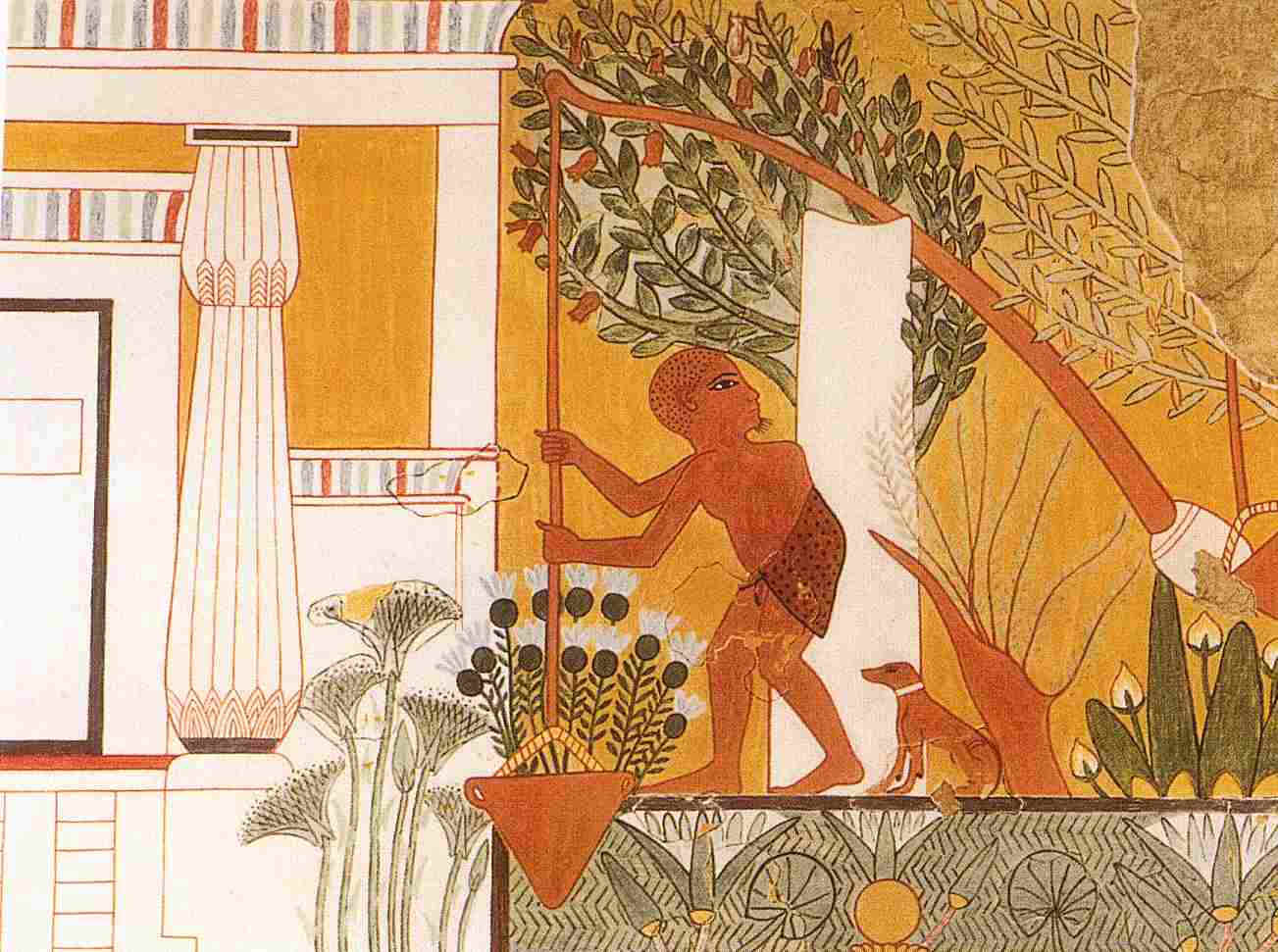
The Nile is one of the great rivers of the world. And gave rise to ancient Egypt, the second of the great river valley civilizations. The Nile is considered by most geographers to be the longest river in the world and for some reason one of the few rivers of any importance which flow north. The Nile headwaters rise in the heart of central equatorial Africa and were a mystery to the ancients and even the modern West until the 19th century. The River is fed by the tropical rains of equatorial Africa and flow north cutting through the parched Sahara dessert, creating a narrow fertile valley, and finally exiting into the Mediterranean Sea. The long, narrow flood plain was a slender green sliver slicing through the barren desert. It flows some 6,600 km through 11 African countries (Burundi, Rwanda, Democratic Republic of the Congo, Tanzania, Kenya, Uganda, Ethiopia, Eritrea, South Sudan, Sudan, and finally Egypt. It had two branches. The White Nile comes from the East African lakes--near Lake Victoria. The Blue Nile originates in the Ethiopian highlands. The two branches meet at Khartoum, Sudan, before traversing the parched Sahara. Its northern flow provides the life-giving water for a narrow slice of arid regions before forming a massive delta of rich silt and emptying into the Mediterranean Sea. The Nile provided the was the lifeblood of Egyptian civilization. Its dependable annual flooding deposited nutrient-rich silt, allowing agriculture to flourish in the very heart of the world's greatest desert. The Nile not only provided water and nutrient rich silt, but facilitated transport and trade giving rise to five millennia of civilization , The regularity gave rise to the creation of our 365-day calendar. he Nile has not lost its significance The Nile today provides water, irrigation, and hydroelectric power for millions. Almost all of of Egypt's vast population live near the river or in the delta. Today Egypt is threatened by Ethiopian dams on its tributaries. And the explosion of the Egyptian population is now beyond the river's ability to support. All Middle Eastern countries (except Israel) face water problems. Egypt for millennia was immune from these problems because of the Nile. Tragically that is no longer the case.

Navigate the Children in History Page:
[Return to the Main Nile page]
[Return to the Main ancient Egyptian page]
[Return to the Main ancient Egyptian agriculture page]
[Return to the Main Egyptian Geography page]
[Introduction]
[Biographies]
[Chronology]
[Climatology]
[Clothing]
[Disease and Health]
[Economics]
[Geography]
[History]
[Human Nature]
[Law]
[Nationalism]
[Presidents]
[Religion]
[Royalty]
[Science]
[Social Class]
[Bibliographies]
[Contributions]
[FAQs]
[Glossaries]
[Images]
[Links]
[Registration]
[Tools]
[Children in History Home]