|
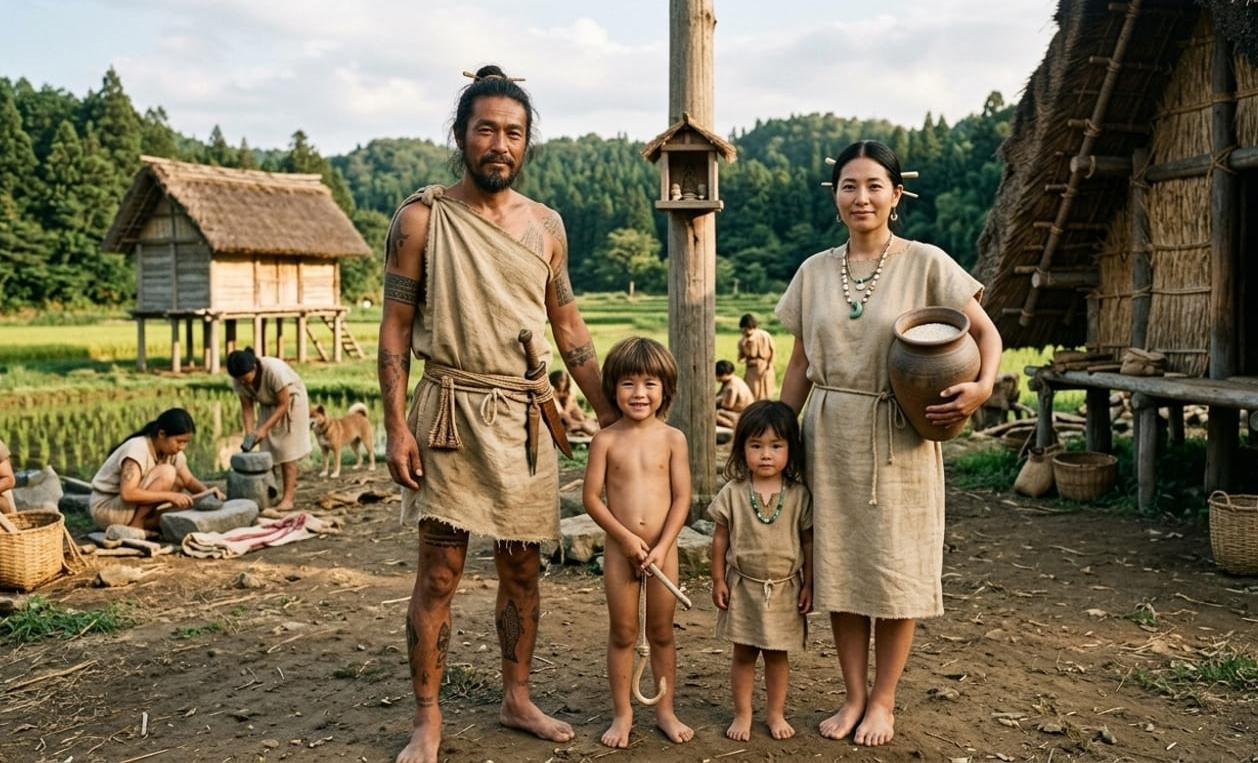
The Neolithic Revolution began in Mesopotamia (about 8,000 BC), but independently later in other regions. In Asia in began in the Yellow River Valley (about 6,500 BC). For some reason it appeared much later in Japan than in neighboring continental areas. The Yayoi period was a defining era in Japanese history. It was the transitional period when people moved from a hunter-gatherer culture to an agricultural society -- the Neolithic Revolution. We see the appearance of wet-rice farming, something more common in the southern Yangtze River Valley. We also see metalworking, and permanent settlements. The name of the period comes from the Tokyo neighborhood where the period's distinct pottery was found. The Yayoi culture entirely changed Japan. The demographics, social order, and technology were all transformed. Migrants from the Korean Peninsula who had been influenced by China introduced agriculture and metal working technologies to the islands. Hunter gather culture was tubal and largely classless.agriculture meant farming surpluses and inevitable wealth variations within the population. . This meant the development of a class structure. Local, competitive chieftains arose. The Japanese islands are mountainous. Meaning that the level areas needed for agriculture is limited. Thus there was conflict rising from the competition for the scarce fertile land and water. The Yayoi Period became a era characterized by inter-village warfare. We see the construction of the first moats and wooden fortifications. It is at this time that we see the first mention of what we now know as Japan in Chinese texts. The Chinese first refer to Japan as Wa. There was mention of tribal confederations and rulers like Queen Himiko. The Yayoi culture meant the appearance of flooded rice paddies. Tilling tools appeared, at first wooden. We also see raised-floor swellings and storage warehouses. Sophisticated metallurgy included both bronze and iron. Iron was used for both durable tools and weapons. Bronze was more expensive and reserved for special items used in rituals. Archeologists have found bronze dotaku (ceremonial bells). In the era before DNA was available, pottery was a major tool in identifying historical periods. Yayoi pottery is described as smoother, harder, and less ornate than the cord-marked pottery of the Jōmon era. Yayoi clothing became more complex, influenced by Chinese trends. We see figurines illustrating clothing styles. There is an account by a Chinese visitor (3rd century AD). Women wore a kind of poncho or simple tunic called a kontofuku, and men wore pieces of cloth wrapped around their bodies. Tattoos were very common. Clothing was often simpler for laborers, especially fishermen. Clothing was frequently reduced to a loincloth for both men and women while working.

Navigate the Children in History Website:
[About Us]
[Introduction]
[Biographies]
[Chronology]
[Climatology]
[Clothing]
[Disease and Health]
[Economics]
[Freedom]
[Geography]
[History]
[Human Nature]
[Ideology]
[Law]
[Nationalism]
[Presidents]
[Religion]
[Royalty]
[Science]
[Social Class]
[Bibliographies]
[Contributions]
[FAQs]
[Glossaries]
[Images]
[Links]
[Registration]
[Tools]
[Children in History Home]
Navigate the Boys' Historical Clothing Japanese pages:
[Return to the Main Japanese history page]
[Return to the Main Chinese history page]
[Return to the Main Korean history page]
[Return to the Main Taiwan history page/a>]
[Return to the Main Asian country history page]
[Choirs]
[Department store catalogs]
[Monarchy]
[Music recitals]
[Scouts]
[School uniforms]