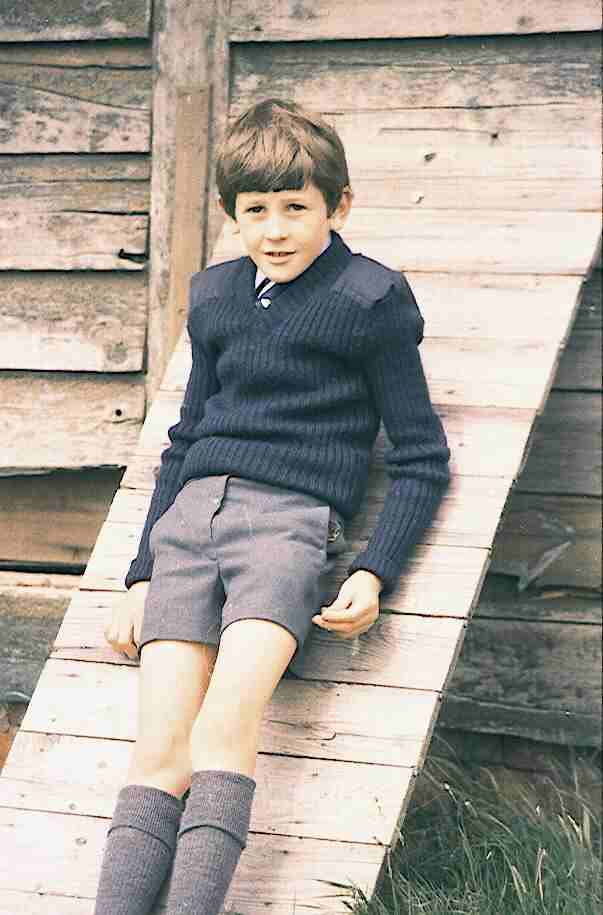
Figure 1.--British boys for much of the 20th century wore knee socks to school. They commonly referred to them as turn-over-top socks, note how they are cuffed. Many schools had the tops done in colored bands of the school colors. At this school the boys wore plain grey knee socks.
Boys have worn a wide range of hosiery to school. Here we note substantisal differences from country to country. American boys in the early 20th century commonly wore long stockings. Many boys went to school barefoot. As knickers became standard after World War I, boys increasingly wore kneesocks--commonly pasterned socks. English school boys primarily wore kneesocks. After World War II ankle socks gradually became more common. Ankle sovcks were especially common in the warm summer term. A factor here may be that kne esocks are more expensive. Boys at Hungarian schools wearing short pants in the early-20th century commonly wore dark colored three-quarter length socks or kneesocks. Knee socks became more common in the inter-war period. The majority of uniformed Japanese schools do not seem to have a sock requirement perse, or at least one which is very strongly enforced.
The popular hosiery types have chhanged over time. Here we note substantisal differences from country to country, both in the type of hosiery and in the chronological times. Gender conventions also varied among countries.
We note children wearing a wide range of hosiery to school. This has varied over time and by age. Gender has also at times beeb a factor. We are not entirely sure what boys wore to schools in the early 19th century. At the time the public school system was still developing and photography did not yet exist. Also long pants were commonly worn, making it difficult to determine what hosiery was worn, at least by boys. We know much more about the second half of the 19th century with the advent of photography. Children both boys and girls wore long stockings. There are very few exceoptins in the photographic record. Socks were much more common in Europe. Boys and girls throughout the 19th century wore basically the same hosiery. Long pants were still very common for boys, except younger boys. This only began to change in the 1880s and by the 1890s we see boys of all ages wearing knee pants, almost always with long stockings. Girls also almost universally wore long stockings. Most boys continued wearing long stockings after the turn-of-the 20th century, but by the 1910s knee pants had been replaced with knickers. Yonger boys after the turn-of-the centuery began wearing tunic suits and would often wear them with three-quarter socks rather than long stockings. Many boys went to school barefoot, especially in rural areas and the South. This became less common after World War I. . As knickers became standard after World War I, boys invreasingly wore kneesocks--commonly pasterned socks. After World War I we begin to see socks being worn. A factor here is that boys began wearing more casual clothes to school. This trend appeared first at primary schools and later at secondary schools as well. Boys at first mostly wore knickers with long stockings, but by the end of tghe cdecade, patterened knee sicks became popular. Younger boys might wear short pants with a variety of hosiery, including ankle socks, three-quarter sicks, knee socls and long stockings. Gradually ankle socks became the dominant hosiery for boys, especially by the 1940s and long pants becamne increasingly common. Girls contginued to wear knee socks. After World War II (1939-45) most boys wore ankle socks. Striped socks were especially popular and fewer babnd fewerboys wore knee socks. Many boys wore white socks. Tights appeared in the 1960s, but only girls worn them. Tube socks were popular in the 1970s as short pants began to be worn by boys again, but mostly atlletic styles.
Kneesocks were once commonly worn by school children as was the case in Britain. Boys commonly wore grey socks and girls white socks. There were kneesocks with bands and with patterns. The Australian socks had the zig zag pattern like those worn during the 1920s and 30s. Some pullovers had this trim. We have not noted this in other countries. A reader writes, "In Australia during the 1950s and 60s school uniforms featured them. There was pretty strict uniform code in those days especially at the non-government schools. Boys had to wear knee length wollen grey shorts and long knee high grey wollen socks held up with garters. Shoes were black leather and shined every day." Since the 1960s kneesocks have declined in popularity. They are still worn at many private scgools and at some state schools, especially the ones affiliated with religious groups. As in Britain, the kneesocks commonly have bands at the top in the school colors. Most have two color cominations in a variety of combinations. Most kneesocks are grey, but there are also some blue socks. We also noticed one prep school in the 1990s that had the patterened kneesocks. Stangely the white socks commonly worn by girls never have the colored bands. These same colors are often used for scarves, jumper trim, and ties. Many state primary schools with uniforms now have ankle socks as part of the school uniform. Colors vary, but grey and white are common.
English school children commonly wore long stockings and kneepants
in the late 19th century. Some boys wore knickers and might wear kneescks. Rather Boys wearing shorts generally wore grey knee socks, for turn-over-top socks as the British might say. Some school pemitted ankle socks (or sandals and no socks) during the summer. Manyschools had socks with the school colors in stripes or a solid bar at the top. This was usually the kneesocks, but a few schools even had ankle socks with colored trim. Many boys wore plain grey knee socks as they were less expensive. Some Scottish schools had colored knee socks. British boys of any age never wore white socks with shorts, except for sports. English boys never wore white socks, except for cricket, as white socks, both ankle and knee socks, were generally worn by girls and thus seen as girls' socks. After World War II ankle socks gradually became more common. Ankle sovcks were especially common in the warm summer term. A factor here may be that kneesocks are more expensive.
Boys at Hungarian schools wearing shortpants in the early 20th century commonly
wore dark colored three-quarter length socks or kneesocks. Knee socks
became more common in the inter-war period. The declining number of
boys wearing shorts by the 1960s commonly wore them with kneesocks,
both white and colored kneespcks. There appear to have been no school
rule about the socks worn. Some boys also wore ankle socks.
The majority of uniformed Japanese schools do not seem to have a sock requirement perse, or at least one which is very strongly enforced. One has to remember that there are two types of uniformed elementary schools in Japan--public, and private. Public schools
(and I would guess about 1/3 the public schools require uniforms) typically have a very simple navy lapeless jacket and navy shorts uniform. White socks seem often to be required, but the type of sock (ankle or knee) is often not specified. Some private schools require navy kneesocks, but most don't much care about the length of the socks. This seems a curious departure from an often rather strict uniform code. Tights are also worn at a few schools in the colder northern part of the country.
English boys wearing shorts generally wore grey knee socks, although colored socks were more common in Scotland. New Zealand boys commonly went barefoot in the summer. At secondary schools they generally wear grey or black or dark blue knee socks as part of the winter uniform. At most schools the grey socks have colored bands at the top in the school colors. As in England, New Zealand boys never wore white socks, except for cricket, as white socks, both ankle and knee socks, were generally worn by girls and thus seen as girls' socks. ften at a New Zealand coed school, the boys will wear grey kneesocks and the girls short white socks or perhaps tights in the winter.
We do not yet have a Scottish school hosiery page, but we do have a kneesock page. Scottish school boys commonly have commonly worn kneesocks. Boys waring kilts almost always wore kneesocks as did boys wearing short pants. Boys going to state schools commonly wore shorts through the 1960s. They usually wore grey kneesocks. Several of the elite Scottish private schools, both public and preparatory schools, had uniforms with colored knee socks (blue, red, burgandy, purple, green, and black). Red was a particularly popular color. This is in sharp contrast to English schools which usually had grey knee socks. Interestingly the color bands on the knee socks often worn by Englisg school boys are not commonly seen at Scottish schools.