|
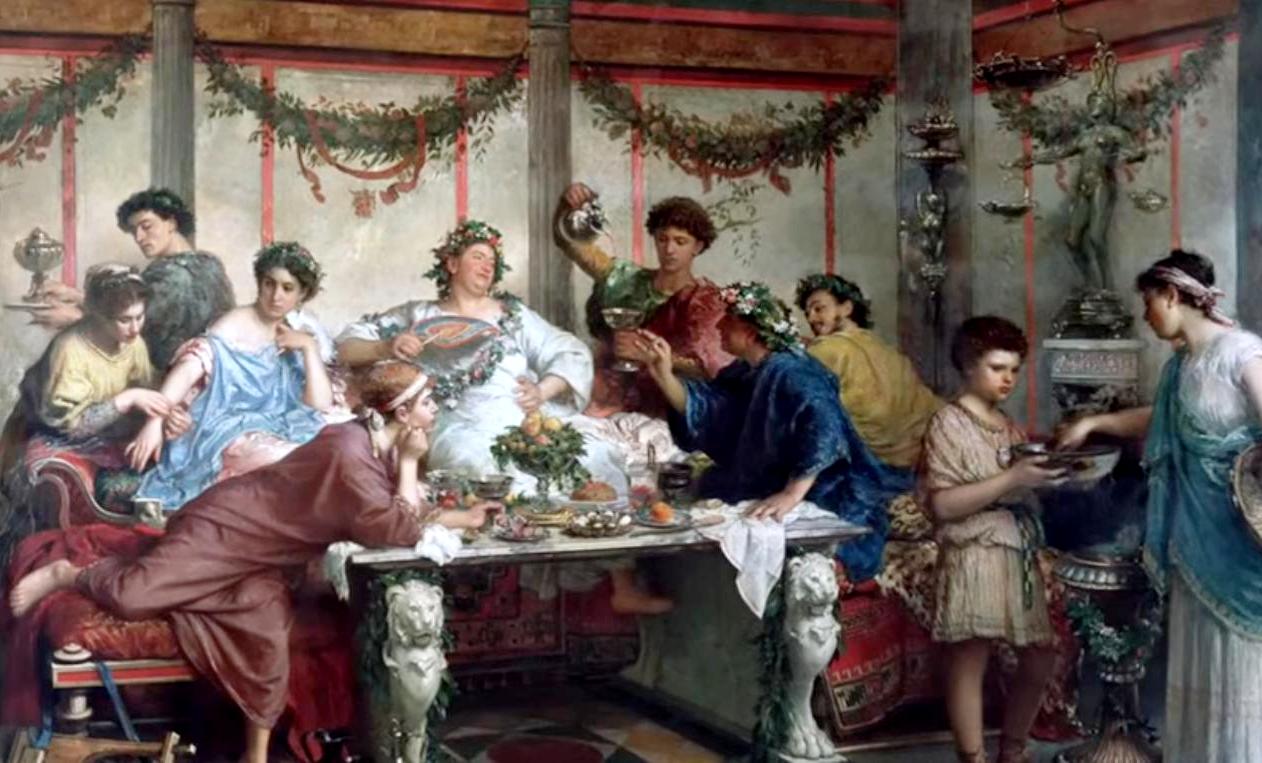
Slaves in ancient Rome performed virtually every occupation required in the Roman economy. There are no firm statistics about the number of slaves, about a third of the population is a widely used estimate. Given the huge dimensions of slavery, it is understandable that they they were utilized in so many different roles. Slaves worked in a wide range of activities. This often meant grueling labor in fields. Economies at the time were largely based on agriculture, including Rome. This was he largest use of slave labor. Many slaves worked on the large estates (latifundia). They cultivating a wide range of crops. The Mediterranean Triad was grains, grapes, and olives. Wheat, olives, and grapes were especially important. Slaves planted, harvested, and cared for livestock. Field hands were often not properly fed or cared for and had little hope of ever gaining freedom. The Roman citizen farmer was the foundation of the early Republic. The gradual shift with the influx of slaves to estate slavery relying on chain gangs to work the fields fundamentally transformed changed the character of Roman society. Mining extracting metals and stone for construction and trade was also important in he Roman economy. And because of the harsh working conditions, commonly involved slave labor. The slaves in mines and quarries endured the harshest conditions. Field work might be harsh, but mining was not only physically demanding, but could be dangerous. Slaves condemned to the mine commonly faced atrocious conditions under brutal overloads. They had the lowest life expectancy of all the major roles delegated to Roman slaves. These two areas were the most common use of slave labor, but slaves were also worked in many other areas--almost all occupational roles. The word slavery generally connotes to the modern reader uneducated, unskilled people forced into manual labor on plantations, especially sugar plantations. This was not the case with Roman slavery. Rome invaded and enslaved people from societies as advanced if not more advanced than Rome itself, such as Greece. Thus the people enslaved could be highly educated and skilled. Thus slaves were used as artisans, carpenters, metal working, weaving, pottery, household managers, business managers, accountants, civil servants, and much more. Greek-educated slaves were especially prized. They were often used to teach wealthy Roman children. These were skills the slaves already had at the time they were enslaved, commonly not training they received after enslavement. There were also many household slaves performing domestic duties. Urban slaves commonly served as household servants. The were assigned tasks like cooking, cleaning, childcare, and personal assistance. Highly skilled slaves could be chefs, secretaries, librarians, or physicians. These highly skilled slaves enjoyed much netter better treatment than the slaved condemned to manual labor and had some prospects for eventual manumission. All of these slaves were in private hands. Less well known is that many slaves were in state hands. Large numbers of slaves were owned by the Roman state and performed a range of essential state functions. They were used to maintaining the vital aqueducts, roads, temples, and administrative offices. Such public slaves might have lightly better living conditions than private slaves, but may have less opportunities for manumission. One of the mist onerous assignment of state slaves was galley laves. Naval vessels nearing armed units for combat at sea at the time were oared vessels rather than sail vessels. Perhaps the best known slaves were used in entertainment. Some of the more imposing slaves were trained as gladiators. They might already have fighting skills. The were forced to fight in public arenas, the most famous being the Colosseum in Rome. This usually led to life-threatening competitions. Other less imposing slaves with skills might work as musicians, actors, or other performers. Slaves in short as a result formed the backbone of Roman society and economy.
>

Navigate the Children in History Website:
[Return to the Main ancient Roman Empire slavery page]
[Return to the Main ancient slavery page]
[Return to the Main slavery page]
[Return to the Main Rome page]
[About Us]
[Introduction]
[Biographies]
[Chronology]
[Clothing]
[Disease and Health]
[Economics]
[Environmental issues]
[Feminism]
[Geography]
[History]
[Human Nature]
[Law]
[Nationalism]
[Presidents]
[Religion]
[Royalty]
[Science]
[Social Class]
[Bibliographies]
[Contributions]
[FAQs]
[Glossaries]
[Images]
[Index]
[Links]
[Registration]
[Search]
[Tools]
[Children in History Home]