|
The seven major Anglo-Saxon kingdoms that dominated England from the 6th to the 9th centuries became known as the Heptarchy. They included from north to south: Northumbria, Mercia, East Anglia, Essex, Kent, Sussex, and Wessex. While the term suggests seven equal kingdoms, in reality they were hardly equal. The number and boundaries fluctuated, and some were absorbed or conquered by others. There were also the complications of sub-kingdoms. In Anglo-Saxon England, the concept of a bretwalda arose -- a king who achieved overlordship over some or all other Anglo-Saxon kingdoms, meaning a position of high authority and influence. this was was not formal contemporary designation but became used in historical chronicles.
At the time Saint Augustine arrived, the Anglo Saxons controlled most of southern England and were expanding north and west (late 6th century). The Anglo Saxon invaders had no central organization as Roman Britain had or as the Normans would institute after Hastings. They gradually colonized England northwards and westwards, pushing the native Britons to the western fringes of island. Thus Roman Britain was replaced by Anglo Saxon Britain. The Anglo-Saxon invaders formed several new kingdoms. The Anglo-Saxon invaders were not-yet Christianized. The Anglii settlements evolved into the kingdoms of East Anglia, Mercia, and Northumbria. The Saxons settlements appeared to have founded the kingdoms of Sussex, Wessex, and Essex. The Jutes appear to have predominated in Kent and the Isle of Wight. Wars between these kingdoms gradually resulted in the consolidation of three important kingdoms into Mercia, Northumbria and Wessex. War continued between these kingdoms as well as raids from the west and north, but they were stronger than the Romanized Britons and thus conquered most of what is today England. This was the prosperous England that the Vikings found, brimming with valuable loot and captives to enslave.
Northumbria was one of the most important of the Anglo-Saxon kingdoms in Britain, especially in the early years. Northhumbria was basically northern England and southern Scotland. Northumbria was created out of a coalition of two independent Anglo Saxon state. Bernicia was a settlement at Bamburgh on the North Sea coast. Deirag laid to the south. Aethelfrith, who ruled Bernicia (593–616), gained control of Deira and created the kingdom of Northumbria--
. He was, however, killed in battle by supporters of Edwin of the Deiran royal house, who ruled the united kingdom. Somehow with fewexceptions, it was Bernician royalty which controlled a united Northumbria. The Northumbrians finally reached the west coast (mid-7th century). Northumbria also rapidly expanded northward, for a short time reaching the River Tay. To the south, however, the Mercia limited expansion. For that reason, Northumbria was primarily located north of the River Humber. At its peak, the Kingdom extended from the Irish Sea to the North Sea. In the north it reached the Ayrshire coast and the Firth of Forth. In the south it controlled the River Ribble, or the Mersey, and the Humber. Northumbria reached its greatest military strength (7th century). The key here was the martial capability of three successive of kings: Edwin (616–632), Oswald (633–641), and Oswiu (641–670). The southern kingdoms understood this. Relative martial capability declined somewhat (8th century). But his was when Northumbria made its most significant contribution to Anglo-Saxon Britain. Here Northumbria made major contributions in the artistic, intellectual, and religious sphere. I became known as a golden age. A few years after establishing the Roman church in Kent, another form of Christianity--Celtic Christianity was becoming established in the powerful northern kingdom Northumbria. Irish monks established a monastery on the island of Lindisfane (635). Under Saints Aidan, Cuthbert, Eadfrith, and Eadberht, Lindisfarne became an important center of Celtic Christianity which bypassed Rome almost entirely traveling along older trade and pilgrimage routes, it had contacts with the developing Eastern Church. The differences between the Christian traditions were resolved by King Oswiu at the Synod of Whitby (664). The King ruled decisively in favor of Roman practices, including the method for calculating Easter and the monastic tonsure. We suspect that political factors were involved. While the actual religious differences were minor, the political ramifications were enormous. It meant that the Anglo-Saxon world would speak with one religious voice, laying the groundwork for eventual political union. And Northumbria was emerging as the dominant Anglo-Saxon power (7th century) Particularly important In Northumbria were the twin monasteries of Wearmouth and Jarrow. They were influential not only with he southern kingdoms, who were respected throughout Western Europe. Learning was done in Latin so there were no language barriers. Northumbria produced libraries of real European significance at a time that Britain was seen as the misty edge of the civilized world. The Venerable Bede was the most important figure (672/73-735). He amassed the largest library in Britain at a time in which books cost a small fortune. The monasteries of Hexham, Whitby, and Lindisfarne were also important centers of learning. The Gospel book created at Lindisfarne show cases Northumbrian accomplishments in writing and illumination. Northumbrian sculptors created stone crosses at Bewcastle and Ruthwell. Northumbria power was eclipsed by the rise of Mercia, especially under Penda (mid-7th century). But disaster came with arrival of the great Heathen Army (865). York hell and was renamed Yorvik (869). It became a thriving Scandinavian trading hub connected to Dublin, Scandinavia, and into what is now Russia and Constantinople. The north and east of Britain fell under Norse control--the Dane Law. Anglo-Saxon Britain was reduced to one surviving kingdom in the far south--Wessex.
The Kingdom of Mercia was one of the major Anglo-Saxon kingdoms. It dominated the midlands of modern Britain and bordered on two other major kingdoms, Northumbria in the north and Wessex in the south as well as Wales in the west. Not to mention East Anglia in he east. It was founded by a semi-legendary king Icel (r 515–527). He had migrated from Germany with his tribe, the `Iclings'. They arrived in East Anglia and then moved into midlands. Surrounded by so many competing forces, Mercia struggled to maintain its boundaries and defend its territory. This changed with the reign of Penda (c625-55) who initiated the period of Mercian strength and importance. Penda seized the Severn Valley as a result of the Battle of Cirencester (628). He then helped defeat the powerful Northumbrian king Edwin at the Battle of Hatfield Chase (633).
【Bede】 While Nortthumbria flourished intellectually, Penda was was a a real war lord and devoted pagan adherent. He wanted no part in Christian conversion even as the new religion spread in the neighboring kingdoms. He by all accounts was one of the most brilliant military leaders of the entire Anglo-Saxon era. He personally defeated and killed multiple competing Anglo-Saxon Christian kings. Penda was formidable, ruthless, and brutally successful through most of his long rule. This made Peda the most powerful of the Anglo-Saxon rulers in the mid-7th century. It began a period of the Mercian Supremacy over the Anglo-Saxon Heptarchy. He repeatedly defeated the East Angles in multiple battles. He drove Cenwalh, the king of Wessex, into exile for three years. He continued to battle the Bernicians of Northumbria. His reign of terror continued at Maserfield (641/42) He defeated King Edwin of Northumbria's 's eventual successor--Oswald who was was killed and dismembered. Penda both fought and allied with Christian kingdoms. Oswald's successor and brother, Oswiu finally stopped Penda at the Battle of the Winwaed (655)--a final campaign against the Northumbrians. Penda' death ended the the influence of paganism, but did not end Mercian power. The old abandoned gods would survive only in folk memories. Mercian dominance, however, continued under Æthelbald. They reached its peak under Offa the Great (r757-96). Offa was best known for the 148-mile-long (238 km) dyke he built to establish a border with the wilder Welsh kingdoms. At its peak, Mercia expanded control over much of southern England. Offa exchange diplomatic communications with Charlemagne. There were trade v agreements and for a time a possible marriage alliance. Offa began his own silver concubinage. Brilliant war lords, however cannot forever erase geography. Fighting the Welsh Northumbria, East Angels, and Wessex gradually eroded Mercian power. Another major problem was the lack of any accepted system for royal secession. After Offa's death rival claimants and weaker successors were unable to maintain Mercian dominance. And it is at his point that the Anglo-Saxons were shocked by a Scandinavian raiding force which sacked the monastery of Lindisfarne (793). While not the first Viking raid, it was the one that burned itself into the Anglo-Saxon world view. The Anglo-Saxons describe terrible omens and Game of Thrones fire breathing dragons. 【ASC】 The Mercian were eventually broken by King Egbert of Wessex (r802-39). Up until this point, Wessex had been a minor power. As Wessex grew in power, Mercia gradually declined and was further weakened by the expanding Viking raids. Then the Great Heathen Army appeared (865). It was led by commanders like Ivar the Boneless and Halfdan--the sons of Ragnar Lothrock. Ceolwulf II (r874-83) was forced to submit to Viking sovereignty and became a puppet king. This meant that it would be Wessex that would have to face the Danes alone. Mercia was subsequently controlled by Wessex under Alfred the Great (r871-99) and lost any autonomy under Alfred's son Edward the Elder (r899-924). A fascinating end to Merci's history was the rile Edward gave to his sister. The most prominent sister of King Edward was Æthelflæd, Lady of the Mercians (also known as Ethelfleda). She was the eldest daughter of Alfred the Great. She ruled Mercia (911-18) and proved a formidable military and political leader, resolutely defending Mercia from Viking raids.
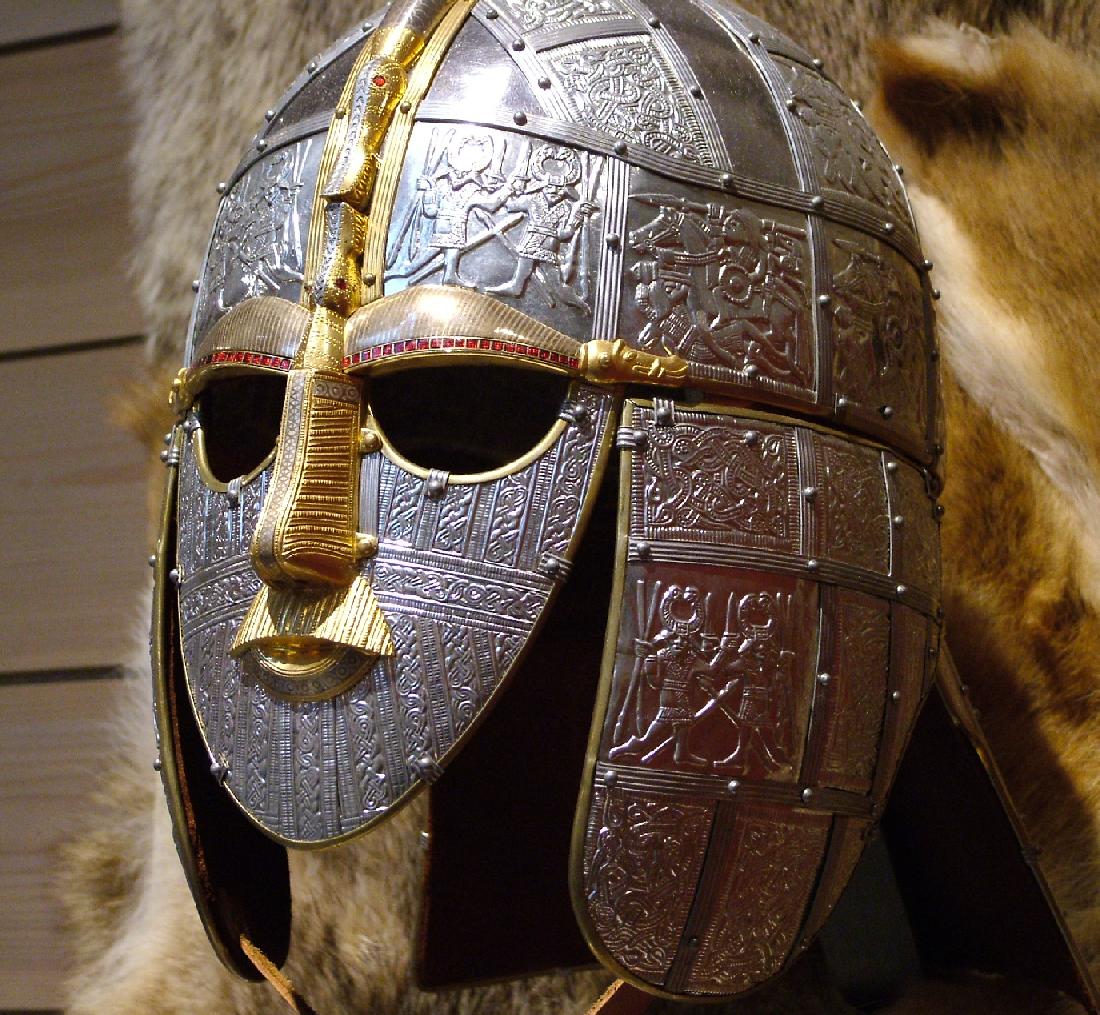
East Anglia was a powerful early Anglo-Saxon kingdom, with kings like Rædwald and Edric, but declined over time. The area is known for its flat, low-lying landscape, rivers, and the The Broads waterways. There are no major geographic barriers. The Kingdom of East Anglia (Ēastengla Rīċe) wass an early medieval Anglo-Saxon kingdom. It covered modern East Anglia in eastern England. It primarily comsisted of the modern counties of Norfolk and Suffolk, and small parts of Cambridgeshire and Essex. East Anglia emerged as the Angles settled in the region (early 6th century). The North Folk (Norfolk) and South Folk (Suffolk) united. Early rulers were Wehha and Wuffa who founded of the Wuffingas dynasty. The Angles were skilled at navigation, using rivers like the Nene, Ouse, and Cam to expand their territory. Under Rædwald ( -c624), East Anglia became one of the most powerful Anglo-Saxon kingdoms, rivaling both Mercia and Kent. Rædwald was converted to Christianity by his overlord Æthelberht of Kent. It is Rædwald that is associated with the fabulous Sutton Hoo ship burial find. It show cases East Anglian wealth and status. After Rædwald’s death, East Anglia declined becoming increasingly dominated by Mercia. Several kings were killed in the military campaigns with Mercia. Christianity became firmly established under bishops like Felix of Burgundy. The Great Heathen Army landed in East Anglia (865). East Anglia was the first Anglo-Saxon kingdom to fall. The Danes went on to take They took York, and returned to kill King Edmund the Martyr with calculated cruelty (869). This gave the Danes control of East Anglia. It became the first part of the Danelaw. The Danes carried the fight to Notthumbria, Mercia, and finally Wessex. Itb is in Wessex that thevruture of Britain would be decided by Alfred the Great at the Battle of Edington (878). Edward the Elder of Wessex would eventually reconquer East Anglia, ending Danish rule and incorporating it into the evolving Kingdom of England (918).
The Kingdom of Essex or Kingdom of the East Saxons is one of the seven traditional kingdoms of the so-called Anglo-Saxon Heptarchy. It is founded (6th century) and included the territory later controlled areas north of the Thames estuary (the modern counties of Essex, Hertfordshire, Middlesex and for a short while Kent). Archaeological evidence confirms the presence of Saxon warrior elites in the area from (c500). This shows the transition from late Romao-British society. Under King Sæberht (r604–616), son of Sledda and nephew of Kent's Æthelberht, Essex adopted Christianity (about 604). This began the adoption Nicean Christianity. The effort was led by Mellitus, a member of the Gregorian mission sent to England to convert the Anglo-Saxons. He became the first bishop of London and the third archbishop of Canterbury. The conversion occured over a century was gradual, accomplished in several stages and not without returns to Saxon paganism depending on the inclination of the various kings in power. This was one of the earliest converted Anglo-Saxon realms, with the establishment of a bishopric in London under Mellitus. However, after Sæberht's death, his sons briefly reverted to paganism, expelling the bishop and highlighting the fragile nature of early conversions. Subsequent kings like Sæbbi (r. c. 664–694) and Sigehere restored Christianity amid co-rulerships and external pressures, but the kingdom frequently fell under the overlordship of Kent, Mercia, and later Wessex, with sparse surviving charters indicating limited independent documentation. By the late 8th century, Essex had lost effective autonomy, becoming a Mercian dependency before the final deposition of its last king, Sigered, by Wessex's Ecgberht around 825–826, after which it was integrated as a shire without separate monarchical rule. Its historical significance lies in bridging early Saxon tribal settlements to the unified English kingdom, with strategic control over London underscoring its role in regional power dynamics, though records remain fragmentary and reliant on sources like Bede and the Anglo-Saxon Chronicle, which may include later embellishments. Essex lost effective autonomy, becoming a Mercian dependency before the final deposition of its last king, Sigered, by Wessex's Ecgberht (around 825–826). It was integrated as a shire without separate monarchical rule. One author contends that the historical significance is in bridging early Saxon tribal settlements to the unified English kingdom, The strategic control over London played an important role in regional power dynamics.
The Kings of Essex were frequently subservient to the neighboring kingdoms. The last king of Essex is Sigered who cedes the kingdom to Egbert of Wessex (825).
Kent was located in southeastern Britain with the strongest ties to Continental Europe. The Kingdom of Kent was a foundational Anglo-Saxon polity that shaped early English history through its Jutish settlement, royal leadership, Christianization, and cultural contributions. The kingdom’s name, derived from the Celtic Cantiaci tribe. The Kingdom emerged after the Roman withdrawal from Britain (around 410). Germanic-speaking tribes, primarily the Jutes, settled in the area, apparently invited as mercenaries to defend against Pictish and Scottish raiders. The legendary brothers Hengist and Horsa led the first settlers, landing at Ebbsfleet near Ramsgate (the mid-5th century). The kingdom initially developed in East Kent. West Kent is believed to be settled by Saxons who later merged with the Jutish community. Its earliest recorded king was Æthelberht, who became the bretwalda, or overlord, of southern England (late-6th century). This marked the beginning of Kent’s prominence, with his court in Canterbury served as both a political and religious center. Kent played a central role in the Christiaanization of Anglo-Saxon kingdom. Æthelberht’s Christian wife, Queen Bertha, welcomed missionaries. And Pope Gregory (540-604) was intent on sending a mission to Britain. And the existence of a Christian in the Kent court
was precisely this reason that Pope Gregory's mission began in Kent. The Roman Church targeted the kingdoms with existing continental connections. Calculated diplomacy, dressed in the language of faith. St Augustine of Canterbury arrived with the Gregorian mission (597). They establishing Canterbury as the first archiepiscopal see in Britain. Æthelberht permitted the missionaries to establish a single church in Canterbury. St Martin’s Church would be attended by Bertha, and today remains the oldest parish church in continuous use in the English-speaking world. Kent developed distinctive laws, customs, and trading connections, tracing back to its Jutish heritage. Æthelberht ultimately agreed to be baptized becoming the first Christian Anglo-Saxon king. Conversions cascaded in the south. Here personal conviction was a factor, but there was also political calculation. Archaeological evidence from cemeteries and the early settlements, along with place-name studies, provides insight into Kent's early medieval society. Lyminge and Eastry were also important. There were royal halls and early monasteries. Kentish kings maintained influence through both military campaigns and alliances. Kent gradually declined becoming subservient to first Mercia (8th century) and later under Wessex (9th century).
Kent's eventful integration into Wessex and ultimately the unified Kingdom of England (10th century) meant the end of its independence, but its historical and ecclesiastical significance left and enduring mark. Its legacy continues in the county of Kent and the ecclesiastical prominence of Canterbury.
Sussex was a Jutish kingdom in the south along the Channel coast. Sussex (Suð Seaxe), one of the kingdoms of Anglo-Saxon England. It consisted of the modern counties of East Sussex and West Sussex, although Hastings in East Sussex appears to have been sometimes separate. According to the tradition preserved in the Anglo-Saxon Chronicle, a certain Aelle landed (477). The place is now covered by the sea, south of Selsey Bill. They defeated the local Britons. Archaeological evidence shows Germanic settlement in the area beginning (5th century). The Venerable Bede reports that Aelle held supremacy over all the peoples south of the Humber. He was he only king of Sussex to hold that status. St. Wilfrid, expelled from still pagan Northumbria, spent several years converting the South Saxons to Christianity (680s). At that time their king was Aethelwalh, but after his death Sussex was divided among several kings. There were still kings early in the reign (757–796) of Offa of Mercia, but later they are named as ealdormen. Sussex eventually fell to the kings of Wessex (9th century).
The Kingdom of Wessex (c519-927) was one of the major Anglo-Saxon kingdom, the one that would survive the Viking invasions and found modern England. Wessex was founded by the West Saxon Chieftain Cerdic (r519-40) in 519 in the Upper Thames Valley of modern-England. The early history of Wessex involved frequent conflicts, primarily with Mercia. This continued until the reign of King Egbert (r802-39) who conquered Mercia and annexed their lands. Wessex under Egbert defeated Mercia at the Battle of Ellandun (825). This secured West Saxon supremacy. The real test for Wessex came with the Danes. Here Wessex had an advantage. It was the furthest Anglo-Saxon kingdom from the vulnerable North Sea coast. The Danes had to fight through the other Anglo-Saxon kingdoms to get to Wessex and Alfred the Great. Four centuries of Anglo-Saxon rule was now reduced o one surviving kingdom--Wessex. Alfred was born in Wantage, Oxfordshire (849). He was the youngest son of King Aethelwulf of Wessex. Alfred married Ealhswith (868). The Great Heathen Army invaded East Anglia (870). The Danes already controlled large areas. Soon they had defeated Northumbria, Mercia, and East Anglia. Finally they moved on Wessex Wessex. hey captured Reading (870). Wessex stopped them at Ashdown. However, but the Danes on two battles, at Basing and an unidentified location. Alfred became king of Wessex inheriting a kingdom that was teetering on survival only a decade after the appearance of the Great Heathen Army (871). The entire future of Anglo-Saxon Britain now rested solely on Wessex alone. Wessex was bankrupt after years of warfare. The population was traumatized. And Alfred understood that every other Christian kingdom had fallen to the Danes. The Saxons and the Danes fought several inclusive battles (871). The Danes were unable to break Saxon resistance. They thus negotiated a peace treaty and the Danes turned their attention to weaker targets. They the other parts of England. They attacked the unoccupied part of Mercia (873). The Mercian king fled and was replaced by a puppet ruler. Wessex remained the only independent Anglo-Saxon kingdom. A Danish Army invaded Wessex again inconclusively (875). They withdrew to Gloucester (877). The Danes under Guthram launched a surprise attack on Chippenham, shattering Alfred's army. King Alfred was forced to flee and hide in the marshes of Athelney. Alfred fought a guerrilla war for some months and then somehow reconstituted his army. They took on the Danes in battle. Alfred decisively routed the Danes were at the battle of Edington (878). Guthrum, the Danish leader, and his men were baptized and signed a treaty with Alfred--the Treaty of Wedmore. They divided southern and central England. Guthrum was given London, East Anglia, and all the territory east of the old Roman road -- Watling Street. The Danish kingdom became known as the Danelaw. The area where Danish customs and law prevailed.
Alfred reorganized the defense of his realm. He created a fleet of ships to fight the Danes at sea. (It was the first English navy). He also created a network of forts across his kingdom called Burhs the origin of the English borough. Alfred founded the House of Wessex, the first English royal dynasty. He achieved a level of centralize control beyond that of any other Anglo-Saxon kingdom. Alfred died (899). Alfred was succeeded by his son Edward. Alfred's reforms would transform Wessex into the most powerful and effective of the Anglo-Saxon kingdoms. His son Edward the Elder (r899-924) would continue his policies and extend Wessex's power further. By the time Edward's son Aethelstan succeeded him (924, the ruler's title had changed from King of Wessex to King of the Anglo-Saxons because of the vast territory now under Wessex's control. Aethelstan would rule in this position (924-27). He then became powerful enough to be declared the first King of England (r927-939).
After Aethelstan became King of England, the Kingdom of Wessex ended as an independent polity (927).
Bede. Ecclesiastical History of the English People
Anglo-Saxon Chronicle (ASC).

Navigate the Children in History Web Site:
[Return to the Main Anglo-Saxon kingdoms page]
[Return to the Main individual German tribe page]
[Return to the Main German chronology page]
[About Us]
[Introduction]
[Biographies]
[Chronology]
[Clothing]
[Disease and Health]
[Economics]
[Environmental issues]
[Feminism]
[Geography]
[History]
[Human Nature]
[Law]
[Nationalism]
[Presidents]
[Religion]
[Royalty]
[Science]
[Social Class]
[Bibliographies]
[Contributions]
[FAQs]
[Glossaries]
[Images]
[Index]
[Links]
[Registration]
[Search]
[Tools]
[Children in History Home]