|
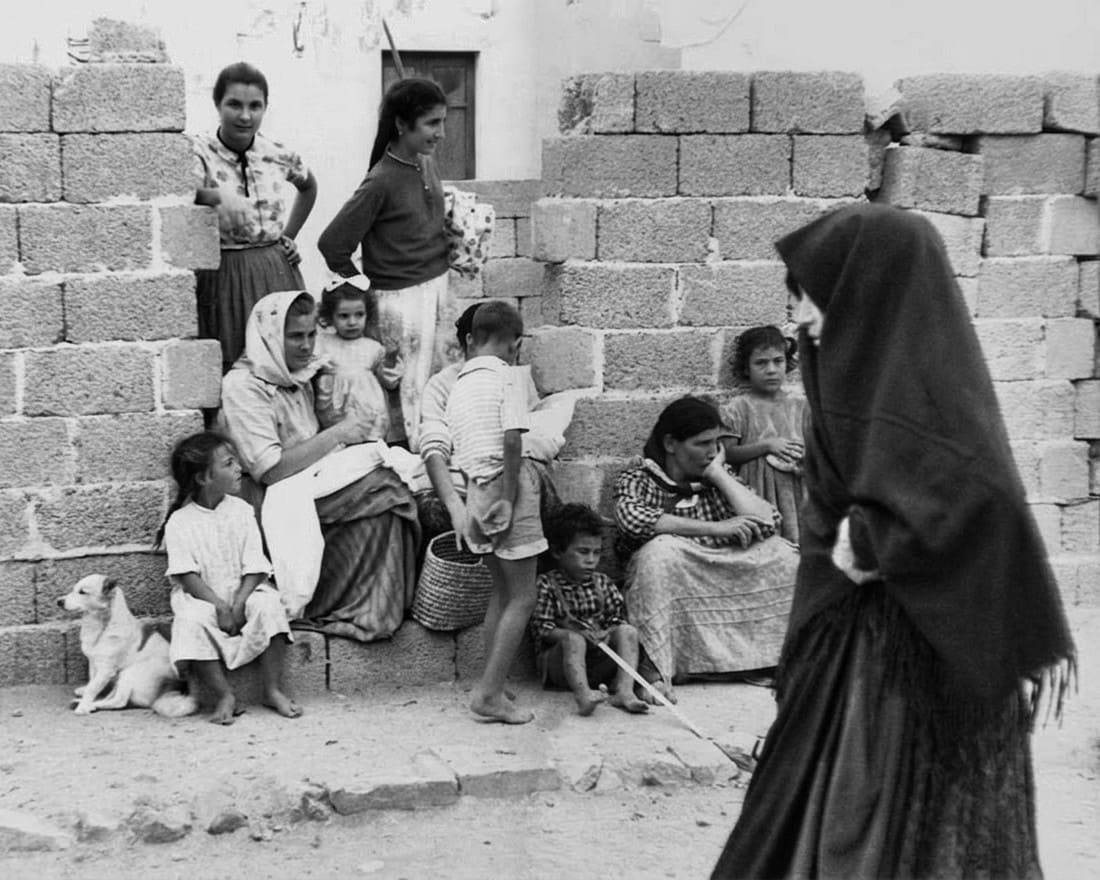
The Sardinian economy as unchanged for centuries. Economic activity was a largely subsistence. In the rugged interior economic activity was largely pastoralist and small-scale subsistence agriculture. Along the coast we see more market oriented agriculture with less focus on livestock. Sheep and goats were important because of the rugged terrain. They milk which could be used to make cheese. Chickens provided both meat and eggs. Family gardens provided both vegetables and fruits. As was the case throughout the Mediterranean wine and olive oil were produced. Vineyards were cultivated yielding grapes which led to wine production. Olive trees afforded the material for olive oil production. Grain was cultivated for producing bread. Pigs were the primary source of meat, supplemented by wild game hunted and some lamb. The island did not have the pastureland to produce much beef. There were some cows, mostly raised for milk. Sardinia produced all the food items for a well-balanced diet; historically, however, transport was a problem. Villages tended to specialize in one or a small number of specialties an he high cost of transport mean that it was difficult to market outside the immediate region. The rugged interior meant that produce could not be transported economically. The road network was virtually n existent, making its= very expensive transport produce. There were fishing villages, fishing has not been a major activity. We are not sure why, but the lack of ability to reach a major market beyond the village may have been a factor. Donkeys and donkey carts provided the bulk of transport and animal power for most of the population. The well-to-do had horses. Industry did not exist. There were to domestic artisanal handicrafts. Mining was of some importance. Traders and conquerors were drawn to Sardinia by the islands mineral riches. This shows today by many surviving place names: Argentiera, Montiferru, Funtana Raminosa, and Capo Ferrato. he primary metals mined were iron, lead, and silver. Zinc was added vin modern times, by then the most extracted minerals on the island, were added to a third one, zinc.
Sardinia was basically economically backward until after World War II (1939-45).
The island began to move from the traditional subsistence economy into a modern market economy. The major driving force was the Italian Economic Miracle on the Italian mainland. Highway construction began to connect formerly isolated villages. Agriculture declined because farmers on the mainland including even foreign producers could produce crops less expensively than on the island with its mostly rugged mountainous terrain. And as roads opened up the island, imported produce could begin to reach the island market. Pastoralism in contrast has survived. Much of the milk is produced from sheep in modern dairies and is now purchased by cooperatives to produce Sardinia's distinctive pecorino cheese for sale in mainland and foreign markets. The service sector now dominates the economy. This includes both public service and small business. The service sector provides the bulk of employment. Household handicrafts have all but disappeared, except for limited sales in the growing tourist industry and some small export sales. Industrialization despite substantial government efforts has not taken hold. The high transport costs is a factor. There are two industrial activities. Mining continued, but is decline and petrochemical has developed. Sardinia is the most prosperous of the various Italian regions south of Rome. Economist classify it as in a transitional status between less and more developed regions. Tourism has been one of the divers of the new Sardinian economy. Poor fishing villages with their sandy beaches have been turned into trendy tourist attractions. Traditional artisanal fishermen needed sandy beaches for their boats. These same sandy beaches are now the major tourist draw. Although energetic hikes are attracted by the many fascinating archeological sites.

Navigate the Boys' Historical Clothing Italian pages:
[Return to the Main Sardinian page]
[Return to the Main Italian island page]
[Return to the Main Italian regional page]
[Return to the Main Italian activity page]
[Return to the Main Itlalian page]
[Italian school uniforms]
[Italian youth groups]
[Italian choirs]
[Italian movies]
[Italian royalty]
Navigate the Children in History Web Site:
[About Us]
[Introduction]
[Biographies]
[Chronology]
[Clothing]
[Disease and Health]
[Economics]
[Environmental issues]
[Feminism]
[Geography]
[History]
[Human Nature]
[Law]
[Nationalism]
[Presidents]
[Religion]
[Royalty]
[Science]
[Social Class]
[Bibliographies]
[Contributions]
[FAQs]
[Glossaries]
[Images]
[Index]
[Links]
[Registration]
[Search]
[Tools]
[Children in History Home]