|
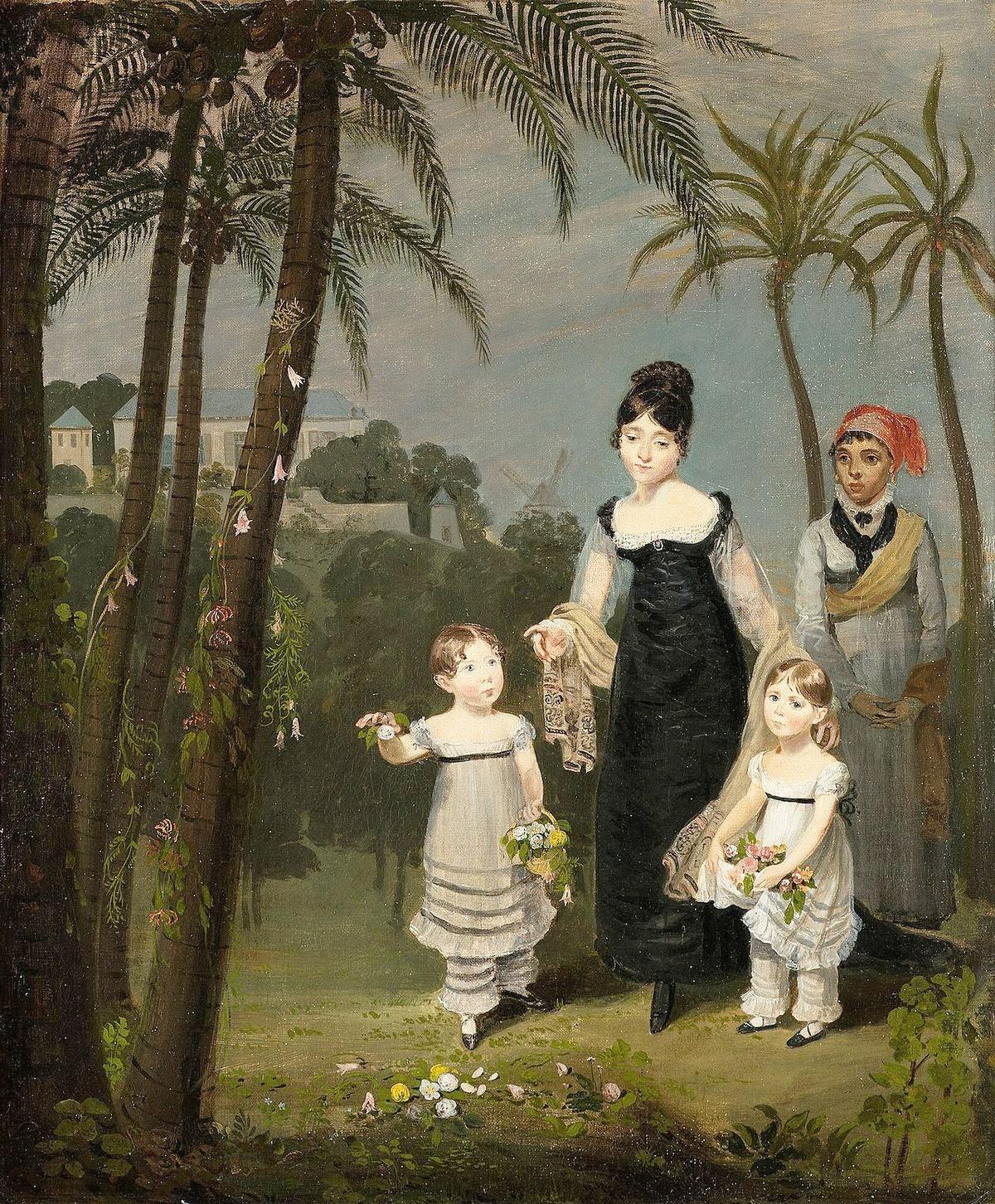
The British and French as part of their world-wide struggle vied for control of the Grenada. The French built Fort George and Fort Frederick to guard St. George's harbor. In the 18th century, the production of sugar came to dominate the Caribbean island economies, including Grenada. As elsewhere in the Caribbean, this meant the importation of enslaved Africans. This would lead to some 130,000 enslaved men, women, and children being transported to Grenada (1669-1808). Numbers increased as sugar production expanded. This ended when the British abolished the slave trade (1807). The Royal Navy began an effort to suppress the slave trade. Some authors believe that the actual number was likely because French records are less complete than British records. 【Martin, 2007】 The island's first official census was held (1669). Grenada’s population was a mere 506 persons, although the Amerindians were included. There were 222 enslaved persons. 【Martin, 2013, p. 119.】 As sugar cultivation expanded, the slave population expanded exponentially, significantly exceeding the free mostly white population during the French era (1659-1762). Even so, the planters in French Grenada complained to governing authorities on Martinique about the lack of slavers not delivering captives to Grenada. The situation on Grenada was somewhat different than the other islands of the Lesser Antilles. The French plantations on he islands also tended to be relatively small plots, focusing on a wider range of crops, including indigo, cocoa, coffee, cotton, along with sugar cane. There were some 15,200 slaves (1763). 【Martin, 2013, p. 119.】 British control of Grenada was finally settled by the French and Indian War (1754-63) and the American Revolution (1776-83) to the the north. The French entered the War to assist the Americans. The Treaty of Versailles ending the conflict between the British and French awarded Grenada to the British (1783). The French heritage survives today in the continued importance of the Catholic Church. During the British period, the sugar cultivation expanded and small plots were consolidate into larger plantations. This increased the demand for slave labor. latter exploded, collapsing small farm plots into large sugar plantations and creating an insatiable appetite for enslaved labor. The British proceeded to import large numbers of slaves for new sugar plantations. Julian Fedon, a black planter was inspired by the principles of the French Revolution (1789). Fedon organized a slave rebellion. Fedon succeeded in effectively controlling the island for a short period from a camp in the central mountains. The British eventually defeated the rebellion. After another slave rebellion in Jamaica, the British emancipated the slaves (1834). This was a result of both the British anti-slave movement and the high cost of suppressing slave rebellions. The Act of Emancipation, freed over 23,600 enslaved in Grenada (1833). This was done with the compensation to the island's planters. Some £616,000 was paid out. (The equivalent of about £75 million in 2020.) 【Martin, 2007】 Emancipation involved a mandatory 6-year apprentice period which, however, was abandoned (1838). The.former slaves received no compensation. Many turned to subsistence farming, not wishing to return to the plantations. Others continued working on the plantations was as wage laborers.
Martin, John Angus. 2007 A-Z of Grenada Heritage (Macmillan Caribbean: Oxford, 2007).
Martin, John Angus. Island Caribs and French Settlers in Grenada: 1498 – 1763 (National Museum Press: St George’s, Grenada, 2013)

Navigate the Children in Histry Website:
[Return to the Main Grenadian history page]
[Return to the Main Caribbean island slavery page]
[Return to the Slavery in the Americas]
[Return to the Main Caribbean history page]
[Return to the Main Latin American page]
[About Us]
[Introduction]
[Biographies]
[Chronology]
[Clothing]
[Disease and Health]
[Economics]
[Environmental issues]
[Feminism]
[Geography]
[History]
[Human Nature]
[Law]
[Nationalism]
[Presidents]
[Religion]
[Royalty]
[Science]
[Social Class]
[Bibliographies]
[Contributions]
[FAQs]
[Glossaries]
[Images]
[Index]
[Links]
[Registration]
[Search]
[Tools]
[Children in History Home]