|
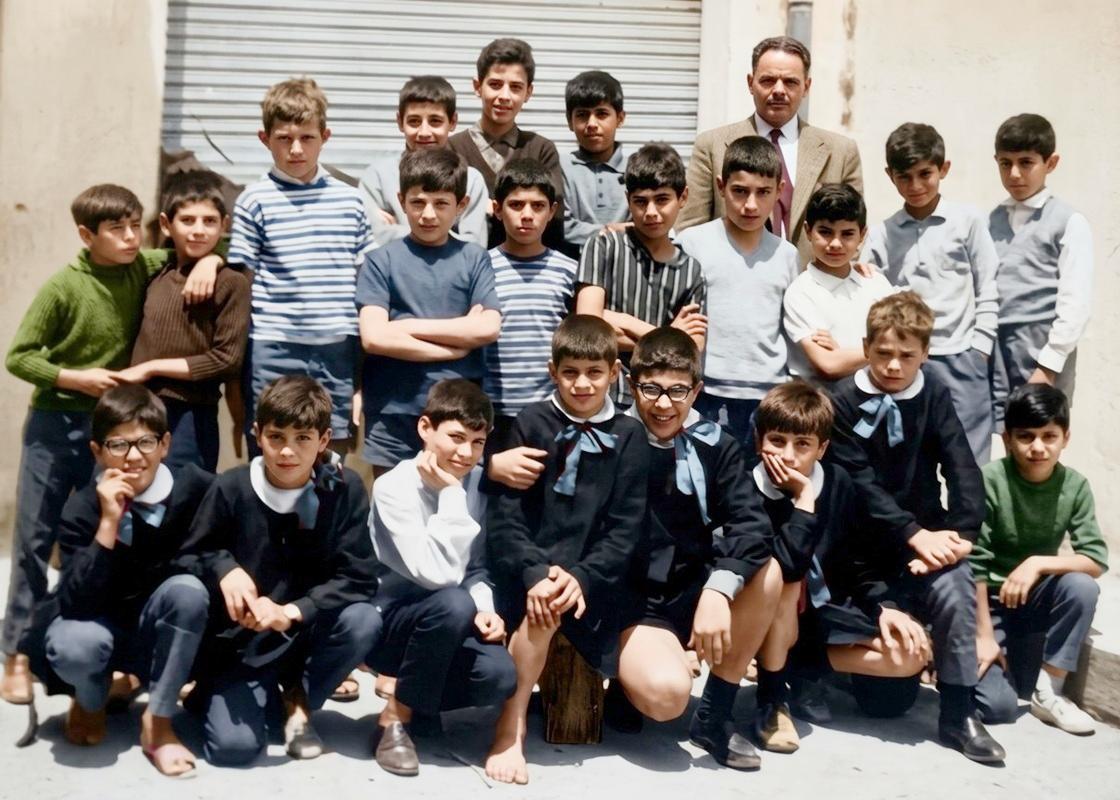
The Sardiniab economy was impacted by war damage, although less so than the Mainland. Much of the damage was in Cagliari which was bombed by he Allies (1943). 【Pireddu】 Important efforts immediately after the War were the anti‑malaria campaigns and work on living conditions. The 'Piano di Rinascit' (Rebirth Plan) was the principal recovery effort (1962). It adopted a 'growth pole' strategy to attract industrial factories, petrochemicals and heavy industry. There was a hyue challenge. "A large portion of the population (one of five people) was still illiterate, poverty was widespread, and basic infrastructure was either missing or very modest." 【Biagi, et. al.】 Sardinia experienced substantial economic changes (1950s-70s). Sardinia benefited greatly from the Italian Economic Miracle. This began with job opportunities opening up in a recovering Germany. Then industry began expanding in Italy. The result was a phenomenal rise in Italian living standards. While industry mostly expanded in the north, improvement in living standards were most notable in the south ans Sicily and Sardinia, because they were beginning at such a low base. While the factories were mostly in the north, workers from the south cold move north to seek goo paying jobs. This is most notable in southern Italy, but also in Sardinia and Sicily, bringing living standards up to a more European level. We think much of this is due to growth of the Italian economy rather than major economic developments on Sardinia. The island attracted petrochemical companies and new infrastructure, designed to modernize the economy. The planners had to contend with mass emigration and unsettling changes in the social fabric. Many rural villages were emptied while the cities expanded as well coastal areas. The economy was hard hit by the Oil Crisis (1973). major issues were insularity, limited diversification, and reliance on extractive industries, especially mining, all of which made it vulnerable to the global price shifts. The 'insularity gap' is a major issue. A poorly educated population and weak local institutions were additional problems. 【Biagi, et. al.】 Autonomy may have been a factor, but we believe that the massive impact of the Italian Economic Miracle was the primary factor, The major growth engine in Sardinia has been tourism which primarily comes from Italy. While Sardinian living standards are no longer more similar to the Third World than Europe, there was only limited actual development of an industrial base on the island.
Biagi, Bianca, Barbara Dettori, Raffaele Paci and Stefano Usai. "Economic Development in Sardinia: Overcoming the Insularity Gap," Rivista Internazionale di Scienze Sociali Anno 129, No. 2, A Special Issue on Italian Regions (Aprile-Giugno 2021), pp. 165-186.)
Pireddu, Andrea. "Sardinia in the Second World War and postwar period: history," www.unicaradio.it (April 15 2026).

Navigate the Boys' Historical Clothing Italian pages:
[Return to the Main Post-War Sardinia page]
[Return to the Main Sardinian history page]
[Return to the Main Sardinian page]
[Return to the Main Italian island page]
[Return to the Main Italian regional page]
[Return to the Main Italian activity page]
[Return to the Main Italian page]
[Italian school uniforms]
[Italian youth groups]
[Italian choirs]
[Italian movies]
[Italian royalty]
Navigate the Children in History Web Site:
[About Us]
[Introduction]
[Biographies]
[Chronology]
[Clothing]
[Disease and Health]
[Economics]
[Environmental issues]
[Feminism]
[Geography]
[History]
[Human Nature]
[Law]
[Nationalism]
[Presidents]
[Religion]
[Royalty]
[Science]
[Social Class]
[Bibliographies]
[Contributions]
[FAQs]
[Glossaries]
[Images]
[Index]
[Links]
[Registration]
[Search]
[Tools]
[Children in History Home]