|
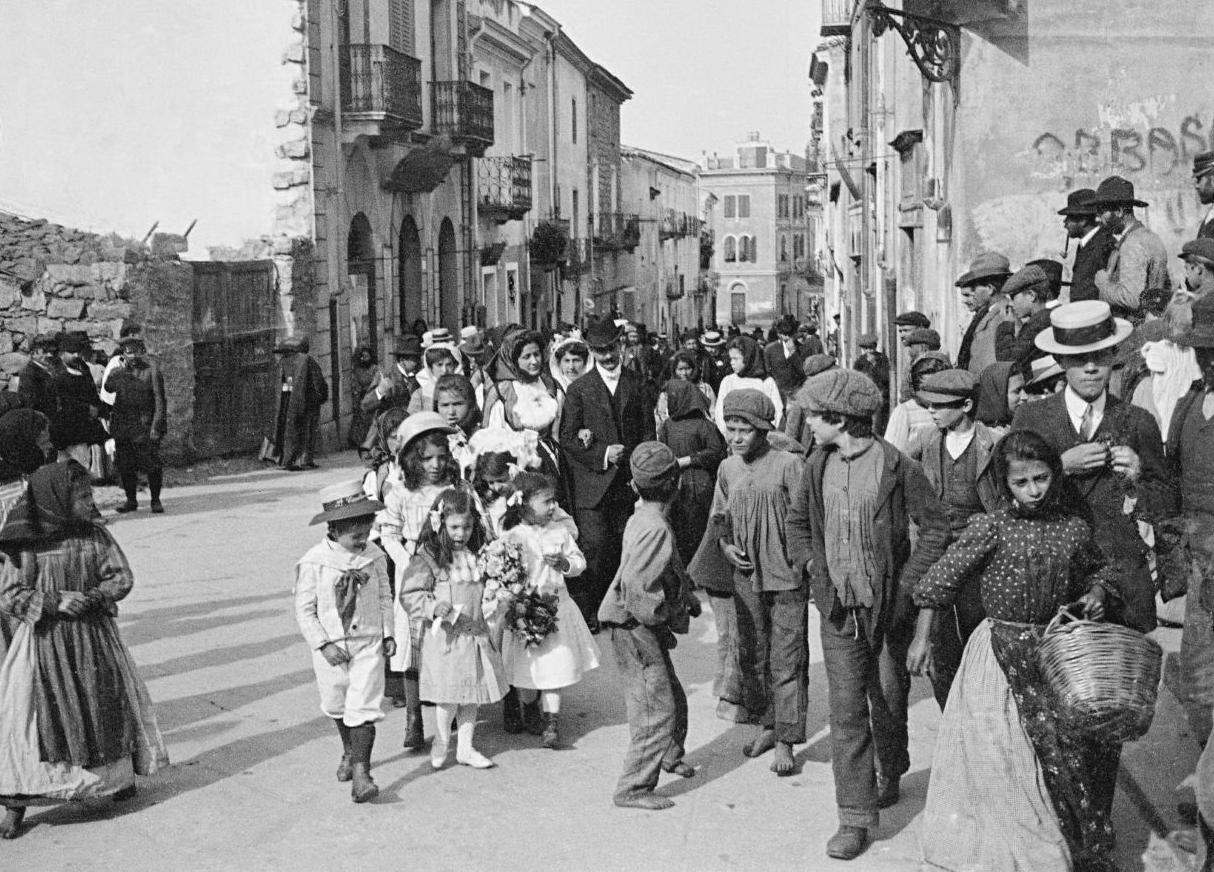
Italian unification was made possible by the the Second Italian War of Independence/Franco-Austrian War (1859). Chancellor Bismarck was involved as he wanted to break the historic Franco-Austrian alliance. The primary result was that Lombardy was annexed by Piedmont. Now Naples and Sicily (the Kingdom of Two Sicilies) remained outside of Piedmont (House of Savoy) control. The final major step in unification was Garibaldi beginning with a very small force (the Expedition of the Thousand) swept through Sicily and then crossing the Strait of Messina into southern Italy. He was warmly received by he population, but the intervention of the Royal Sardinian Army (actually the Sardo-Piedmontese Army) was needed to defeat the Neopolitans. This brought Naples and Sicily into a unified Kingdom. Victor Emmanuel II was proclaimed king of a united Italy (1861). Had it not been for Sardinia, Victor Emanuel would have been a duke and not a king. An alliance with Prussia meant that the Veneto was obtained after the Austro-Prussian War (1866). Then finally Rome was annexed after the French garrison was withdrawn as a result of the Franco-Prussian War (1870). A major political figure was Count Cavour who quarreled with Garibaldi. The primary development was industrialization in the north and important infrastructure development. As the north developed, a major political issue became the Southern Question--disparities between the north and south. While not located in the south, Sardinia was essentially part of the Southern Question. This was the era of Scramble for Africa, Italy pursued colonial ventures in Africa, but became the only European nation to be defeated by an African army (1896). One might have thought that Italy would have addressed the Southern Question before pursuing African colonies, but this was not the case. Sardinia was part of the unified Italian nation, but as in the South, there was no important effort to address the inequities with the larger nation. Sardinia was not just any Italian province. The Islands geographic separation and its distinctive linguistic and cultural identity make it stand out. Something very different in the Italian body politics. This was especially the case in the 19th century before the advent of modern mass media. Given Sardinia's insular isolation it has been described as a 'forgotten' province. This gave rise over time to a growing desire for autonomy. Italy was part of the Triple Alliance (1882) becoming associated with the Central Powers. Italy did not, however, join the Central Powers when World War I broke out (1914). Given territorial claims in the Tyrol, Trentino, and Balkans (Istria), Italy joined the Allies -- Treaty of London (1915). The War had nothing to do with Sardinia, but the Italian Kingdom was destabilized by the War, the economic strain, battlefield losses, and failure to gain all of the territories anticipated. The Italian Kingdom did not end with the Fasixy seizure of power (1922) but effective control of the Itaian state did end. And most imprtantly for Sardinia, there was no major effort to assress the Southern Question.
Giacobbe, Maria. Maschere e Angeli Nudi: Il ritratto di un'infanzia Masks and Naked Angels: A Portrait of a Childhood (1999).

Navigate the Boys' Historical Clothing Italian pages:
[Return to the Main Sardinian history page]
[Return to the Main Sardinian page]
[Return to the Main Italian island page]
[Return to the Main Italian regional page]
[Return to the Main Italian activity page]
[Return to the Main Itlalian page]
[Italian school uniforms]
[Italian youth groups]
[Italian choirs]
[Italian movies]
[Italian royalty]
Navigate the Children in History Web Site:
[About Us]
[Introduction]
[Biographies]
[Chronology]
[Clothing]
[Disease and Health]
[Economics]
[Environmental issues]
[Feminism]
[Geography]
[History]
[Human Nature]
[Law]
[Nationalism]
[Presidents]
[Religion]
[Royalty]
[Science]
[Social Class]
[Bibliographies]
[Contributions]
[FAQs]
[Glossaries]
[Images]
[Index]
[Links]
[Registration]
[Search]
[Tools]
[Children in History Home]