|
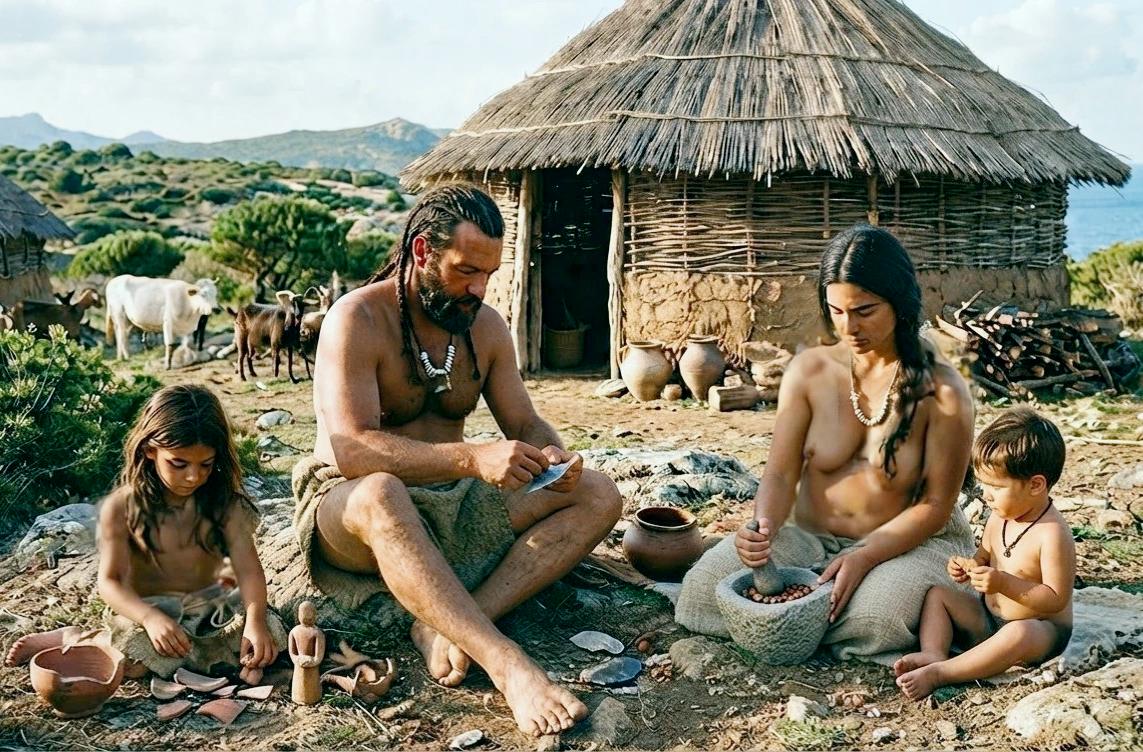
Anatolian farmers swept over Europe. These are the people that bcarried agricultural tecgbnology from Mesopotamia to Europe. They reached Sardinia (8th century BC). They fundamentally altered the genetic profile of Europe. And because Sardinia was unaffected by the subsequent invasion of Steppe people, the Sardinian population has one of the oldest and most distinct DNA profiles in Europe. There is a very high percentage of the island's population with direct ancestry from the early Neolithic farmers who migrated from Anatolia. Sardinians are more genetically similar to ancient Neolithic farmers than any other modern European populations, except the Basque people. This is unusual in Europe which has been racked by major wave of migratory peoples over time and massive changes in ethnicity. Archolohists have found evidence of several different culures after the appearnce of agriculture. This figureine on the previous page is the work of the Bonu Ighinu culture dating around 4000–3400 BC. It was found near Cabras, but evidence of this culture has been found throughout the island, except for the higher rocky elevations where agriculture could not be practiced. Very littlr is know about these people othere thn the clay figurines have been found. Here is avisual representation of hee people vased on the limited imformation avilble (figure 1).

Navigate the Boys' Historical Clothing Italian pages:
[Return to the Main Sardinian pre-history page]
[Return to the Main Sardinian history page]
[Return to the Main Sardinian page]
[Return to the Main Italian island page]
[Return to the Main Italian regional page]
[Return to the Main Italian activity page]
[Return to the Main Itlalian page]
[Italian school uniforms]
[Italian youth groups]
[Italian choirs]
[Italian movies]
[Italian royalty]
Navigate the Children in History Web Site:
[About Us]
[Introduction]
[Biographies]
[Chronology]
[Clothing]
[Disease and Health]
[Economics]
[Environmental issues]
[Feminism]
[Geography]
[History]
[Human Nature]
[Law]
[Nationalism]
[Presidents]
[Religion]
[Royalty]
[Science]
[Social Class]
[Bibliographies]
[Contributions]
[FAQs]
[Glossaries]
[Images]
[Index]
[Links]
[Registration]
[Search]
[Tools]
[Children in History Home]